CFO – PDF Site Map
| ID | Node | Title | PDF Links | ||||||||||||||||||||||||||||||||||||||||||||||||||||||||||||||||||||||||||||||||||||||||||||||||||||||||||||||||||||||||||||||||||||||||||||||||||||||||
|---|---|---|---|---|---|---|---|---|---|---|---|---|---|---|---|---|---|---|---|---|---|---|---|---|---|---|---|---|---|---|---|---|---|---|---|---|---|---|---|---|---|---|---|---|---|---|---|---|---|---|---|---|---|---|---|---|---|---|---|---|---|---|---|---|---|---|---|---|---|---|---|---|---|---|---|---|---|---|---|---|---|---|---|---|---|---|---|---|---|---|---|---|---|---|---|---|---|---|---|---|---|---|---|---|---|---|---|---|---|---|---|---|---|---|---|---|---|---|---|---|---|---|---|---|---|---|---|---|---|---|---|---|---|---|---|---|---|---|---|---|---|---|---|---|---|---|---|---|---|---|---|---|---|---|---|
| 1 | 3376 | Financial reports | Explore the comprehensive financial reports archiveAnnual financials
Email Financial Services or call 480-965-3601 for more information about annual comprehensive financial reports. EADA reportsDepartment reporting toolsVisit the ASU Analytics portal to find Advantage web, financial aid, management information, MyReports and other reports. Supplementary information |
||||||||||||||||||||||||||||||||||||||||||||||||||||||||||||||||||||||||||||||||||||||||||||||||||||||||||||||||||||||||||||||||||||||||||||||||||||||||
| 2 | 3361 | Employees working outside the State of Arizona | Guidance and resourcesASU employees whose primary physical work location is outside the state of Arizona are subject to all employment-related laws of the U.S. state, territory or non-U.S. country in which they work. Pre-approval is required before:
Regardless of duration, any such arrangement must be approved by the dean or director and the responsible vice president or vice provost. The Office of Financial Services, the Office of Sponsored Projects Administration and the Office of General Counsel advise on any requirements or restrictions specific to the requested work location. Include sufficient time for the approval process when planning a hire or relocation. International appointments may require additional processing time. The approval process for adding employees to established ASU locations outside Arizona is streamlined. For more information, review:
Location-specific guidanceWhen working from a location outside Arizona, ASU employees are subject to Arizona Board of Regents and ASU policies, as well as any applicable local laws. Units should seek guidance from the Office of General Counsel and the Office of Human Resources on complying with local laws. For established ASU locations outside Arizona, ASU may also prepare a location-specific policy supplement or other guidance. CaliforniaFor employees in California, review the California Employee Policy Supplement. |
||||||||||||||||||||||||||||||||||||||||||||||||||||||||||||||||||||||||||||||||||||||||||||||||||||||||||||||||||||||||||||||||||||||||||||||||||||||||
| 3 | 1124 | Food reconnection | Food equity and accessASU seeks to ensure the ASU community is connected with the need for food equity, access and sustainable food choices, such as plant-forward, organic and Fair Trade certified options. Starting with Sun Devil Hospitality and incorporated across the enterprise, ASU offers many programs and tools to achieve food system sustainability. Commitments
Programs
Tools
ASU’s Sustainability Recognition program offers a Green Event Recognition that includes several guidelines related to sustainable food systems for campus events. |
||||||||||||||||||||||||||||||||||||||||||||||||||||||||||||||||||||||||||||||||||||||||||||||||||||||||||||||||||||||||||||||||||||||||||||||||||||||||
| 4 | 1763 | Get involved | You make an impact on campusWaste prevention is essential in all aspects of life. The Environmental Protection Agency estimates that each person generates 4.9 pounds of waste every day. Preventing waste is a great way to help achieve ASU's Zero Waste goals. It is important to note that you do not have to become zero waste overnight. Taking small steps helps to build lasting behaviors that will generate a positive impact. Together we can make a difference. How to be a sustainable Sun DevilMost of the decisions you make in a day can impact the planet. The EPA found the average amount of waste a person generates has increased by 0.4 pounds in just one year. There are many ways to create small and large-scale changes, and one of the best places to start is at home. Follow the steps below to achieve a zero-waste residence: Reducing waste at workAccording to the EPA, an estimated 45% of all municipal solid waste is generated at work. Since one-third of your life is spent in the office, there are many impactful ways you can reduce waste at work. Developing policies and programs to reduce, reuse and recycle items can make a positive impact on ASU’s sustainability goals. Follow the steps below to achieve a zero-waste office space: Zero waste living at ASUThe average college student generates around 640 pounds of waste a year — Department of Energy and Environmental Protection. Luckily, zero-waste strategies can be implemented anywhere waste is generated. You have the ability to make meaningful changes to support ASU’s sustainability goals. Follow the steps below and help your residence hall reduce waste: Help ASU achieve its Zero Waste goal in the following ways:
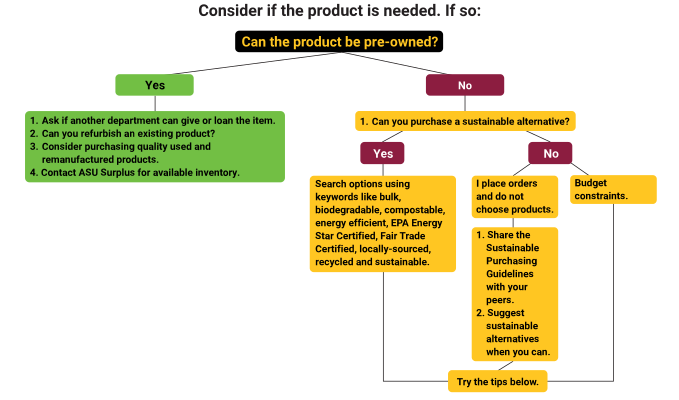
Eco Reps ProgramEco Reps is ASU’s peer-to-peer sustainability engagement initiative, empowering students living in campus residential communities to lead sustainability efforts and demonstrate sustainable lifestyle habits. USP established the program in fall 2022 with grant funding from Coca-Cola. Over the past four years, the program has engaged thousands of students in adopting eco-friendly practices, helping the university meet its sustainability goals. Collaborating with partners like ASU Zero Waste and Sun Devil Hospitality, Eco Reps are vital in building a campus sustainability culture. Their impact was recognized through ASU’s AASHE STARS ranking, earning points in Campus Engagement under the Student Educators Program. Watch the Eco Reps mini-documentary and follow USP on Instagram and LinkedIn to learn more about the award-winning program. |
||||||||||||||||||||||||||||||||||||||||||||||||||||||||||||||||||||||||||||||||||||||||||||||||||||||||||||||||||||||||||||||||||||||||||||||||||||||||
| 5 | 2731 | Reusable K-Cup Program | Delicious coffee without the wasteAll ASU departments can now participate in the Reusable K-Cup® Program. This follows a successful 2024 pilot in the University Services Building with over 300 employees on the Tempe campus. View the Reusable K-Cup Checklist to learn more about implementing the program in your work area. To qualify for the grant, departments should have at least 30 regular coffee users. Email University Sustainability Practices with questions about program eligibility. Submit a Reusable K-Cup Program interest form to get started. The first 10 departments that sign up will receive up to $500 from the Sustainability Initiatives Revolving Fund to cover the costs of a coffee grinder, one month of Fair Trade coffee and one reusable K-Cup per employee. What the program doesSaves money
Encourages sustainability
Email University Sustainability Practices with questions or for more information. |
||||||||||||||||||||||||||||||||||||||||||||||||||||||||||||||||||||||||||||||||||||||||||||||||||||||||||||||||||||||||||||||||||||||||||||||||||||||||
| 6 | 3106 | Building a more sustainable workspace | February 16, 2026 Even as ASU continues to lead in digital-first work, office supplies remain part of everyday operations. Thoughtful, sustainable purchasing choices help departments reduce environmental impacts without affecting day-to-day operations. Purchasers may refer to the ASU Sustainable Purchasing Guidelines for recommendations on sustainable office supplies. Review the following list of standard office items and consider these essential sustainability features: Consider sustainable office supply options
Choose non-toxic productsSome office supplies, particularly cleaning and ink-based products, may contain harmful chemicals. Selecting non-toxic, certified products supports both environmental sustainability and employees’ health.
Find sustainable products in SunRISEASU prioritizes sustainable products within supplier catalogs in SunRISE. Purchasers can easily identify preferred items from the following awarded suppliers by using sustainability filters and curated lists:
Support sustainable behaviorsBeyond purchasing decisions, departments can further sustainability through these shared-office practices:
Departments across ASU are creating innovative ways to support reuse and waste reduction through sustainability events. For example, ASU Staff Council hosts the annual Fashion Forward event in April to collect gently used clothing for free distribution to students. Departments supported the event by hosting donation bins in their offices. The ASU School of Sustainability’s graduate advising team offers another model through its “supply-brary,” located in the graduate lounge. The team encourages students, faculty and staff to leave or take gently used items. With minimal upkeep, the bookshelf helps keep office items in circulation and encourages reuse before they end up in the landfill. “The ‘supply-brary’ has been a great way for our community to share free home goods, office supplies, crafting materials and non-perishable food. We also maintain a Little Free Library for non-academic books. Our students, faculty and staff like sharing our wealth, and we're happy to keep good items out of landfills. It's fun to see what new items make their way onto the shelves and what gets snatched up quickly," said Lindsey Plait Jones, assistant director, Immersion Graduate Programs, School of Sustainability. Sustainability professional development opportunitiesAchieving ASU’s sustainability goals requires active participation across the university community. Every employee has an opportunity to support sustainability in their day-to-day work, whether through office programs, purchasing decisions or by participating in a shared sustainability culture. Employees interested in advancing sustainability within their offices can enroll in several training opportunities provided by University Sustainability Practices:
USP hosts a biannual Green Devil Ambassador Sustainability Conference, where employees can connect with sustainability leaders across the university. Visit ASU Events to join an upcoming conference. “Creating a more sustainable office culture starts with engaging staff where they are and empowering them to take action in meaningful, practical ways,” said Paige Strickland, program manager, University Sustainability Practices. “When employees understand how their everyday choices contribute to ASU’s broader sustainability goals, sustainability becomes part of how teams operate, not an extra task. The Green Devil Ambassador Program helps foster that shared culture by connecting staff, building confidence, and turning individual actions into collective impact.” Sustainability at ASU is a shared effort. When departments adopt sustainable purchasing practices and support reuse initiatives, they contribute to a university-wide culture that values conservation, innovation and environmental stewardship. Each department has the power to make a meaningful difference. Editor’s note: This article is part of a series about sustainable purchasing at ASU. Topics include sustainable purchasing best practices, notable suppliers and resources. |
||||||||||||||||||||||||||||||||||||||||||||||||||||||||||||||||||||||||||||||||||||||||||||||||||||||||||||||||||||||||||||||||||||||||||||||||||||||||
| 7 | 3031 | Choose Energy-Efficient Tech, Reduce Waste | December 18, 2025 Shop energy-efficient electronicsEvery purchase your department makes is an opportunity to reduce ASU’s environmental footprint. Laptops, audiovisual equipment and other electronic devices consume considerable energy and generate significant carbon emissions and e-waste. By choosing sustainable, eco-certified products, ASU departments can support the university’s sustainability goals and make a positive difference. ASU tracks its purchasing performance through the Association for the Advancement of Sustainability in Higher Education’s Sustainability Tracking, Assessment & Rating System. Achievement of Electronic Product Environmental Assessment Tool Gold certification by ASU fulfills an AASHE STARS measure that evaluates the share of purchased electronics that meet EPEAT Gold or equivalent standards. ASU achieved a 0.76/1.00 ratio of sustainable to unsustainable electronic purchases — this strong performance reflects our shared commitment to responsible procurement. We can increase that score with mindful everyday purchasing. Purchasing electronics with eco-certificationsIn addition to environmental benefits, products that meet EPEAT® and ENERGY STAR® standards are typically more durable, efficient and cost-effective.
Refer to the ASU Sustainable Purchasing Guidelines for a list of recognized eco-certifications and purchasing guidelines for IT hardware and appliances. Departments can apply for a Sustainability Initiatives Revolving Fund grant to support sustainable electronics purchases. Contact ASU University Sustainability Practices for more information. Finding sustainable products within SunRISEFilter for eco-certified or environmentally friendly options in the ASU supplier catalog, SunRISE, including:
Refer to the Business and Finance Information Technology webpage for a list of contracted and preferred suppliers for computer products. Additional sustainable purchasing tipsIf eco-certified products are unavailable, consider the following when purchasing:
Departments considering bulk purchases of computers or other electronics should work with ASU Procurement to identify sustainable options. Choosing energy-efficient, certified electronics helps ASU lead by example in sustainability. Each purchase helps save energy, reduce waste and strengthen ASU’s commitment to a cleaner, healthier future. Editor’s note: This article is part of a series about sustainable purchasing at ASU. Topics include sustainable purchasing best practices, notable suppliers and resources. |
||||||||||||||||||||||||||||||||||||||||||||||||||||||||||||||||||||||||||||||||||||||||||||||||||||||||||||||||||||||||||||||||||||||||||||||||||||||||
| 8 | 3021 | Single Trade Services | Services to support your facility’s needs.ASU-authorized Single Trade Services suppliers provide specialized support for campus projects that require skilled trades, including electrical, HVAC, painting, plumbing and general maintenance. Contract #ASU RFP 212401 ASU has contracted with the following suppliers for the listed services. |
||||||||||||||||||||||||||||||||||||||||||||||||||||||||||||||||||||||||||||||||||||||||||||||||||||||||||||||||||||||||||||||||||||||||||||||||||||||||
| 9 | 3006 | Talent Acquisition Certification Training | Unlock your recruitment potential with the ASU Talent Acquisition CertificationRecruiting the best talent is essential to the success of every department at ASU. The Office of Human Resources Talent Acquisition offers Talent Acquisition Certification to equip every recruiter and hiring partner with the knowledge, tools and strategies necessary to conduct effective, compliant and equitable hiring searches. This certification establishes a consistent foundation across the university, ensuring alignment of recruitment processes with ASU’s policies, standards and values. Comprehensive, hands-on trainingThis training provides practical, hands-on instruction. Participants will learn the latest ASU policies, Workday tips and legal requirements to remain fully compliant with university and state regulations. You will refine your skills in resume screening, learning how to quickly identify the most qualified candidates from your applicant pool. You will also gain in-depth guidance on interviewing techniques that allow you to assess candidates fairly and thoroughly while maintaining a positive candidate experience. In addition, the training covers selection strategies designed to help you make confident, well-informed hiring decisions that support your department’s goals. Benefits of certificationUpon completion, participants earn a certification valid for two years, demonstrating their expertise and commitment to excellence in hiring. This certification enhances your individual skills and contributes to a streamlined, equitable and positive hiring experience for candidates and departments alike. Whether you are a new recruiter, an experienced hiring partner, or someone who conducts interviews and makes final hiring decisions, this certification ensures you are prepared to make an immediate impact. Who should attendThe training is open to all members involved in the recruitment process. It is particularly valuable for those responsible for interviewing candidates or making final hiring decisions, but the knowledge and skills gained will benefit anyone participating in recruitment activities. Participants will leave the course with confidence in their ability to navigate Workday, apply best practices consistently, and maintain compliance with ASU recruitment policies and legal requirements. List of certified ASU hiring managers Looking to train your team?Departments can schedule an in-person, tailored group session to provide a focused and collaborative learning experience. These sessions are ideal for teams who want to align their recruitment practices, build shared understanding, and improve efficiency across the hiring process. Contact OHR Talent Acquisition to schedule a session that meets your department’s needs. |
||||||||||||||||||||||||||||||||||||||||||||||||||||||||||||||||||||||||||||||||||||||||||||||||||||||||||||||||||||||||||||||||||||||||||||||||||||||||
| 10 | 1128 | Reducing our carbon footprint | Scope 1, 2 and 3 emissionsSince fiscal year 2019, ASU has been carbon neutral for scope 1 and 2 emissions. ASU has achieved this through:
Commitments to reductionASU will work to reduce the need for offsets through its efforts to decarbonize over the next several years. The Achieving Carbon Neutrality at ASU Case Study outlines ASU’s efforts to reach carbon neutrality from 2007 to 2019 and introduces our future goals.
Energy efficiency and conservationAchieving ASU’s Climate Positive goal requires transitioning to low-carbon energy sources. In 2024, ASU consumed 2,404,922 gigajoules of energy, of which 1,043,302 gigajoules, or 42% came from low-carbon sources. Identifying energy wasteASU uses data from building-level energy monitors to identify energy waste. Two forms of analysis are employed: year-on-year energy data are compared for each building to determine increases in energy use, and energy use intensity is compared across buildings by class to identify outliers with excessively high energy use. The results are used to guide energy efficiency and conservation efforts. Email Energy Innovations with your suggestions, questions or comments on energy efficiency and conservation at ASU. ASU SolarCheck out the ASU solar website for more information on ASU’s solar power generation. Purchasing measures: energy-relatedASU implemented sustainable purchasing policies and practices that have been recognized twice by the Association for the Advancement of Sustainability in Higher Education for top achievement among reporting universities. To minimize emissions, the university requires Electronic Product Environment Assessment Tool Gold status for all computer purchases, the highest EPEAT standard available for television monitors, and Energy Star certification for all products and materials eligible. In practice, over 60% of paper purchased is 100% recycled. Sustainable commutingTargets and measurementsASU is working toward carbon-neutral transportation by 2035. As a milestone on this path and in support of Maricopa County’s Trip Reduction program, ASU aims to reduce single-occupancy vehicle travel to below 60% of total transportation modes. ASU’s annual Comprehensive Sustainability Survey measures progress toward this target in the “Sustainable Commuting” section of the survey, which asks about the general commuting patterns of students, faculty and staff. Questions include commute modal split, travel distance to campus, level of interest in the different commuting mode options, incentives that would increase the use of a sustainable commuting mode, electric-vehicle-specific questions, and barriers to alternative modes. As of 2022, ASU has met this milestone, with single-occupancy vehicle travel at 59%. This means that 41% of ASU chose alternative modes of transportation in 2022. Values collected from this survey also serve to measure the effectiveness of current programs in place and to develop policies and practices to increase sustainable commuting modes. Promoting sustainable commuting
|
||||||||||||||||||||||||||||||||||||||||||||||||||||||||||||||||||||||||||||||||||||||||||||||||||||||||||||||||||||||||||||||||||||||||||||||||||||||||
| 11 | 2946 | ASU Youth Activities | Requirements for operating ASU youth activitiesASU youth activities are programs, activities or events involving minors who will be in care, custody or control of university personnel or volunteers. These activities may take place on or off campus, in-person or virtually. Activity requirementsDepartments or units that operate youth activities must complete the following requirements before the activity’s start date. Please plan 30–60 days before the start date to allow time for approvals:
Staff requirements
Contact your OHR business partner or Office of Human Resources for fingerprinting questions. Review the Background check stage guide for instructions on submitting fingerprint requests in Workday. How to access the trainingASU employees and students. Staff with an active ASURITE and ASU email can access the training using single sign-on. Non-ASU volunteers. Staff who are not affiliated with the university must be assigned an ASURITE and ASU email to complete the training for compliance purposes. The sponsoring department is responsible for requesting an ASURITE and email as part of the onboarding process. Note: Do not use personal emails or create separate accounts to access the protection of minors training. Training completed using personal accounts will not be recorded or accepted for compliance. Access Youth Protection training Additional trainingUnited Educators offers additional training courses that staff may complete as directed by the activity manager: Independent contractorsASU youth activities using independent contractors must review the Independent Contractor Information before allowing the individual to begin their work. Youth activities using independent contractors — where any of the following apply — are responsible for ensuring the independent contractor has the appropriate insurance before any work with minors:
Independent contractors must purchase and maintain insurance that meets ASU’s requirements for working with minors. All insurance must name the Arizona Board of Regents, Arizona State University and the state of Arizona as additional insureds. The independent contractor must provide a certificate showing this insurance coverage before working with minors. This requirement for insurance does not apply if:
Report incidents immediatelyImmediately report any incidents or concerns that occur during ASU youth activities, such as injuries, behavioral issues or safety threats. |
||||||||||||||||||||||||||||||||||||||||||||||||||||||||||||||||||||||||||||||||||||||||||||||||||||||||||||||||||||||||||||||||||||||||||||||||||||||||
| 12 | 2926 | Financial Reports to Arizona Board of Regents | Annual Capital Plan (ACP)Purpose: ASU’s Annual Capital Plan (ACP) lists the major capital projects the university intends to start in the next 12 months. For each project, it includes a brief fiscal management plan that is brought to the Arizona Board of Regents (ABOR) for approval. The ACP is distinct from the multi-year Capital Improvement Plan (CIP). View the FY 2026 Annual Capital Plan. Annual Cost Containment ReportPurpose: A consolidated report that ABOR submits each year by September 1, detailing cost-management actions taken by Arizona’s three four-year public universities. Required by A.R.S. § 15-1650.03, the report is submitted to the Governor; President of the Senate; Speaker of the House of Representatives; Joint Legislative Budget Committee (JLBC); and a copy to the Secretary of State. View the FY 2026 Annual Cost Containment Report. Annual Personnel ReportPurpose: A consolidated report that ABOR submits each year by September 1, covering workforce and compensation trends for Arizona’s three four-year public universities. Required by A.R.S. § 41-751, the report is submitted to the Governor and the Legislature, and a copy to the Secretary of State. View the FY 2026 Annual Personnel Report. |
||||||||||||||||||||||||||||||||||||||||||||||||||||||||||||||||||||||||||||||||||||||||||||||||||||||||||||||||||||||||||||||||||||||||||||||||||||||||
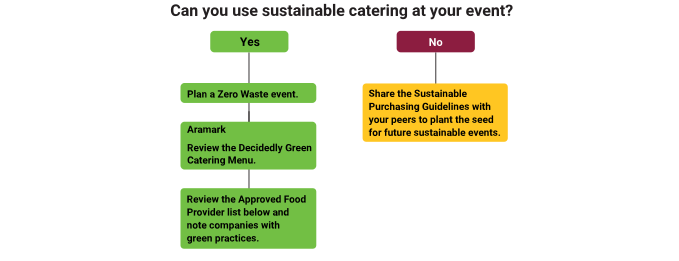
| 13 | 2796 | Rent, Reuse, Repeat: Sustainable Event Resources | Sept. 12, 2025 Plan green events with rentals and compostables.Event planners can save time, money and effort by renting materials instead of buying new ones. Support ASU’s sustainability goals by choosing reusable items and compostable materials for your university events. Check out these resources to find reusable decorations, dining ware, equipment and more: Search the materials inventoryThe Ira A. Fulton Schools of Engineering developed the Events Inventory Program to reduce waste and improve access to free reusable event materials. ASU employees create an online account to submit, track and even repeat orders. Rentals require a seven-day lead time, and you must pick up and return all rented items. Fees only apply in specific cases; check the rental policy for details. Users may place unlimited orders from mid-August to late May during the academic year. Email the Events Inventory Program team with questions about placing orders. For items unavailable through campus resources, use ASU-authorized external event rental companies and follow ASU’s procurement guidelines when working with external vendors. Sustainable event planning resourcesIf you want to make your event more sustainable, check out the Greener Gatherings: How Sustainability Enhances Campus Events webpage for these event planning tools:
Plan zero-waste eventsEvents typically waste 15–20% of the food they produce, according to Lime Venue Portfolio and BCD Meetings & Events. Sun Devils can help reduce event waste by renting compost, recycling and landfill bins from ASU Moving and Event Services for university-sponsored events. Delivery and pick-up are included in the service cost, making for easy setup and cleanup. Composting helps keep food waste and plastic serving materials out of landfills. MES also offers these compostable supplies:
ASU vets all products to ensure compatibility with its compost stream. Planners with a packed schedule may also stock up on compostable plates and cutlery at the start of the year. Event planners can also elevate their events with resources from the ASU Library Makerspace’s Tech Lending program, which offers cameras, photo backdrops, portable speakers and even options for VR competitions or interactive photo booths. By rethinking event planning through rentals, reusables and compostables, Sun Devils can host gatherings that save resources, cut costs and actively support ASU’s commitment to sustainability. Editor’s note: This article is part of a series about sustainable purchasing at ASU. Topics include sustainable purchasing best practices, notable suppliers and resources. |
||||||||||||||||||||||||||||||||||||||||||||||||||||||||||||||||||||||||||||||||||||||||||||||||||||||||||||||||||||||||||||||||||||||||||||||||||||||||
| 14 | 2711 | Redefining Sustainable Printing | Aug. 1, 2025 ASU and Canon’s commitment to a carbon-neutral futureDriving innovation and sustainability through strategic partnershipsEnvironmental impactsPrinting causes significant environmental impacts, from deforestation and carbon emissions to chemical pollution and e-waste. In 2008, ASU partnered with Canon to mitigate those impacts in its print services. Canon has worked with ASU to reduce its environmental impacts and support sustainability initiatives across the Sun Devil community. Canon’s environmental commitmentSustainability is a top priority for Canon. The company set rigorous carbon emission goals independently verified by the Science-Based Target initiative. Canon’s environmental philosophy and commitment align perfectly with ASU’s mission and support the university’s long-term success in sustainability, innovation and social impact. Canon uses print services and philanthropy to help universities reduce energy and waste beyond ink and paper. In summer 2022, with funding from Canon, ASU purchased and installed low-flow showerheads in three of ASU’s residential communities on the Tempe and West Valley campuses, saving an estimated 763,000 gallons of water per year. Since 2017, Canon’s Higher Education Advisory Team has helped ASU achieve these sustainable milestones:
ASU’s latest fleet of multi-function print devices marks a major sustainability upgrade, with models like the Canon IRA DX 8986I and imageFORCE C7165 using less than one watt in sleep mode, down from 3–5 watts in earlier versions. Canon has also incorporated recycled materials into its product design, such as electric furnace steel sheets, made from scrap metal that reuses steel from decommissioned devices. Canon’s devices include other sustainability features like default duplex printing and 100% recycled paper. Read more about Canon printers’ specific sustainability features. New initiativesASU is working with Canon to expand the Print Anywhere Program, where print jobs are sent to printers in the queue but are not printed until the sender goes to the machine to release it to print. “This initiative will continue to reduce paper waste and allow for more secure printing to a central location,” said Jan Holland-Malcom, assistant director of strategic partnerships, Auxiliary Business Services. What Sun Devils can doDepartments can request a free printing assessment with Canon to boost these sustainable and cost-saving efforts:
New models include better sustainability and improved security features that help avoid unauthorized access, data breaches and more. Departments considering replacing a copier or printer should contact ASU’s Supply Chain Sourcing Team for more information. Use sustainable office paperCertified sustainable paper is a key component of responsible printing and requires shared responsibility across campus. ASU departments can reduce environmental impact by aligning purchases with ASU’s Sustainable Purchasing Guidelines. Departments should order standard copier paper through the Materials Management catalog in Workday. The guidelines prioritize paper with 90–100% post-consumer content, agricultural residue or one of these certifications:
These certifications promote sustainable forest management, protect ecosystems and minimize harmful chemical use. Choosing paper that meets these standards helps ASU lower its environmental footprint from printing. Recycle old printers and toner cartridgesDepartments looking to retire old ASU-owned devices should submit a transfer request to ASU Surplus Property. This allows the university to resell old devices to the community at discounted rates. Contact Canon for pickup and recycling of rented devices. ASU collects used toner cartridges for recycling. Departments can leave cartridges in their outbound mail area, where the mail service team will pick them up. The cartridges are then boxed at the Alameda Warehouse and sent for recycling. These practices reflect ASU’s longstanding partnership with Canon, grounded in shared values, innovation and a bold vision for a carbon-neutral future. ASU and Canon are minimizing environmental impact and redefining what sustainable printing can look like at universities. Visit the Print at ASU webpage to learn more. Editor’s note: This article is part of a series about sustainable purchasing at ASU. Topics include sustainable purchasing best practices, notable suppliers and resources. |
||||||||||||||||||||||||||||||||||||||||||||||||||||||||||||||||||||||||||||||||||||||||||||||||||||||||||||||||||||||||||||||||||||||||||||||||||||||||
| 15 | 1175 | Capital Asset Management | Ensuring the protection of ASU capital assetsThe Capital Asset Management team is responsible for properly tracking, safeguarding, and accounting for all ASU capital assets, maintaining accurate records and controls to support asset integrity and compliance with institutional and regulatory requirements. These responsibilities include:
Arizona State University relies on future research capital assets, ranging from buildings, land, and infrastructure to lab equipment and library books to support its research and academic goals. These tasks require the ongoing cooperation of the entire ASU community. An approved property control system is critical to ASU’s future in research. Our cognizant auditing agency, the Office of Naval Research, approves or denies our property system each year. Without the annual approvals that CAM has achieved since 1989, ASU would not be permitted to purchase capital assets on our contracts and grants, significantly affecting our research opportunities and future. Review the additional information below for further details. Visit the ASU Surplus Property webpage for surplus information. FormsThe following are helpful property control forms:
Descriptions and policiesCapital equipment — PCS 102 details what constitutes capital equipment. Generally, capital equipment consists of movable items with an acquisition cost of at least $10,000 per unit and a life expectancy of greater than one year. Computer software must be at least $5,000,000. Disposal of equipment that is no longer needed
Donated equipment — per PCS 206 and PCS 1002-10, all donated equipment must be processed through the ASU Foundation. Donated equipment must remain in ASU’s possession for at least three years because of IRS tax regulations. Equipment transferred from another institution — per PCS 207, email CAM immediately and forward all pertinent documentation, including a valuation of the equipment, to be properly tagged and recorded. Fabricated equipment — PCS 004 defines fabricated equipment and when it is capitalized. If the final fabrication cost is expected to be at least $10,000, complete a fabrication data sheet and email CAM to set up a fabrication number. After the number is assigned, include it on all supplier invoices, P-Card transactions, and journals related to the purchase of the equipment and use the fabrication spend category Fabricated Equipment Capital for ordering all components of the equipment. Government-furnished equipment — per PCS 204, when receiving government-furnished equipment, the PI should inspect the equipment to ensure the equipment’s description, quantity, and condition are recorded correctly. If any discrepancies are noted, the PI should work with CAM and the sponsor to resolve them after the GFE is properly received; email CAM, and forward all pertinent documentation, including the equipment's value and the expected return date. CAM will tag the GFE and record it in Workday. Per PCS 1007, once the equipment is returned to the sponsor, CAM must be notified. Inventory of capital equipment — per PCS 601-02, CAM will coordinate the inventory of each asset once every two years. The department head and an inventory coordinator are identified in Workday as the point of contact. Equipment whose title does not rest with ASU will be inventoried annually or as requested by the sponsor. Various auditing agencies also verify equipment records periodically. Off-campus use of equipment — PCS 505 defines the permissible use of university equipment off-campus. Generally, equipment may be taken off-campus only for university or sponsored project use. Before removing equipment from campus, departments should complete the top portion of an off-campus loan form and submit it to CAM. The lower portion should be filled out and submitted when the item is returned. For permanent or extended off-campus use, the form must be renewed every two years to satisfy inventory requirements. Researchers transferring to another university — PCS 1004-01, PCS 1004-02 and PCS 1004-03 relate to the transfer of equipment to other institutions. The transferring equipment process may vary depending on who owns the equipment and how it was originally funded. To ensure the transfer is completed correctly, and appropriate approvals are received from sponsors, departments should include CAM at the outset of the transfer process. To begin the process, email CAM a list of the equipment being transferred, including tag numbers. CAM will prepare transfer documentation that includes a list of the equipment and its value. The department head must approve the transfer before the equipment can be removed from ASU. ASU property control tags should be removed from the equipment before departure, and all shipping and freight charges are paid for by the receiving institution. Purchasing capital equipment — per PCS 401, once CAM reviews a purchase in WD or is otherwise notified of an acquisition, CAM will contact the department that purchased the equipment to coordinate tagging the equipment with an ASU barcode tag, obtain a picture of the equipment and document the serial number, location, model number, and other needed information and enter the record into Workday. The equipment will then be included in the department's biennial physical inventory. If a department becomes aware of the equipment that meets the capitalization criteria but is not tagged, please email CAM as soon as possible. Purchase of equipment when retiring from ASU — PCS 1009 allows employees to purchase the equipment they wish to keep when they retire from ASU. Email CAM to obtain a sale price for the equipment that is based on fair market value. Approval of the sale by the department head must be obtained once a sale price is determined. The transaction must be completed before removing equipment from ASU. Trade-ins — PCS 1006 allows for the trade-in of university equipment. Sponsor-owned equipment cannot be traded in, and trade-ins should not be made substantially less than market value. Before committing an asset to an external vendor, departments should email CAM to confirm that the equipment is titled to ASU. Once verified, complete a trade-in authorization form and submit it to CAM. Departments should also let the ASU buyer know that a trade-in is involved and provide the ASU Property Control barcode number. AssetworksAssetworks is an internal system used to track asset information for both capital and non-capital assets and to enter equipment disposal requests once the equipment is deemed surplus. Reports have been created in Assetworks that allow departments to review asset records assigned to their department's cost centers. Additionally, departments can use Assetworks to make changes to existing asset records, such as location transfers. Email CAM for the following reasons:
CAM provides barcode tags free of charge for normal circumstances to departments requesting to track sensitive non-capital equipment. Email CAM if you need tags. Include in your email your department name, mail code and the number of tags needed. Then, use Assetworks to add, update and track your non-capital equipment. Staff
Tempe mailing address |
||||||||||||||||||||||||||||||||||||||||||||||||||||||||||||||||||||||||||||||||||||||||||||||||||||||||||||||||||||||||||||||||||||||||||||||||||||||||
| 16 | 2684 | ASU Surplus Extends the Life of Campus Goods | June 2, 2025 Reuse, recycle and repurpose excess propertyWhat happens to desks or laptops when department's no longer need them? Diverting used items from landfills gives them a second chance. ASU Surplus Property recirculates excess university property to the public through the storefront and the online auction platform GovDeals, diverting items from landfills. Surplus Property offers various items for sale, such as bikes, chairs, desks, laptops, laboratory equipment and more. ASU policy PUR 205 requires the university to resell excess property back to its own community and the public. Surplus ensures the university fulfills its obligation to responsibly dispose of excess university property through recycling and reuse by other ASU departments or by public sale. Reselling items at discounted prices creates cost savings, supports the university’s sustainability goals, reduces waste, cuts emissions, and extends the life of resources. ASU Surplus Property diverts an average of 400,000 pounds of excess property annually by reselling it instead of sending it to a landfill. Purchasing secondhand items significantly reduces emissions and extends product life. According to a life cycle analysis conducted by University of British Columbia students, purchasing secondhand tables from popular furniture brands like Wayfair and IKEA resulted in a 60.51–84.95% reduction in carbon emissions compared to buying new tables. How to start the disposition processASU employees can help keep excess property out of landfills by submitting an approved surplus transfer request to ASU Surplus Property in AssetWorks. After completing the online transfer request process, ASU Surplus Property will coordinate the pickup and transfer of the excess property back to the Surplus warehouse. “Properly submitting an approved transfer request in AssetWorks for capital assets, tagged and non-tagged assets helps tremendously for accurate reporting and auditing purposes,” said John Ishii, assistant director of Supply Chain Operations. How to shopASU Surplus and the online auction are open to the public to shop for gently used items. “We serve many public organizations in the surrounding community like nonprofits and K-12 educators in addition to the ASU community who are truly in need of items at a discount,” Ishii said. The cost of items can range from about 25% to 50% off the original price. Surplus shoppers may find the following items available for sale:
ASU Surplus Property offers a year-round back-to-campus promotion on items intended for university use, such as 50% off furniture and 25% off technology items such as desktop computers, laptops and tablets. Large items can also be delivered directly to specified campus locations for an additional fee. Be on the lookout for an upcoming ASU employee surplus sale during the summer to enjoy major discounts on items such as furniture and technology. Follow University Sustainability Practices on Instagram and check ASU Insight for upcoming sales. Despite the misconception that secondhand means second-rate, many surplus goods are gently used and well-maintained. Check out USP’s Instagram to see creative ways secondhand items are reimagined. The ASU Surplus Store is open Monday through Friday from noon–4 p.m. at 734 W Alameda Drive, Tempe, AZ 85282, surplus door entrance W4. Visit the ASU Surplus Property webpage to learn more. Editor’s note: This article is part of a series about sustainable purchasing at ASU. Topics include sustainable purchasing best practices, notable suppliers and resources. |
||||||||||||||||||||||||||||||||||||||||||||||||||||||||||||||||||||||||||||||||||||||||||||||||||||||||||||||||||||||||||||||||||||||||||||||||||||||||
| 17 | 1218 | Financial Services Forms | Access the Financial Services forms you needForms are divided by type and content area.Cash receipting
FMSUse the links below to request new Program and Gift Worktags in the Financial Management System.
Payables and reimbursements
Tax
Travel
Other
Email Financial Services with questions regarding FS Forms. |
||||||||||||||||||||||||||||||||||||||||||||||||||||||||||||||||||||||||||||||||||||||||||||||||||||||||||||||||||||||||||||||||||||||||||||||||||||||||
| 18 | 2677 | Be Sustainable: Buy Licensed ASU Apparel | May 6, 2025 ASU supports fair labor and sustainability in purchasing decisions.Our students, faculty and staff proudly wear maroon and gold branded apparel with department logos, the pitchfork, or special events like Pat Tillman’s Run. While many of these apparel items, like T-shirts, hats and bandanas, are handed out for free at campus events, behind each one lies a powerful story of sustainability and ethics that reflects our university values. Apparel is often manufactured in developing countries with weak labor protections. The Workers’ Rights Consortium has published multiple reports investigating conditions in apparel factories that put workers’ health and safety at risk. ASU enforces a commitment to fair labor and respect for human rights on all branded merchandise, including apparel, by requiring licensed vendors and their contractors to register and comply with the Fair Labor Association Collegiate Licensee Program. Membership requires vendors to meet the international labor standards outlined in the FLA Code of Conduct. Purchasing apparel, especially with ASU logos, wordmarks or pitchforks, through a licensed vendor ensures you comply with the university’s commitment to social responsibility, brand standards and trademark licensing. In addition to meeting the requirements of the FLA, licensed vendors also offer sustainable apparel products. Made from sustainable materialsApparel manufacturing is a resource-intensive process, contributing to environmental issues such as water and energy consumption, pollution, and waste. According to the United Nations, the total greenhouse gas emissions from textile production were estimated at 1.2 billion tons annually, more than those of all international flights and maritime shipping combined. When purchasing apparel from licensed vendors, look for sustainable product catalogs or products with sustainable attributes, typically featuring apparel made with environmentally preferable fabrics. The ASU Sustainable Purchasing Guidelines prioritize apparel made from certified organic and natural fibers like organic cotton, linen, hemp or Tencel. These biodegradable fibers have lower environmental impacts than synthetic fibers like polyester or nylon, which are made from chemicals and petroleum by-products, essentially plastics. The synthetic fabric polyester used in athletic wear has moisture-wicking properties that most natural fabrics do not. When moisture-wicking is needed, choose recycled polyester over new polyester, which produces 50–75% fewer carbon emissions. In addition, some companies have sought out third-party certifications to verify that chemicals used to treat fabrics, like softeners or dyes, do not contain hazardous chemicals or environmentally harmful substances. Look for the following certifications: The makers of your apparelASU’s vendors source apparel from manufacturers that support strong labor practices and environmental responsibility. The product’s manufacturer will be listed in the product title or description in the product catalog.
By purchasing apparel made by licensed vendors, Sun Devils can wear their ASU pride and uphold the university’s ethical commitment to fair labor. When choosing apparel products, purchase more sustainably by selecting products with eco-certifications, sustainable fabric, or made by sustainable manufacturers. Visit the ASU sustainable purchasing webpage to learn more and schedule a purchasing consultation. Contact ASU Trademark Licensing with questions about branded apparel and licensing. Editor’s note: This article is part of a series about sustainable purchasing at ASU. Topics include sustainable purchasing best practices, notable suppliers and resources. |
||||||||||||||||||||||||||||||||||||||||||||||||||||||||||||||||||||||||||||||||||||||||||||||||||||||||||||||||||||||||||||||||||||||||||||||||||||||||
| 19 | 1702 | Disability insurance | Financial security when you're injured and unable to work.Arizona State University offers short and long-term disability insurance to help protect your income if you experience a non-work-related illness or injury that prevents you from working. Short-term disability insuranceShort-term disability provides income replacement for up to six months. You must elect this coverage within 30 days of your eligibility hire date, a qualified life event, or during open enrollment. Review the short-term disability plan comparison chart for more details about coverage and premiums. Unum
ADOA Plan
Long-term disability insuranceLTD coverage provides income replacement if you are out of work for more than six months due to non-work-related illness or injury. Review the long-term disability plan comparison for coverage details. LTD coverage is automatically included with your mandatory retirement plan:
Review your LTD plan based on your retirement plan: Phone: toll-free 1-855-278-5081 or 480-727-9900 Contact HR support online to submit an inquiry or check on your issue at any time. |
||||||||||||||||||||||||||||||||||||||||||||||||||||||||||||||||||||||||||||||||||||||||||||||||||||||||||||||||||||||||||||||||||||||||||||||||||||||||
| 20 | 2660 | EHS Asbestos Management | Health risks of asbestos exposureFor detailed information, please review the ASU asbestos management program. The Residential Hall Asbestos Information Guidance document provides information about the potential presence of asbestos in residence halls. If you have any questions or need assistance, please email EHS. About asbestos
Asbestos at ASUWhere is asbestos at ASU? ASU's asbestos policy is “management in place,” meaning that asbestos is removed only when necessary, such as during building renovations or when damage occurs. Many of ASU’s buildings, constructed before 1985, contain asbestos in floor tiles, pipe insulation, roofing and ceiling textures. View the LA Herald Examiner Building Annual Asbestos Notice — Connelly Act. Risks associated with asbestos
|
||||||||||||||||||||||||||||||||||||||||||||||||||||||||||||||||||||||||||||||||||||||||||||||||||||||||||||||||||||||||||||||||||||||||||||||||||||||||
| 21 | 1668 | Benefits eligibility: What you need to know | Enroll within 30 calendar daysWhether you're new to ASU or becoming eligible for benefits, understanding the enrollment process and important deadlines will help you make the most of your benefits. You have 30 calendar days from your hire date or the date you become benefits-eligible to enroll in your benefits. To complete your enrollment, you must:
Important: The Office of Human Resources must receive all required documents within 30 days of your hire or eligibility date. What happens if I miss the deadline?If you miss the deadline, you must wait until the next open enrollment period or experience a qualifying life event. Learn more about how and when you can enroll and update your benefits. When does my coverage begin?Your benefits coverage starts on the first day of the pay period following submission of your enrollment task and any required supporting documentation. Keep in mind: Benefits do not begin on your hire or eligibility date. Rehires and transfersExceptions for rehires and transfers within the Arizona university system — ABOR, NAU and UofA — or Arizona state agencies:
Retirement plansArizona State University employees must participate in a retirement program if they work 20 or more hours per week for at least 20 weeks in a fiscal year, as outlined in Title 38 of the Arizona Revised Statutes regarding social security and retirement. These programs include the Arizona State Retirement System and the Optional Retirement Plan. Some employees are exempt, including:
Can I waive retirement participation?You may be eligible to decline participation in ASRS if all of the following apply:
If you qualify, submit the ASRS 65+ Membership Waiver Form to HR Retirement within one week of employment. Arizona State Retirement SystemUniversity staff who meet the membership criteria must participate in the ASRS. Contributions begin the first day of the pay period after a 182-day waiting period. Note: You may owe retroactive contributions. Exception: Contributions begin on your hire or eligibility date if you:
Optional Retirement PlanFaculty, administrators, academic professionals and other eligible employees may choose between: Participation begins on the first day of the pay period after you complete enrollment. Public Safety Personnel Retirement SystemCertified ASU peace officers who meet the following criteria must participate in the PSPRS:
Participation starts on the first day of the pay period that includes day 91 of your employment. Exception: Participation begins on your hire or eligibility date if you are already a PSPRS member. Phone: toll-free 1-855-278-5081 or 480-727-9900 Contact HR support online to submit an inquiry or check on your issue at any time. |
||||||||||||||||||||||||||||||||||||||||||||||||||||||||||||||||||||||||||||||||||||||||||||||||||||||||||||||||||||||||||||||||||||||||||||||||||||||||
| 22 | 1181 | FLSA questions |
|
||||||||||||||||||||||||||||||||||||||||||||||||||||||||||||||||||||||||||||||||||||||||||||||||||||||||||||||||||||||||||||||||||||||||||||||||||||||||
| 23 | 1684 | Life insurance programs | ASU offers employees three life insurance plans, which include basic, employee supplemental and dependent life insurance. Coverage is available through plans provided by ASU and the Arizona Department of Administration. Employees are automatically enrolled in basic life coverage and may elect supplemental coverage for themselves and their eligible dependents. These documents provide details about our life insurance summaries for basic, supplemental and dependent programs. |
||||||||||||||||||||||||||||||||||||||||||||||||||||||||||||||||||||||||||||||||||||||||||||||||||||||||||||||||||||||||||||||||||||||||||||||||||||||||
| 24 | 1649 | Phased retirement | The phased retirement program is available for eligible participants in the Optional Retirement Plan.Phased retirement allows participants to withdraw from their ORP accounts and work part-time for up to three years before full retirement from ASU. Eligible faculty and staff who meet the criteria must negotiate and document the dates, length and percentage of reduced work schedules with the dean or vice president of your unit or department. You can specify different percentages for different periods of your phased retirement. The standard range will vary between 50% and 95% time full-time equivalent. Phased retirement agreements are irrevocable and you may not be eligible if you already have an existing retirement agreement. Review the ORP Phased Retirement Program Process for an overview. You may be eligible for phased retirement if you are:
Benefits during phased retirementEmployee and employer contributions will continue until your retirement date if you maintain at least 50% FTE status. Health and vacation leave accruals and contributions to some benefits, including disability and life insurance, are based on your FTE status and will be adjusted accordingly. Note: You must maintain at least 50% FTE status to retain certain benefits. If you reduce your schedule to below 50% FTE, you will:
Faculty or academic professionalsTenured faculty or academic professionals with continuing status irrevocably relinquish all tenure and employment status rights at the end of the phased retirement period. These types of employees will continue to be subject to regular employment contract renewals during the phased retirement period. Participation in the phased retirement program does not create a guarantee or implied agreement of continuous employment. Returning to work after phased retirementThere is no guarantee of future employment after your formal retirement date, but the program does allow ORP participants to return to work after retirement if positions are available. However, to protect the tax-deferred status of the retirement plans, you cannot make any oral, written or implied agreements to work after retirement before your retirement date. If you return to work for at least 50% FTE for at least 90 days, you will be subject to the same benefits eligibility requirements as other ASU employees, including participation in a retirement plan. If you are already receiving pension benefits, you will be exempt from ASRS participation but can participate in ORP. Review the "Working after retirement" webpage for additional rules for returning to work. Phone: toll-free 1-855-278-5081 or 480-727-9900 Contact HR support online to submit an inquiry or check on your issue at any time. |
||||||||||||||||||||||||||||||||||||||||||||||||||||||||||||||||||||||||||||||||||||||||||||||||||||||||||||||||||||||||||||||||||||||||||||||||||||||||
| 25 | 1659 | Voluntary retirement plans | Voluntary 403(b) or deferred compensation 457(b) plans.All faculty, postdoctoral scholars, staff and student workers are eligible to participate in the 403(b) and 457(b) plans. Both plans are tax-advantaged supplemental retirement plans that allow participants to allocate pre-tax and after-tax Roth-based contributions through payroll deduction. There is no employer matching for either plan. Contributions
Pre-tax vs Roth contributionsPre-tax contributions are withheld before the calculation of federal and state income taxes, which reduces your taxable income. You pay income taxes only when the funds are distributed or withdrawn. With the Roth option, your contribution is withheld from your paycheck after your income is taxed. This does not lower your taxable income, but your contributions will be tax-free when you withdraw them later. Catch-up provisionsYou are eligible to make additional contributions if you are at least age at least 50 years old during the calendar year. Refer to the IRS contribution limit table for details. Your contributions will automatically stop during the calendar year if you are:
Contributions will resume on the first pay date of the following calendar year. Roth catch-up requirementsThe SECURE Act 2.0, Section 603, requires that all age-based contributions to eligible retirement plans be made as "designated" Roth contributions for participants who earned more than $150,000 of compensation in the prior calendar year from the employer sponsoring the plan, indexed annually, starting in 2025. Starting in 2026, if you are age 50 or older and your FICA wages (Box 3 on your 2025 W-2 from ASU) exceeded $150,000, any catch-up contributions to your voluntary retirement plans must be made as after-tax Roth contributions. If your wages were $150,000 or less, you can choose between pre-tax or Roth catch-up contributions. Voluntary 403(b) planThe voluntary 403(b) plan is administered through the Arizona Board of Regents using Fidelity and TIAA as providers. Eligible employees can enroll with either provider through the NetBenefits website. There is a $10.50 quarterly administrative charge for participation in the 403(b) plan. If you sign up with both providers, you will be charged the administrative fee for each provider. If you are also enrolled in the 401(a) ORP with the same provider, the fee will only be assessed once. You may be eligible to make additional 403(b) contributions if you have at least 15 years of service and under-contributed in prior years. Contact your provider for help determining eligibility. Plan documents and resources: Voluntary 457(b) planThe voluntary 457(b) plan is a supplemental retirement plan available exclusively for public employees. This plan is administered by the Arizona State Retirement System using Nationwide as the provider. Eligible employees can enroll through the Nationwide website. Note: Nationwide offers participants the option to elect a percentage for their contribution. ASU cannot process this type of election. ASU employees must elect the before-tax or after-tax options and set a per-pay-period contribution amount. There is an administrative fee of 0.06% annually, and assessed on a monthly basis. You may be eligible to make additional 457(b) contributions under the 457(b) Plan Double Limit Catch-up provision and contribute up to double the basic annual limit if you are within three calendar years of retirement. Contact Nationwide to determine if you are eligible. Plan documents and resources: Phone: toll-free 1-855-278-5081 or 480-727-9900 Contact HR support online to submit an inquiry or check the status of your issue at any time. |
||||||||||||||||||||||||||||||||||||||||||||||||||||||||||||||||||||||||||||||||||||||||||||||||||||||||||||||||||||||||||||||||||||||||||||||||||||||||
| 26 | 1655 | Academic professional and faculty summer hires | Summer hiring criteria for academic professionals and facultyHiring managers can use the following criteria to determine how to process a summer hire for academic professionals or faculty. Benefits eligibility criteriaState and university benefits package: Regularly scheduled to work .50 FTE or more 20 or more hours per week for an anticipated duration of at least 90 consecutive days, including all sessions or semesters — fall, spring or summer A, B or C. Refer to the summer faculty positions chart for samples. New — not previously employed in spring
Note: 12-month contract summer hires positions at 0.50 FTE or more for 90 days or longer are eligible for benefits and mandatory retirement. |
||||||||||||||||||||||||||||||||||||||||||||||||||||||||||||||||||||||||||||||||||||||||||||||||||||||||||||||||||||||||||||||||||||||||||||||||||||||||
| 27 | 1623 | ACA employment status and eligibility | ASU employees may be eligible for Affordable Care Act benefitsYou may be eligible for ACA benefits if you meet the following criteria:
Upon determination of eligibility for benefits under the Affordable Care Act, employees will be notified by email. The email will provide specific information and instructions tailored to the employee's circumstances. Refer to the ACA benefits eligibility chart. Department responsibilitiesContact ASU ACA Compliance regarding employees meeting any of the criteria listed above. The ASU ACA compliance team will determine if further action is required and advise accordingly. Enrolling or declining coverageThe ACA does not require you to enroll in benefits offered by ASU. However, whether you enroll or decline these benefits, you will be automatically enrolled in a university-paid basic life insurance policy equal to your annual salary. If you decline coverage, complete the process by declining all coverage to HR Benefits within the 30-calendar-day enrollment period. Failure to complete the process within this timeframe will result in no changes to your current elections. Premiums for elected coverage are withheld from your biweekly paychecks. If you don’t receive a biweekly paycheck, we will send an invoice to your home address listed in My ASU. If you fail to remit premiums for your share of the costs by the due date, your coverage will terminate at midnight on the last day of the pay period in which premiums were paid in full. Further, you will forfeit your right to continue coverage under federal COBRA regulations. ACA termination coverage conditionsACA benefits continue for one year or the stability period if eligibility is met following the initial measurement period.
ACA benefits continue through the end of the calendar year if eligibility is met following the standard measurement period.
If ASU employment is; terminated, coverage ends at midnight on the last day of the pay period in which your last day worked occurs. You will be given the opportunity to continue your medical, dental or vision coverage under the federal COBRA regulations. Information will be mailed to your home by the Arizona Department of Administration Benefit Services Division. Options for ACA after coverage terminates
Phone: toll-free 1-855-278-5081 or 480-727-9900 Contact HR support online to submit an inquiry or check on your issue at any time. |
||||||||||||||||||||||||||||||||||||||||||||||||||||||||||||||||||||||||||||||||||||||||||||||||||||||||||||||||||||||||||||||||||||||||||||||||||||||||
| 28 | 1697 | Dental benefits at a glance | ASU offers two dental plans for benefits-eligible employees:
Which plan is right for you?When choosing a plan, consider:
Delta Dental PPO Plus Premier — Indemnity PPOThis plan offers flexibility with an extensive network and the ability to see any licensed dentist, even out of state or internationally. Key features:
Find a providerVisit Delta Dental PPO Plus Premier to search for a provider. Note: You may need to submit claims if using an out-of-network provider. Delta Dental contact and resources
UnitedHealthcare Solstice S800B — Prepaid DHMOThis plan focuses on preventive care and offers lower monthly premiums. You must choose a participating dentist to coordinate your care. Key features:
Find a providerVisit the Solstice directory → select S800B plan → enter your ZIP code → search. The UHC DHMO plan does not cover residents in the following states and territories: AK, AL, AR, DE, HI, IA, ID, LA, ME, MS, MT, ND, NE, NH, OK, RI, SD, VT, WV, WY, Guam, Puerto Rico and the U.S. Virgin Islands. Solstice contact and plan documentsPhone: toll-free 1-855-278-5081 or 480-727-9900 Contact HR support online to submit an inquiry or check on your issue at any time. |
||||||||||||||||||||||||||||||||||||||||||||||||||||||||||||||||||||||||||||||||||||||||||||||||||||||||||||||||||||||||||||||||||||||||||||||||||||||||
| 29 | 1546 | President's Awards prequalification proposal form | President’s Awards 2026The purpose of this form is to collect a summary of your project or program and how it aligns with one of the President’s Award categories. Submissions at this stage are not complete applications. The prequalification process runs Feb. 6 through March 20, 2026. A committee will review the summaries and determine whether the submissions align with the award category. Submissions must be ASU-led. While external partnerships are welcome, the primary point of contact must be an ASU employee. Projects selected to advance will receive an invitation to submit a complete application. Upon further advancement, applicants will also be required to submit a letter of support from their dean, vice president or appropriate unit leader. Award category descriptions |
||||||||||||||||||||||||||||||||||||||||||||||||||||||||||||||||||||||||||||||||||||||||||||||||||||||||||||||||||||||||||||||||||||||||||||||||||||||||
| 30 | 1029 | Retiree Accumulated Sick Leave Program | Receive payment for accumulated unused sick leave at retirement.Eligible faculty and staff can receive a maximum of $30,000 payout per retirement system if they meet the following requirements:
Health leave hours below 500 or above 1,500 are forfeited. The benefit value is calculated by taking the hourly rate of pay on the date of termination from university service, multiplied by the number of unused sick leave hours at termination up to 1,500 hours, multiplied by one of the percentages below. See the RASL program benefit formula and examples.
Additional RASL eligibility requirementsTo receive RASL benefits, you must complete and submit the required forms to OHR Benefits and Total Rewards within 150 calendar days of your effective retirement date. Visit the RASL application webpage to download the necessary forms. The OHR Benefits team will complete the employer sections and forward the application packet to the Arizona Department of Administration, General Accounting Office, within 180 calendar days of your effective retirement date. RASL paymentsGAO usually issues the first RASL payment within 60–90 days of receiving the application packet. Subsequent RASL payments are issued on the second and third anniversaries of the first payment. You can only defer the first payment to the retired faculty or staff member’s State of Arizona Deferred Compensation 457(b) account with Nationwide Retirement Solutions. First payments rolled into a deferred compensation account are subject only to Social Security and Medicare taxes. All other payments are subject to Social Security, Medicare, federal and Arizona taxes. RASL payments are mailed directly to retired faculty or staff members’ homes or, if authorized, electronically deposited into their designated bank accounts. Phone: toll-free 1-855-278-5081 or 480-727-9900 Contact HR support online to submit an inquiry or check on your issue at any time. |
||||||||||||||||||||||||||||||||||||||||||||||||||||||||||||||||||||||||||||||||||||||||||||||||||||||||||||||||||||||||||||||||||||||||||||||||||||||||
| 31 | 1665 | IRS contribution limits | Helping you save for the futureArizona State Retirement SystemThe IRS limits the amount of annual compensation subject to Arizona State Retirement System contributions. When the limit is reached, contributions must stop for the remainder of the fiscal year. Optional Retirement PlanTwo IRS limits apply to the Optional Retirement Plan:
Effective Jan. 1, 2016, both limits are tracked by the calendar year, Jan. 1 to Dec. 31. The lower of the two limits will apply. When the limit is reached, contributions must stop for the remainder of the calendar year. Voluntary 403(b) and 457(b) deferred compensationThese limitations are cumulative across all of your 401(k) and 403(b) plans. If you work for multiple employers, it is your responsibility to ensure that your voluntary 403(b) plan contributions do not exceed the IRS annual contribution limits. You may also contribute the maximum to the 457(b) deferred compensation plan. The same rules for the 403(b) plan also apply to the 457(b) plan. If you are age 50 or older, you are automatically eligible to make catch-up contributions of an additional $7,500 in 2025 to both your 403(b) and 457(b) plan for a total of $31,000 each.
|
||||||||||||||||||||||||||||||||||||||||||||||||||||||||||||||||||||||||||||||||||||||||||||||||||||||||||||||||||||||||||||||||||||||||||||||||||||||||
| 32 | 1660 | Working after retirement | Under the IRS regulations that govern all tax-deferred retirement plans, there can be no oral, written or implied agreement to work after retirement made before your retirement date. Before you retire, please ensure that you understand the post-retirement employment requirements for your specific retirement plan. Important: Compliance is required to protect the tax-deferred status of the retirement plans. Review plan withdrawals rules for mandatory and voluntary retirement plans. Ask HR if you have any questions.
|
||||||||||||||||||||||||||||||||||||||||||||||||||||||||||||||||||||||||||||||||||||||||||||||||||||||||||||||||||||||||||||||||||||||||||||||||||||||||
| 33 | 1704 | Retiring from ASU | Retirement plans and financial education for eligible faculty and staff.ASU offers pre-retirement meetings to help eligible employees prepare for leaving the workforce. Eligible ORP participants can transition into retirement by participating in the ORP phased retirement program. Visit phased retirement FAQs for more information. ASU retirement eligibility
Learn more about preparing to retireWhether you enjoy real‑time interaction or prefer the freedom to learn on your own schedule, you have options. Join a live virtual session for guided support, or explore the material at your own pace with our on‑demand, self‑paced retirement readiness course. Retirement preparationSchedule a retirement meeting to learn about retiring from ASU, the end of ASU benefits, state-sponsored retiree health insurance options, life insurance options, vacation payouts, the Retiree Accumulated Sick Leave program, ASU retiree benefits and working after retirement rules. Retirement income information is not provided at these meetings. Participants must contact their retirement provider for income information. After attending a pre-retirement session, you can schedule a one-on-one retirement meeting to address any additional questions or receive further assistance. Faculty and academic professionals on academic-year appointmentsIf you are not returning in the fall, your last day of employment will be May 15, regardless of whether you are on an academic or fiscal year pay schedule. Your termination or retirement effective date is May 16. Fiscal pay contracts will be paid out. Employees on an academic pay schedule are reimbursed for pre-collected benefits deductions upon separation from employment. Important: Requests for termination dates for tenure-track, tenured and multi-year faculty, and continuing-track, continuing-status and multi-year academic professionals after May 15 require that your summer salary be paid from grant funds or some other funding source using appropriate employee-related expense rates and you have received approval from the Provost’s Office by May 1. Resignations or retirements received after May 15 will require you to reimburse ASU for any salary paid on your behalf. Failure to make reimbursements in a timely manner will be subject to collections. If you will be working all summer or a portion of it, then your benefits will remain active until the summer position and benefits-eligible positions are terminated. Your pre-collect dollars will be used to cover your benefits during this timeframe. Retirement resourcesArizona State Retirement System member education Finalizing your retirement presentation. Optional retirement plan
Public Safety Personnel Retirement System |
||||||||||||||||||||||||||||||||||||||||||||||||||||||||||||||||||||||||||||||||||||||||||||||||||||||||||||||||||||||||||||||||||||||||||||||||||||||||
| 34 | 1032 | Sun Devil Award for Service | Congratulations to our faculty and staff for their service to ASUThis length of service award recognizes benefits-eligible academic professionals, faculty and staff for continued commitment to ASU. Employee service is recognized in five-year increments of employment, such as 5, 10, 15, or 20 years, through over 50 years of service.
Acrylics and gifts
Sun Devil Celebration of ServiceASU celebrates benefits-eligible faculty, staff and retirees at 25, 30, 35, 40, 45, 50 and 55 years of continuous service at a ceremony with the university president. The ceremony is typically held late spring. Download our Sun Devil Service Award poster. Help us promote and recognize the outstanding service provided by our colleagues. How to organize a recognition eventRecognizing an employee’s service is more than just presenting an award — it’s about making them feel truly valued. A well-thought-out presentation can have a lasting impact and deepen their connection to Arizona State University. Steps for planning a meaningful recognition event
What to include in a thoughtful presentationMake the award presentation personal and meaningful by sharing specific details about the employee:
How to present awardsYour presentation should celebrate the recipient in a sincere and uplifting way. Recognize their achievements and highlight how their work supports the university’s mission. Encourage peer involvement to strengthen team spirit and create a sense of community. Above all, ensure the employee feels appreciated, respected and proud to be part of ASU. |
||||||||||||||||||||||||||||||||||||||||||||||||||||||||||||||||||||||||||||||||||||||||||||||||||||||||||||||||||||||||||||||||||||||||||||||||||||||||
| 35 | 1804 | Family assistance and reimbursements | Life stage resources for benefits-eligible employees and their familiesASU provides financial support to help offset the high cost of adoption, fertility services and gender-affirming medical care. ASU recognizes that you may need to be away from work for an extended period because of these services and events. Read our leave of absence guide for information about requesting a leave of absence. Adoption benefitsASU provides a one-time reimbursement to assist with adoption expenses. To request a reimbursement, complete an adoption benefits request.
Medical care reimbursementsASU provides reimbursement for fertility services and gender-affirming medical care through Navia Benefits Solutions. To request reimbursement through Navia, follow these steps.
Fertility benefitsReimbursement is available to assist with fertility expenses not currently covered by the Arizona Department of Administration health care plan.
Gender-affirming medical careReimbursement is available for gender-affirming medical care services not currently covered by the Arizona Department of Administration health care plan.
Phone: toll-free 1-855-278-5081 or 480-727-9900 Contact HR support online to check the status of your issue at any time. |
||||||||||||||||||||||||||||||||||||||||||||||||||||||||||||||||||||||||||||||||||||||||||||||||||||||||||||||||||||||||||||||||||||||||||||||||||||||||
| 36 | 2655 | EHS Safety Coaching | Safety coachingEHS produces posters for students, faculty, staff and ASU researchers.Emergency evacuationHazardous waste disposal |
||||||||||||||||||||||||||||||||||||||||||||||||||||||||||||||||||||||||||||||||||||||||||||||||||||||||||||||||||||||||||||||||||||||||||||||||||||||||
| 37 | 2647 | EHS Registration | RegistrationLaboratories are required to be registered on an annual basis following these instructions. The Principal Investigator, PI, or their designee completes the registration process. If you are a new or existing Principal Investigator, the method for registering your lab spaces will be the same. Please log in to CEMS with your ASURITE and password. Once logged in: If you are a new PI, EHS will reach out to conduct a startup consultation shortly after submitting the Registration form. Chemical inventory managementPrincipal Investigators or their designee can manage chemical inventories online. CEMS has tutorials and additional information on purchasing, managing and disposing of chemicals. Guidance and standard operating procedures |
||||||||||||||||||||||||||||||||||||||||||||||||||||||||||||||||||||||||||||||||||||||||||||||||||||||||||||||||||||||||||||||||||||||||||||||||||||||||
| 38 | 2645 | EHS Lab close-out or move | Lab close-out or moveStarting a new labEHS must be notified before a laboratory is newly occupied. EHS will assist you with the lab start-up in accordance with the EHS 405 Laboratory Start-up/Close-out policy and provide guidance and assistance to ensure that all hazardous materials regulations and EHS policies are addressed. Closing out or moving a labIf you are closing out or moving an existing lab, moving or transferring a piece of equipment or disposing of equipment:
Email EHS with questions or call 480-965-1823. |
||||||||||||||||||||||||||||||||||||||||||||||||||||||||||||||||||||||||||||||||||||||||||||||||||||||||||||||||||||||||||||||||||||||||||||||||||||||||
| 39 | 2637 | Greener Gatherings: How Sustainability Enhances Campus Events | Updated July 2, 2026 Learn how to plan a sustainable event.As ASU champions sustainability and zero waste practices across its campuses, event planners are crucial in driving meaningful change. By reducing waste and making mindful purchasing decisions, they support ASU’s sustainability goals and enhance the overall event experience. However, adopting these practices comes with challenges that planners must navigate to create more sustainable gatherings. Sustainable event planning in actionThe ASU Sustainable Procurement and Zero Waste teams interviewed campus employees to understand how they implement sustainability into events and overcome barriers. Their insights revealed that while sustainability requires intentional and upfront effort, the long-term, environmental and operational benefits make it a worthwhile investment. Carolyn Starr, senior director, strategic initiatives, New College of Interdisciplinary Arts and Sciences, minimizes waste at West Valley campus events through continuous reflection. “Sustainability and reducing waste are important because we want to use public funds responsibly," said Starr. "Instead of purchasing new, we can borrow or reuse, which sets a positive example for our students. Our aim is to leave lasting impressions at our events, not lasting waste." After each event, her team evaluates leftover or discarded items to determine which are popular and which go unused. These insights guide future purchasing decisions to reduce unnecessary waste. Other Sun Devils incorporate sustainability into event planning by ordering mostly plant-forward meals from the Sun Devil Catering Decidedly Green menu. Others buy quality items or rent event décor through the Engineering Events Inventory. Addressing sustainable event planning barriersEvent planners identified several challenges and creative solutions to implement sustainable practices. Vendor selectionPurchasing from familiar vendors can hinder sustainability and creativity. While trust is essential, exploring new suppliers can uncover more eco-friendly options as companies continuously innovate to meet sustainable trends. Questions to ask new and current vendors include:
Asking vendors for this information has the added benefit of showing ASU’s commitment to sustainability. Your interest encourages vendors to offer more sustainable options, helping us fulfill the ASU Charter by inspiring our community to invest in sustainable purchasing practices. Product selectionWhile trendy promotional items such as plastic pop sockets, thumb drives and mini electric fans are tempting, sustainable products offer lasting value, like reusable canvas bags, water bottles, etc. ASU purchased 987,709 branded products in fiscal year 2024 — potentially representing significant future waste. T-shirts are popular giveaways but could be one example of an unnecessary purchase. One department discussed purchasing over 200 branded shirts annually for a first-year student event, primarily for a commemorative group photo. A sustainable alternative would be purchasing a reusable banner with the event name, accomplishing the same purpose while reducing costs and waste over time. Refer to the Sustainable Promotional Materials Toolkit for sustainable swag suggestions. Waste managementMany event planners face challenges with waste bin contamination, as attendees often dispose of items incorrectly, mixing recyclables, compostables and landfill waste. A simple solution is to add a PowerPoint slide at the start of presentations that outlines the proper disposal of food and tableware. This helps reduce confusion and improves the recovery of recyclable and compostable materials. Moving and Event Services now offers compost bins that employees can order for events outside the Memorial Union and Student Pavilion. Moving and Event Services handles the delivery and pickup, making it easy and seamless to have compost at events. Resources for sustainable event planningASU provides several resources, in addition to those mentioned above, to support the ASU community in making their events more sustainable:
Email University Sustainability Practices for questions or to request a consultation. Editor’s note: This article is part of a series about sustainable purchasing at ASU. Topics include sustainable purchasing best practices, notable suppliers and resources. |
||||||||||||||||||||||||||||||||||||||||||||||||||||||||||||||||||||||||||||||||||||||||||||||||||||||||||||||||||||||||||||||||||||||||||||||||||||||||
| 40 | 2636 | Why Sustainable Purchasing Matters | April 2, 2025 Available tools to incorporate sustainability into your purchasing decisions.All purchases that ASU employees make — office supplies, welcome gifts, promotional items, scientific materials — affect ASU’s environmental footprint. The pressure to purchase items quickly often leads us to use familiar suppliers and large corporations. To incorporate sustainability in our purchasing, consider the item’s purpose and long-term value. Employees often buy giveaway items like T-shirts, notebooks, and sunglasses for events, which serve as mementos and help connect us to the ASU community. But many are low-quality, disposable and environmentally harmful. Instead, we can choose giveaway items using the Sustainable Purchasing Guidelines to support ASU’s sustainability goals and create lasting memories, not landfill waste. Questions to ask yourselfAmanda Parks, director of marketing operations, Mary Lou Fulton College for Teaching and Learning Innovation, encourages her team to question whether these purchases are necessary. “As a marketing manager, I understand how promotional swag can foster brand affinity,” said Parks. “But we also ask ourselves — does this item serve a meaningful purpose? Could we achieve the same goal with something nonmaterial, like an experience or consumable gift?” Consider the following when selecting giveaways:
Sustainable statementsAt ASU’s Hispanic Celebration, traditional papel picado banners are a common sight but are often made of flimsy paper and disposed of after one use. Instead of purchasing a single-use banner each year, Marissa Tuchalski, events manager, Office of University Events and Protocol and Office of University Ceremonies, partnered with the ASU Print and Imaging Lab and the Enterprise Brand Strategy and Management team to create a reusable ASU-branded version. The stunning banner reduces waste while enhancing the ceremony. It highlights how choosing sustainability enhances an event while advancing ASU’s sustainability goals. ASU licensing and sustainability standardsIf you have purchased an item with an ASU logo or trademark, you have likely worked with the university’s licensing team. A common misconception is that ASU’s licensing requirements limit purchasing options. However, Monica Middendorf, associate director of trademark licensing at Auxiliary Business Services, says licensing helps support sustainability standards by working with vendors to provide sustainable options and require ethical labor practices. “When vendors become licensed through the Collegiate Licensing Company, they must meet ASU’s standards for graphic compliance, ethical business practices and adherence to the Fair Labor Association Code of Conduct,” said Middendorf. “Working with ASU’s licensed vendors ensures promotional purchases align with these ethical standards.” The Fair Labor Association holds companies accountable for their labor rights commitments by evaluating business practices through high international standards for global supply chains. As part of the accreditation process, FLA conducts yearly audits to ensure that businesses maintain compliance with international human rights standards. Visit the Fair Labor Accreditation website to learn more about the FLA accreditation process. ASU’s licensing team also works to reduce single-use plastics and goods made primarily from fossil fuel-based chemicals. When suppliers submit new branded products made from single-use plastics, the licensing team encourages the supplier to resubmit with an alternative product made from organic, recycled or upcycled materials, which are more ideal. Sustainable purchasing resourcesSome say the most sustainable choice is not to purchase goods at all. But this is impractical. Our purchases can be sustainable, support our community and meet our educational and business needs. ASU’s sustainable purchasing team developed the Sustainable Purchasing Guidelines to assist employees in determining sustainable product features and materials. These guidelines apply to product categories, such as:
The sustainable purchasing team evaluates the environmental impact, eco-certifications, packaging, and product qualities, such as reusable or refillable. They also collaborate with suppliers to highlight sustainable products as the top search results in the catalog. For example, all cleaning and janitorial paper products should carry one or more of the following certifications: These certifications guarantee that the paper meets industry standards for sustainable forestry and recycling, ensuring it comes from responsibly managed forests or recycled materials and is free of toxic chemicals. Certain large dollar purchases have mandated sustainability requirements. For example, ASU policy PUR 211 requires purchased vehicles to be battery-electric. For purchases under $10,000 — 75% of all purchases ASU employees make — employees are responsible for choosing the most sustainable option. Use the Sustainable Purchasing Guidelines to verify that purchases meet ASU’s criteria. Get involvedASU’s sustainable purchasing team offers one-on-one and team consulting sustainable purchasing workshops. Email University Sustainability Practices to schedule a workshop. Editor’s note: This article is part of a series about sustainable purchasing at ASU. Topics include sustainable purchasing best practices, notable suppliers and resources. |
||||||||||||||||||||||||||||||||||||||||||||||||||||||||||||||||||||||||||||||||||||||||||||||||||||||||||||||||||||||||||||||||||||||||||||||||||||||||
| 41 | 2316 | Computer Products | Purchasing computers and tech productsOnline purchasing sites are listed where applicable and may require a specific login to access ASU pricing. For more information, review the computers and technology policies and procedures. Departments supported by Business and Finance IT should view the BFIT guidelines for buying equipment and software. They can also contact the BFIT Help Desk for all computer-related purchases. BFIT will help you identify the best solution and vendor for your needs. The contracted or preferred vendors currently accepting the ASU Purchasing Card are below. Apple systemsApple products can be purchased through the ASU SunRISE Catalog or The Sun Devil Marketplace as ASU’s campus retailer. ASU SunRISE catalog The ASU SunRISE catalog is used for online shopping and order placement for delivery. If you are new to shopping from the Apple catalog in SunRISE please read the Welcome to SunRISE message prior to placing your first Apple order. If you have any questions please submit a ServiceNow ticket for further assistance. Sun Devil Marketplace The Sun Devil Marketplace is ASU’s campus retailer providing convenient one-stop shopping and delivery options for all ASU campuses. Apple purchases can be made through the Sun Devil Marketplace using a purchase order or university P-Card. For purchase orders, use the vendor code: Follet. The Sun Devil Marketplace is at the College Avenue Commons building. Email Sun Devil Marketplace or call 480-965-1385. If you have questions about Apple products or services, please contact ASU’s Inside Account Executive, Ian Pond at 512-965-6621. Dell systemsNAU Contract #P22KJ006 The Dell Premier webpage is available in SunRISE. Users need to visit SunRISE to create quotes or place orders with Dell. The My Premier link is in the Dell Punchout catalog. Email Erik Keedy or email Andrew Giddings. Surface for BusinessThe Surface for Business catalog is available in SunRISE, giving all ASU campuses an easy way to purchase Surface equipment. If you are unsure which Surface is best for your needs, contact the Microsoft Support Team for a virtual demonstration to look at the Surface lineup. Email Microsoft to schedule a virtual demonstration. Additionally, the Microsoft Support team offers training for your devices and more. Email Brandon Dorfman, business solutions specialist, to make an appointment. With the Microsoft Complete Advanced Exchange Accidental Damage coverage on Surface, you're eligible for two device replacement claims over three years for damages like a cracked screen or liquid spill. Note: You must purchase all Surface devices with a three-year EXPSHP warranty at a minimum. There are three and four-year EXPSHP options, but three-year is the standard for ASU faculty and staff devices. Please work with your technical advisory group member if you have unique circumstances or requests. You should receive your device 7–10 business days after placing your order. The Microsoft Support Team is available seven days a week for all your technical needs and issues. Visit Microsoft Support for technical support with all Microsoft products and tools. For additional information related to Microsoft's support offerings, access ASU-Microsoft Support. |
||||||||||||||||||||||||||||||||||||||||||||||||||||||||||||||||||||||||||||||||||||||||||||||||||||||||||||||||||||||||||||||||||||||||||||||||||||||||
| 42 | 1265 | Purchasing Card | The P-Card is a corporate liability card that is used like a credit card.The P-Card is ASU’s preferred method for purchasing low-dollar goods and services that serve a public purpose. Using the P-Card will eliminate the need for supplier setup, entering requisitions and receivers and requesting reimbursement. ASU pays the P-Card bill weekly, and departments are responsible for reconciling and maintaining their records in FMS. All purchases must comply with P-Card, Purchasing and Financial Services policies. For more information, visit the P-Card user guide and review the P-Card Use at Workday training. General informationStarting January 18, 2023, ASU Central Receiving and Distribution Services will provide central processing and delivery for all Tempe campus business-related small package deliveries from Amazon, FedEx, UPS and other carriers purchased on P-Card. Please visit the Central Receiving and Distribution website for delivery addresses and further instructions. Obtaining a P-Card
If you do not have a P-Card and do not wish to obtain one, you may:
P-Card best practicesCardholder responsibilitiesThe purchasing cardholder must perform the following duties:
Reviewer responsibilitiesControls should be implemented to ensure goods purchased with a P-Card are adequately accounted for, including proper segregation of duties, where warranted. Reviewer duties should be performed by a business manager or someone in a related position who has complete knowledge of ASU policies and procedures. They will also have the authority to question others’ transactions. The reviewer should not be the cardholder’s direct report. The reviewer must:
If the cardholder cannot appropriately support or explain a questionable transaction, the reviewer should contact the appropriate administrator for guidance on the next steps. This should, at a minimum, be a dean or director’s office. Purchases that cannot be fully documented as having a valid ASU business purpose must be immediately and fully reimbursed by the cardholder into the account linked to the P-Card incurring the expense. The reimbursement documentation must be uploaded with the applicable P-Card verification, including the cashier’s receipt from ASU Cashiering Services. Note: Expenses with no ASU business purpose cannot be reimbursed with deposit funds at the ASU Foundation or any other ASU-affiliated organization, such as the Sun Angels Foundation or ASU Alumni Association. Repeated personal use by a cardholder must be reported to the P-Card administrator and may result in canceling the cardholder’s P-Card. The Arizona Board of Regents has stressed that accountability for adherence to policies and procedures rests with the cardholder and the designated reviewer. If inappropriate or personal transactions have occurred and were not detected and reported through the reviewer’s regular duties, the reviewer and cardholder may be subject to disciplinary action. References and training |
||||||||||||||||||||||||||||||||||||||||||||||||||||||||||||||||||||||||||||||||||||||||||||||||||||||||||||||||||||||||||||||||||||||||||||||||||||||||
| 43 | 1319 | Procurement Guide | The purchasing procedure guide is a tool to assist employees with issues related to the PUR manual. It provides the procedural steps for effective and compliant procurement.View the Procurement Quick Reference Guide. General purchasing guidelinesUse the correct way to purchase goods and services for ASU and be a good steward of the public’s resources. The following guides cover spending authority, financial responsibility, purchasing methods, what you can and cannot buy, and more:
Federal procurement
Orders and requisitions
Supplier setupArizona State University uses PaymentWorks, a supplier information management platform that automates supplier information collection, verification and updates. Suppliers can do the following through PaymentWorks:
All new suppliers must register through PaymentWorks. Existing suppliers must update their information in PaymentWorks. New supplier registration through PaymentWorks
Complete the FMS Supplier Onboarding training to learn how to send suppliers a registration invitation. Please email Supplier Administration for supplier setup-related questions or more information. Terms and conditions
Quick guides
|
||||||||||||||||||||||||||||||||||||||||||||||||||||||||||||||||||||||||||||||||||||||||||||||||||||||||||||||||||||||||||||||||||||||||||||||||||||||||
| 44 | 1072 | HR forms | Access forms, documents and instructions for benefits requests, data management, financial documentation, insurance claims and retirement program administration. Visit the Work Instructions and Information app for more information about changing and managing benefits, leaves of absence and other common HR processes. The resources on this page are for university staff. Academic personnel can access forms and resources through the Academic Enterprise. E-fax numbers:
|
||||||||||||||||||||||||||||||||||||||||||||||||||||||||||||||||||||||||||||||||||||||||||||||||||||||||||||||||||||||||||||||||||||||||||||||||||||||||
| 45 | 1098 | Leaves management | Managing employee leaves of absenceThe Office of Human Resources Benefits Design and Management staff are available to assist departments in managing leaves of absence and ensuring compliance with ASU policy as well as federal and state regulations. Departments informationFaculty and staff members assigned to your department, school or college may request one of the following types of leaves:
Types of leaveA leave of absence may be categorized as one or more of the following types of leaves. Review the leaves policies for details about each leave type.
FMLAEmployees may be eligible for Family and Medical Leave Act leave for the following reasons.
ASU leaveEmployees may be eligible for an ASU non-FMLA leave for the following reasons:
Tools and resources
Phone: toll-free 1-855-278-5081 or 480-727-9900 Contact HR support online to submit an inquiry or check on your issue at any time. |
||||||||||||||||||||||||||||||||||||||||||||||||||||||||||||||||||||||||||||||||||||||||||||||||||||||||||||||||||||||||||||||||||||||||||||||||||||||||
| 46 | 1651 | Mandatory retirement program | Arizona State University employees are required to participate in a retirement program if you work 20 or more hours per week for at least 20 weeks in a fiscal year, according to Arizona Revised Statutes, § 38-711.23 (b). University Staff in an ASRS Mandated Job Classification must participate in the Arizona State Retirement System. Faculty, administrators, academic professionals and other university staff are eligible to elect between the Arizona State Retirement System and the Optional Retirement Plan. Exceptions include postdoctoral scholars, undergraduate and graduate student workers, F1, J1, M1, Q1 visa holders. If you meet the following criteria and want to decline participation in the ASRS and ORP, complete the ASRS 65+ Membership Waiver Form and fax to HR Retirement at 480-993-0008 within one week of employment.
|
||||||||||||||||||||||||||||||||||||||||||||||||||||||||||||||||||||||||||||||||||||||||||||||||||||||||||||||||||||||||||||||||||||||||||||||||||||||||
| 47 | 1670 | Optional Retirement Plan | The Optional Retirement Plan is available to faculty, administrators, academic professionals and other university staff.The ORP is a defined contribution plan qualified under section 401(a) of the Internal Revenue Code. This plan offers you a choice of investment providers and investment options to meet your retirement goals. Investment consultants are available to meet with you on your campus. If you fail to select the ORP during the 30-calendar-day enrollment period, you will forfeit your option to choose the ORP and be enrolled in ASRS, which may include retroactive contributions. If you are reclassified and become ORP-eligible for the first time following your initial hire or eligibility date, the 30-calendar-day enrollment period begins on the date of notification. ASRS contributions will continue until you complete the ORP enrollment process and ORP participation becomes effective. Your election is irrevocable for the duration of your continuous employment in the Arizona university system — Arizona Board of Regents, ASU, Northern Arizona University and the University of Arizona — as long as you remain employed in an ORP-eligible position. Participation details
Establishing your accountEstablish an ORP account with your chosen investment provider.
Existing accountsPlease review the following information if you have an existing account with Fidelity or TIAA and follow the instructions.
VestingYou are immediately vested in your contributions and become fully vested in the university’s contributions after five years of participation or reaching age 65, whichever occurs first. University matching contributions are held in a separate university-administered trust account until you meet the five-year vesting criteria. All funds are forfeited if you separate employment before the vesting period is complete. You may be immediately vested if you are the owner of a qualified retirement plan with a higher education or research organization at the time of eligibility. For immediate vesting consideration, submit a copy of a recent account statement from your prior eligible employer’s retirement plan online. Immediate vesting will not be established until you furnish this statement. ORP phased retirement programPhased retirement allows vested and eligible ORP participants to gradually transition into retirement, with the consent of their deans or vice presidents. Visit the phased retirement webpage for eligibility details and other program information. RetirementThe performance of your investments determines your retirement benefit. Your ultimate account balance results from the number of contributions deposited to the ORP account and the performance of your chosen investments.
Schedule a one-on-one consultation with the following providers:
Working after retirementAny ORP retiree who is considering returning to work for ASU should be familiar with the university’s return-to-work rules before making any re-employment decisions. Withdrawals and rolloversWhen you leave employment with all Arizona University System institutions or participate in the ORP Phased Retirement Program, you may withdraw or roll over all or a portion of your ORP account balance. Contact your investment provider for application forms and instructions. To obtain employer authorization of withdrawals, fax your form to 480-965-6961 or email it. Allow two to three business days for verification of eligibility, completion of authorization or return or submission of authorized forms. Additional resourcesPhone: toll-free 1-855-278-5081 or 480-727-9900 Contact HR support online to submit an inquiry or check the status of your issue at any time. |
||||||||||||||||||||||||||||||||||||||||||||||||||||||||||||||||||||||||||||||||||||||||||||||||||||||||||||||||||||||||||||||||||||||||||||||||||||||||
| 48 | 838 | New employee orientation | Congratulations on becoming part of the ASU communityOur inclusive workforce represents various ages, cultures, ethnicities, experiences, interests and talents. Learn about working at the New American University and your benefits on your orientation day. This event is for newly benefits-eligible and current employees who work 20 hours or more per week for 90 days or longer. Program information for new employee orientationEither you or your supervisor may enroll you to attend a virtual orientation. You can view the schedule of available sessions in Workday Learning. The OHR Talent Development is not responsible for registering new hires.
ASU Mobile IDAll new employees must obtain an ASU Mobile ID. This process is now automated and you must submit the request online. Your ASU credentials must be set up to submit a request. Sun Devil Card Services will approve your mobile ID. Make sure to download the ASU mobile app onto your phone. Benefits informationView the benefits orientation presentation to learn more about your options. Preventing Harassment and DiscriminationThis self-paced training includes an online module and resource guide with information and policies to review. Learn how to identify and prevent prohibited behavior and how to report concerns. This training must be completed within 60 days of hire date. Preventing Harassment and Discrimination training Your Duty to ReportThis training explains university policy and provides important ASU resources and contact information to report incidents of unwanted sexual conduct and other inappropriate behavior. Title IX — Your Duty to Report training is available to student workers, staff and faculty. All faculty, staff and student workers must complete this 15-minute online training module within 60 days of hire date. To take the course, you must have an ASURITE affiliate username and password and Duo two-factor authentication to take the course. Contact our help desk if you experience trouble accessing the training. Your participation ensures a positive working environment for everyone at ASU. Temporary parking permitsNew employees may receive a free two-week parking permit valid during their first two weeks. Backdating or extensions are not allowed. Only faculty and staff with no prior ASU affiliation are eligible for the temporary two-week parking permit; student workers are not included. Visit a Parking and Transportation Services office location to pick up a temporary parking permit. Postdoctoral scholar hiresCongratulations on becoming part of the ASU postdoctoral scholar community. We encourage you to attend the employee orientation to learn about your benefit plan options. Complete your benefits enrollment for medical, life insurance, short-term disability, flexible spending or health savings accounts within 30 days of your hire or eligibility date. J-1 scholars may choose ASU medical coverage as a secondary plan. Visit the J-1 medical insurance webpage for additional coverage information and resources to ensure you meet U.S. Department of State requirements. You can compare your benefit plan options on our employee health care guide and review the Health Insurance Marketplace Notice. Failure to complete your benefits enrollment during your 30-day enrollment period waives your right to enroll in health or welfare plans until the next benefits annual open enrollment period, unless you have a qualifying life event. Health leaveAll full-time postdoctoral scholars accrue health leave of 3.69 hours per pay period. Vacation hoursFull-time postdoctoral scholars on a fiscal appointment accrue ten vacation days in the first year of appointment and 15 vacation days in subsequent years. Vacation days do not carry over into the following year and are unpaid after the postdoctoral appointment. Full-time postdoctoral scholars on an academic appointment do not accrue vacation. Retirement programsAlthough postdoctoral scholars are not eligible to participate in a mandatory retirement plan, you can participate in one of our voluntary retirement plans at any time during your employment.
Contact the HR Service Center with questions. |
||||||||||||||||||||||||||||||||||||||||||||||||||||||||||||||||||||||||||||||||||||||||||||||||||||||||||||||||||||||||||||||||||||||||||||||||||||||||
| 49 | 2597 | Leaves of Absence | Circumstances may arise that require an extended absence from workThe university offers leave of absence options for when personal or family illness, or other life events, necessitate taking time away from work. If you require an extended absence of more than three consecutive workdays, start the leave of absence process. Leaves of absence do not apply if you are on a short work break or taking a planned vacation. Review the Vacation Leave policy for more information. Requesting leaves of absenceAcademic professionals, faculty and staff can request a leave of absence through Workday. Note that employees cannot request a leave of absence more than two months in advance. Refer to the following job aids for detailed instructions: The Office of Human Resources, department HR representatives, supervisors and other necessary approvers will receive notification when an employee submits a leave request. Upon receiving the task, they will send the employee a Leave Packet with all required documentation. A leave of absence provides approved time away from work. You may request a leave of absence for any of the following reasons:
You can take a leave of absence in one of the following ways:
Types of leavesASU offers a variety of leave of absence, paid time off plans, and disability benefits that allow employees to have approved time away from work. Please refer to the relevant policies for detailed information about each leave type. Family and Medical Leave ActFMLA is a federal law that allows eligible staff members, faculty members and academic professionals to take job-protected leave for specific qualifying medical and family reasons. The law ensures that health insurance coverage will continue during the leave under the same terms and conditions as if the leave had not been taken. Visit FMLA rights and responsibilities and Employee’s Guide to FMLA for details. ASU LeaveThis leave allows eligible staff, faculty, and academic professionals to take leave that the FMLA does not cover. Requests for ASU Leave will be considered and granted at the department’s discretion. Military LeaveMilitary leave allows staff members, faculty members, and academic professionals who voluntarily or involuntarily enter active service in the armed forces of the United States to be placed on extended military leave without pay for the active service duration. The paid military leave benefits are granted for no more than 30 working days in any two consecutive federal fiscal years — Oct. 1 to Sept. 30. Visit USERRA for details about your rights and responsibilities related to military leave. Reasons for leavesEmployee medical
Family member healthTime off to care for a spouse, child, parent or member of your established household during an illness or injury. MilitaryTime off while on active duty or military training in the Arizona National Guard, reserves or other armed forces branch. Military family business leaveTime off to address the business or household needs of a military family member called to or on active duty. Military family health leaveTime off to care for a military family member recovering from an injury or illness suffered while on active duty. Parental for birth, placement for adoption, foster care or bondingTime off for one of the following situations:
PersonalRequested leave for personal reasons. Phone: toll-free 1-855-278-5081 or 480-727-9900 Contact HR support online to check the status of your issue at any time. |
||||||||||||||||||||||||||||||||||||||||||||||||||||||||||||||||||||||||||||||||||||||||||||||||||||||||||||||||||||||||||||||||||||||||||||||||||||||||
| 50 | 1232 | Payroll | Payroll processes and resourcesOverpaymentsAn overpayment occurs when an employee is paid for hours they did not work or paid at an incorrect rate. ASU is required by law to recover these funds. A series of state and federal regulations govern the overpayment process. Employees must notify their department immediately if they discover an overpayment on a paycheck to comply with these regulations. Departments should reconcile their payroll on a timely basis to ensure that no employees are overpaid. Repayment processOnce notified of an overpayment, payroll services will provide the department administrator with a payroll deduction agreement and an overpayment schedule for the employee. Repayment should be made in full immediately. However, some overpayments may be substantial, and an immediate repayment may be a financial burden to the employee. Accounting Services will work with the employee to identify a mutually agreeable repayment solution in those instances. If the employee fails to respond to the payroll deduction agreement within 10 days, payroll deductions will begin on the next pay period per the terms outlined in the document. Federal law treats wage overpayments the same as any other wages the employee might receive. As long as the employee repays the overpayment within the same taxable year, all taxes may be refunded, and the employee’s W-2 will reflect the correction. If repayment is received after the end of the tax year in which the overpayment is made, the W-2 cannot be changed for federal income or state taxes. Only social security taxes can be refunded. Because of these circumstances, payroll will request net pay as the reimbursable amount if the repayment is made in the same year as the overpayment. If the repayment is not made until a later tax year, federal law requires payroll to request gross pay less Social Security taxes as the reimbursable amount. Refer to IRS Publication 525 for more details. Appeal of determined repayment amountAn employee who wishes to appeal the amount and duration of the repayment may send an email to FS Payroll. All appeals are approved by the senior director of accounting services. Resources
StaffMain office: Call 480-965-3601 or fax 480-302-8543.
Additional contactsContact the appropriate resource with questions about specific payroll deductions: Time reportingThe employee and their immediate supervisor are responsible for accurate time and attendance reporting. A Timekeeper may be assigned to support the Manager in approving time for the employees within that organization. Timekeepers should have a direct line of sight over the employees for whom they approve time. An Operational Timekeeper has access to all time-entry approval requests for the employees in the supervisory organization hierarchy. Operational Timekeepers approve time entries in exception scenarios to ensure timely pay. They must maintain approval documentation, which is subject to review and audit. Documentation must show acknowledgment or approvals of hours by the direct supervisor or an equivalent individual or designee. Employee responsibilities
Manager and timekeeper responsibilities
Operational timekeeper responsibilities
Vacation and compensatory payoutsVacation and compensatory payouts at termination or status change are now centrally mapped and funded. The ERE rate includes a component to fund vacation and compensatory payouts. |
||||||||||||||||||||||||||||||||||||||||||||||||||||||||||||||||||||||||||||||||||||||||||||||||||||||||||||||||||||||||||||||||||||||||||||||||||||||||
| 51 | 1270 | Surplus Property | Explore the Surplus StoreArizona State University Surplus Property sells excess university property to the public through the Surplus Store and online auctions. The ASU Surplus Store is located at 734 W Alameda Drive Tempe AZ 85282, Surplus door entrance W4. ASU auctionsOnline auctionsVisit the online auction regularly. Auction items frequently change, with new items offered weekly. Join the mailing list to receive reminders. ASU departmentsSurplus Property disposes of excess university property through recycling, reuse by other university departments or public sale. To send items to Surplus Property, departments must complete a transfer request on the access surplus webpage. University users will log in by clicking on the “Login Using SSO.” Items with a property control number must be placed on their own line. Multiple items can be placed on each transfer request. Your department cost center manager must authorize all transfer requests. To submit transfer requests, the user must have the department data entry specialist — property control role in Workday. To approve transfer requests, the user must have the cost center manager role in Workday. In AssetWorks, the cost center approver and user profiles are maintained by the nightly user and profile integration from Workday. Departmental AssetWorks users need to request and receive approval for one of the roles by the established Workday role provisioning process via ServiceNow. AssetWorks approvers or data entry specialists will only have access to assets assigned to the Workday cost center for which they are approved. Environmental recycling feeSurplus Property charges an upfront fee of $50 for the hazardous waste disposal of eligible cathode ray tube monitors, refrigerators and scientific freezers. Billing goes to the cost center and program number associated with the Surplus Transfer Request in AssetWorks via an Internal Service Delivery transaction. Note: Surplus Property will not pick up CRT monitors, refrigerators or scientific freezers that are inaccurately described or not listed on the Surplus Transfer Request. Rebate scheduleIf a surplus item sells for over $2,500, the department may request a rebate of 80% of the amount above $2,500. TrainingTraining for the new ASU Surplus Property software is available in Workday. Users may also access the AssetWorks training document. Document storageASU departments may send document storage to Surplus Property for temporary storage and secure destruction. Information on the types of documents stored and the length of time for storage can be found in PUR 205. Read more about ASU Records and Information Management. Follow these guidelines when sending boxes to Document Storage as Surplus Property:
To sign up for ASU’s Shredding Service, fill out a request form. Materials Management delivers a free, lockable storage bin and collects the bin on a schedule or on demand. Surplus StoreThe ASU Surplus Store is open Monday through Friday from noon–4 p.m. Surplus Property offers a variety of items for sale, including but not limited to:
Visit the Surplus Store for full inventory. ParkingParking is located on the west side of the building. Surplus property entrance is located near roll-up doors A and B. No parking is allowed at the customer loading dock or on the east side of the building. For department shopping, visit the ASU departments tab for more information. Mailing address Phone: Warehouse |
||||||||||||||||||||||||||||||||||||||||||||||||||||||||||||||||||||||||||||||||||||||||||||||||||||||||||||||||||||||||||||||||||||||||||||||||||||||||
| 52 | 1225 | Traveler Resources | Planning ASU business travelUse My ASU TRIP for trip requests, booking and expense reportingFind the latest travel guidance on the Travel guidance webpage.All domestic and international trips with an overnight stay or airfare are processed in My ASU TRIP with a request submitted before travel and an expense report submitted within 30 days after the trip ends. Accounts payable processes trips without an overnight stay, airfare and ASU Travel Card transactions on the mileage — parking reimbursement form. Travelers are responsible for the review and compliance with:
Travelers to international destinations should also review the international travel webpage. Additional resources:
Getting started in My ASU TRIPEmployees
Students
Trip requestsTrips require an approved request before travel booking and traveling. Expense reports are filed when the trip is complete and created from the approved request. Completing the request does the following:
Beginning a trip request To begin a trip request, log in to My ASU TRIP and click request > new request.
If needed, copy a request. High-risk destinations Additional departmental and risk management approvals are needed to travel to high-risk destinations. Sufficient details should be included in the assessment request. Allow time for further approvals. Personal time Do not include any expenses associated with personal time included on your trip. Costs related to the personal portion of the trip are not reimbursable. Zero-dollar trips Trips with no cost to the university and no reimbursement to the traveler are considered zero-dollar trips. A request has been submitted to document your travel for insurance purposes and help ASU locate you in an emergency. The request is closed or inactivated when the trip is complete. ExceptionsThese exceptions may occur as you build your request:  Red Exceptions need to be cleared before a request can be submitted. Read the exception for directions on how to clear. If you need additional help, email My ASU TRIP.
 Yellow Exceptions are informational and need to be reviewed, complied with and will always display. They will not prevent a request submission.
Book travelWe recommend booking airfare through My ASU TRIP or with Anthony Travel. Car rentals, hotels and trains should be booked through My ASU TRIP unless there is a business reason not to do so. My ASU TRIP step-by-step instructions:
For assistance with bookings and to use airline credits, email Anthony Travel or call 480-739-9145 or 1-844-682-5052. Expense reportsExpense reports are created from approved trips and are documents of public record and scrutiny. They must be completed within 30 days of the trip end date and document actual trip expenses and itineraries in order to generate traveler reimbursement. Resources
Travel Service Center PO Box 875912 |
||||||||||||||||||||||||||||||||||||||||||||||||||||||||||||||||||||||||||||||||||||||||||||||||||||||||||||||||||||||||||||||||||||||||||||||||||||||||
| 53 | 1228 | Department Resources | Departmental travel guidanceFind the latest travel guidance on the Travel guidance webpage.Use these resources to guide you through the ASU business domestic and international travel process:
My ASU TRIP forms and resourcesForms
Resources
DashboardsSubmit a request for dashboard access. The Data Area Type should be Analytics Group (viewer) and the Data Area Name should be Analytics Group I Travel (viewer).
Approval and delegate role responsibilitiesEmployees can apply for an approver role, assign an approval delegate or act as a traveler or approver delegate.
Approving trip requestsBefore a trip, a travel request must be completed to:
Concur will auto-generate an email when a request is awaiting approval. Review ASU’s travel policy and the My ASU TRIP Manual before approving a request. All your approved requests will remain in your history. Use the View Drop Down button or the search bar to access them. Approving expense reportsExpense reports are created after a trip ends and include all receipts and documents to support the business purpose. Review the My ASU TRIP Manual, know your role and understand ASU’s travel policy before you approve an expense report. Non-standard reports include the following:
All your approved expense reports will remain in your history. Use the View Drop Down button or the search bar to access them. If a person leaves the university before being reimbursed for a trip, someone from the department must be added as the delegate to complete the expense report. The delegate must email the ASU Travel Service Center when the expense report is ready for submission. The Travel Service Center will attach an email explaining that the traveler is no longer with ASU and will submit the expense report on the traveler’s behalf. Best practices
On a biweekly basis, departments should:
Travel Service Center PO Box 875912 |
||||||||||||||||||||||||||||||||||||||||||||||||||||||||||||||||||||||||||||||||||||||||||||||||||||||||||||||||||||||||||||||||||||||||||||||||||||||||
| 54 | 1240 | Employee Health Forms and Programs | ASU Employee Health provides guidance and assistance in addressing and managing health. If you are a student needing counseling, medical or wellness services, please contact ASU Wellness Resources and Services. Occupational exposure guides and resourcesThe following resources are available to view and download.
Personal health careASU Employee Health now accepts ASU-provided personal medical insurance. Limited personal health care services are now available to employees covered by ASU health plans UnitedHealthcare or Blue Cross Blue Shield of Arizona. Services include the following:
Call 602-496-1917 to schedule an appointment and review these resources: |
||||||||||||||||||||||||||||||||||||||||||||||||||||||||||||||||||||||||||||||||||||||||||||||||||||||||||||||||||||||||||||||||||||||||||||||||||||||||
| 55 | 2248 | ASU Job Architecture |
Download a copy of the presentation.
ASU is committed to building an innovative workforce.When Workday HCM goes live on Dec. 23, 2024, employees will see ASU’s new job architecture in their employee profiles. The information below defines essential terms and clarifies project decisions. The Job Architecture framework standardizes job titles, responsibilities and other job dimensions across departments and teams. It also helps recruit new employees and defines career paths for existing ones. A job profile — defined below — combines a job family group, job family, management level and job level to describe the work’s nature and the expected performance level. Job families, profiles and titlesBusiness Title: A descriptive job title detailing the position’s internal and external communications function. The Business Title is also the “working title” migrated from PeopleSoft. Job Profile: A generic title used for job classification that links individuals to a management level, defined below. The job profile defines features like pay rate type, Fair Labor Standards Act — exempt/non-exempt — status and other federal compliance classifications. Note that Position will include this same language with an alpha-numeric designation. Job Family Group and Job Family: A Job Family Group is a broad category of work grouped based on similar characteristics and required skills. The job family is typically a specialized subset within the Job Family Group. Management LevelManagement levels provide consistency across job families with progressing job levels based on the nature of the work performed. Note that the management level does not appear in your employee profile but is integral to the job architecture. Job Level: Generally, a numerical designation that categorizes the scope, authority and responsibility required for a job differentiated by work dimensions. ASU has three management levels to support career planning and progression.
Work dimensionsJob levels are determined by considering the six work dimensions listed below. While they do not necessarily determine progression, work dimensions identify an individual’s current standing and potential progression opportunities based on the factors listed below. Depending on the management level, some dimensions may be more heavily weighted.
Guiding the job architecture projectOver 200 ASU leaders and an advisory committee reviewed job code mapping for positions within their academic or operational units. They worked with HR Business and Finance representatives and other subject matter experts who participated in the job profile review process. A core work team — OHR compensation staff and outside consultants — reviewed the job code mapping and identified areas and positions where more information was needed. Assignments were based on duties performed within a given role, related roles university-wide and progressions within a school or unit. nbsp; Future updatesWe will work with HR leaders across ASU to establish a protocol for requesting changes, determining if the changes are necessary and how to communicate future updates to the job architecture. Career transparency in the job architectureThe job architecture provides career transparency with a structured and consistent framework for job roles, levels and career paths at ASU. It helps employees understand where they currently are at the university and the available opportunities for growth. Other benefits include:
|
||||||||||||||||||||||||||||||||||||||||||||||||||||||||||||||||||||||||||||||||||||||||||||||||||||||||||||||||||||||||||||||||||||||||||||||||||||||||
| 56 | 992 | Background and fingerprinting | Arizona State University conducts a pre-employment reference check and a background investigation for final candidates applying for university positions.This process ensures a safe and secure work and learning environment.ResourcesView the ASU background check policy, current rates for criminal background checks, frequently asked questions and information about Fair Credit Reporting Act rights. |
||||||||||||||||||||||||||||||||||||||||||||||||||||||||||||||||||||||||||||||||||||||||||||||||||||||||||||||||||||||||||||||||||||||||||||||||||||||||
| 57 | 1675 | Vision benefits at a glance | Vision coverage through the Avesis Advantage ProgramRefer to the Enroll and change your benefits webpage for details on how and when you can enroll or update your benefits selections. Employees are responsible for paying the full premium for this voluntary plan. Avesis Advantage Program highlights
How to use the Advantage ProgramVisit the Avesis website to find a provider. Using in-network providers allows you to maximize your vision care benefit. Schedule an appointment with your chosen provider for services and identify yourself as an Avesis member employed by the state of Arizona. Review the Avesis plan details for more information about premiums and coverage. Out-of-network benefits and claimsIf you receive services from a non-participating provider, you will pay the provider in full at the time of service and submit a claim to Avesis for reimbursement. Send the out-of-network claim form and itemized receipt to Avesis within three months of the service date to be eligible for reimbursement. You can obtain and download the claim form from the Avesis website. Phone: toll-free 1-855-278-5081 or 480-727-9900 Contact HR support online to submit an inquiry or check on your issue at any time. |
||||||||||||||||||||||||||||||||||||||||||||||||||||||||||||||||||||||||||||||||||||||||||||||||||||||||||||||||||||||||||||||||||||||||||||||||||||||||
| 58 | 1246 | Circular resource system | Historically, the economic system has been designed around a linear extraction, processing, manufacturing, consumption and disposal path. There is no waste in nature, just a circular process. This is a paradigm shift, requiring a change in how our economic system produces, assembles, sells and uses products to minimize waste and maximize reuse value. Through zero waste efforts, ASU is helping the local and global transition to a circular resource system. At ASU, we strive to create a system to achieve the highest reuse value, including economic, social and environmental values, for diverted resources. Commitments
Tracking waste and recycling at ASUASU Zero Waste’s policy measures all university waste sent to the landfill, recycled or otherwise diverted. Major streams tracked include trash, commingled recycling, food waste, green waste and yard waste. ASU has tracked waste since fiscal year 2007. ASU has tracked waste since fiscal year 2007. ASU’s waste data is publicly reported through AASHE STARS, most recently in 2023. Read about how ASU tracks waste across the whole university, our diversion progress and Zero Waste programs in ASU's Zero Waste Annual Report. Going full circleASU is committed to going full circle. Check out the innovative ways we are closing the loop. Plastic reductionNearly 14% of the waste produced at ASU is single-use plastics. Minimizing and eventually eliminating single-use plastics is a key strategy in reaching ASU’s circular resource system goal of 90% diversion and 30% aversion by 2025. Reducing single-use plastics will reduce materials that may become litter. In addition to being unsightly, this litter carries an environmental cost as it ends up in our natural areas and waterways. ASU is committed to navigating the complexities of supply chains and consumer behavior to become a more sustainable university. Strategic partnerships with ASU’s suppliers will be a key step in eliminating single-use plastics. Learn more about how ASU is putting this commitment into action through the Plastics Reduction Initiative. PurchasingASU’s sustainable purchasing policies encourage the transition to a circular resource system by promoting:
ASU shifted to recycled-content paper in 2007 while also dramatically reducing paper purchases despite increased growth in campus population. ASU has switched to 100% recycled paper in all public copy machines and automatically prints double-sided with Canon. |
||||||||||||||||||||||||||||||||||||||||||||||||||||||||||||||||||||||||||||||||||||||||||||||||||||||||||||||||||||||||||||||||||||||||||||||||||||||||
| 59 | 1231 | Health Screenings | ASU benefits-eligible employees can receive a free 30-minute health screening per calendar yearAppointments are required. Bring your ASU ID and health insurance card to your screening. Visit ASU Events for available free health and hearing screenings. The following tests and measurements are included in the free health screening:
Fasting for eight hours before the venous draw is required. Water and medications are permitted. Employees receive results in the mail within 7 to 10 business days. This event is HIP-endorsed, a program available to benefits-eligible State of Arizona employees. Comprehensive blood helps determine the health of many organs and body systems. Fee-based screeningsAdditional tests are available for as low as a $25 copay. Cash, check or credit card is accepted. Allergy test results are delivered by mail within two to three weeks.
Contact Wellness Program Manager Liz Badalamenti with inquiries about available health and wellness screenings and classes. |
||||||||||||||||||||||||||||||||||||||||||||||||||||||||||||||||||||||||||||||||||||||||||||||||||||||||||||||||||||||||||||||||||||||||||||||||||||||||
| 60 | 1119 | Facilities and Shop Safety | EHS programsThere are a significant number of Occupational Safety and Health Agency regulations that apply to facilities maintenance operations, and any construction or remodeling activities. To assist ASU Facilities Development and Management staff with compliance with these regulations, and to ensure that best practices are followed, EHS has developed several general safety program guidance documents for use by ASU employees who work in facilities maintenance operations and similar positions. Examples are below and include a brief description and a link to the document. Employees working in laboratories or offices should review guidance available on those websites.
We can assist with safety and health complaints, including lab and shop safety concerns, indoor air quality, workstation setup, and general safety concerns. Please email EHS or call 480-965-1823 for assistance. FormsAerial liftsCrane liftsConfined space entry
Facility use agreementsFall protection
HotworkLock Out Tag OutPowered industrial truckWe are available to assist with health concerns related to shop and general safety. Please email EHS or call 480-965-1823 for assistance. Job hazard assessments
Shop registrationShops are required to be registered with EHS and registrations are updated on an annual basis via the CEMS system. The shop supervisor or their designee completes the registration process. Manage or update your registered shop information online in CEMS
After your registration has been submitted and approved, the EHS CEMS team will manually barcode and inventory all of the lab space's chemicals. Once this process is completed, your searchable chemical inventory can be accessed through the CEMS webpage under the "Chemical Inventory" tab. Note: Review the Register a Laboratory/Space tutorial for more information, such as adding personnel to PI profiles, checking your chemical inventory, submitting hazardous waste pick-up forms and more. Supervisor SafetySupervisors are responsible for implementing safety policies and procedures in the work areas they supervise. The sheets below provide information and references to specific requirements of existing ASU EHS programs, contain essential health and safety information and provide answers to general compliance questions. Supervisors are expected to familiarize themselves with the sheets below that are specific to the work areas they supervise. Each fact sheet summarizes specific policy requirements, outlines the required information for supervisor responsibilities and provides quick references to applicable federal, state and university policy.
TrainingAll training courses are located on the EHS training page on the facilities-specific training tab. Facilities Management personnel must complete all online annual safety training requirements. Courses with multiple modules require completion of all parts of the training to receive credit. A supervisor will notify you if your position requires additional classroom courses. |
||||||||||||||||||||||||||||||||||||||||||||||||||||||||||||||||||||||||||||||||||||||||||||||||||||||||||||||||||||||||||||||||||||||||||||||||||||||||
| 61 | 837 | Talent Acquisition | Employing the best and the brightestFrom sourcing top talent to streamlining the hiring process, we simplify recruitment for departments across ASU.The Office of Human Resources Talent Acquisition at ASU is your strategic partner in finding and securing the best talent to power university success. Our team also supports departments with impactful guidance on employee retention and outplacement services, helping ASU maintain a strong and dynamic workforce. Let us help you build an exceptional team. We provide consultation and expertise on the following subjects:
Refer to the Recruitment Compass for a comprehensive guide to ASU best practices and step-by-step Workday instructions. Training and resourcesUsed in the acquisition of staff, undergraduate and graduate students.
Staff
|
||||||||||||||||||||||||||||||||||||||||||||||||||||||||||||||||||||||||||||||||||||||||||||||||||||||||||||||||||||||||||||||||||||||||||||||||||||||||
| 62 | 1314 | Purchases Not Requiring a Purchase Order | The table lists specific purchase types and any restrictions on the amount that can be purchased without a purchase order. To receive payments from ASU for goods, services and other payments unrelated to employment, suppliers and individuals, including students, must register and be entered into the ASU Financial Management System, Workday. Prior to conducting business with a company or individual, please verify whether the supplier exists in Workday. Departments may initiate the supplier registration process by sending the supplier the appropriate registration link. Detailed instructions are on the Supplier Set Up tab of the Procurement Guide. If you want Procurement to take care of the supplier registration for a purchase type from the Non-PO list, skip the step above and:
Note: For any of the purchase types above where a payment is being made to a foreign individual, the Foreign Data Collection form is required. |
||||||||||||||||||||||||||||||||||||||||||||||||||||||||||||||||||||||||||||||||||||||||||||||||||||||||||||||||||||||||||||||||||||||||||||||||||||||||
| 63 | 1269 | Volunteers | Safeguarding volunteers at ASUThe Office of Risk Management offers support and advice on managing risks and securing insurance coverage for volunteers.The recruitment, onboarding, and management of volunteers are managed by individual university departments. Volunteers are persons performing official university activities while under the direction and control of an ASU-authorized official and are not paid. An ASU-authorized official is an ASU employee who is not a student worker. Employees who are working within the course and scope of their employment do not need to complete the volunteer process. There are limits to the work and prerequisites for volunteers engaging in activities at ASU. These include, but are not limited to, the following:
Forms and processVolunteer activities must be registered with ORM to ensure insurance coverage. The ASU department responsible for the volunteer must:
Volunteer forms are valid for the dates on the form. If a volunteer’s duties will extend past the dates on the form, a new volunteer form must be completed.
InsuranceASU volunteers are provided limited insurance coverage, including liability for acts or omissions while serving in their authorized capacity in accordance with state law, Arizona Revised Statutes §41–621 et seq., Arizona Administrative Code R2–10–107(B). Workers’ compensation coverage is not provided to volunteers. The state will provide a limited accident policy in excess over any primary insurance. If a registered volunteer is injured while performing their volunteer duties, submit an incident report. Use of ASU vehiclesBefore a volunteer can drive an ASU-owned or rented vehicle or cart, they must complete the Authorized Driver Program. Visit the Driving for ASU webpage to learn how to access the program and complete the required training. Volunteers and minorsVolunteers working with minorsVolunteers working in activities and programs with minors who are not ASU students or ASU employees who have responsibility for the care, control or custody of a minor as part of that activity or program must comply with the protection of minors policy. Minors working in labsIf a minor falls under the definition of a volunteer, a youth volunteer registration must be completed by the minor and their parent or guardian. Departments working with minors in labs must also complete the Minors in Labs process through ASU Environmental Health and Safety before the minor can enter the lab. Refer to Minors in Labs and Research for more information. |
||||||||||||||||||||||||||||||||||||||||||||||||||||||||||||||||||||||||||||||||||||||||||||||||||||||||||||||||||||||||||||||||||||||||||||||||||||||||
| 64 | 1209 | Accounting Support | FinancialThe Business Center accounting team is your partner in processing financial transactions within Workday. Please review some of the regular financial references used by the Business Center, such as the following: Forms and trainingThe Business Center processes financial transfers, cash receipting and payables and expense reimbursements. Please review the forms below for more information, all of which are available on the Financial Services forms page. Review the procurement guide for more resources.
Policies and proceduresThe Business Center is committed to strong internal controls. Please review some of the resources pertaining to policies and procedures: |
||||||||||||||||||||||||||||||||||||||||||||||||||||||||||||||||||||||||||||||||||||||||||||||||||||||||||||||||||||||||||||||||||||||||||||||||||||||||
| 65 | 1325 | Do Business with ASU | ASU publishes all solicitations. Suppliers should check the ASU Bid Board often, as changes may occur daily. Refer to the Enterprise Brand and Marketing Guide for more information on licensing, logos, marks and vendors.Sourcing opportunitiesSuppliers interested in receiving notifications about upcoming sourcing opportunities should provide company profile information in the new portal, including product and service categories offered. If you submitted the web form that was available previously, please resubmit your information in this new portal. Submitting your company’s information provides the following:
Formal solicitations are published on the Commodities, Services and Facilities Bid Board. Suppliers are encouraged to check this resource regularly, as changes may occur daily. Invoicing and paymentInvoicesIncomplete invoices may delay the payment process. The purchase order will direct the supplier where to send the invoice. University policy is to pay for goods after receipt unless ASU makes a prior contractual arrangement. The following information must appear on your invoice:
TaxASU is not exempt from Arizona sales and use tax without a specific exemption provided at the time of purchase. ASU requires the supplier to pay all contributions, premiums and taxes under federal, state and local laws for employees engaged in work under an ASU contract, per FIN 108. Supplier registrationASU uses PaymentWorks to automate and strengthen onboarding controls for suppliers conducting business with the university. PaymentWorks is a business identity platform that provides a streamlined and secure process for suppliers to manage their profile and all related information, such as banking details, contact information, payment status, etc., within the PaymentWorks supplier portal. All ASU suppliers are required to register through PaymentWorks. Suppliers will receive an email invitation from ASU to begin the registration process. Please refer to the Supplier Registration User Guide for more information. Email Supplier Administration for questions or more information. Resources
Suppliers and other non-ASU staff may email to ask procurement questions. Arizona State University, Purchasing and Business Services |
||||||||||||||||||||||||||||||||||||||||||||||||||||||||||||||||||||||||||||||||||||||||||||||||||||||||||||||||||||||||||||||||||||||||||||||||||||||||
| 66 | 1325 | Do Business with ASU | ASU publishes all solicitations. Suppliers should check the ASU Bid Board often, as changes may occur daily. Refer to the Enterprise Brand and Marketing Guide for more information on licensing, logos, marks and vendors.Sourcing opportunitiesSuppliers interested in receiving notifications about upcoming sourcing opportunities should provide company profile information in the new portal, including product and service categories offered. If you submitted the web form that was available previously, please resubmit your information in this new portal. Submitting your company’s information provides the following:
Formal solicitations are published on the Commodities, Services and Facilities Bid Board. Suppliers are encouraged to check this resource regularly, as changes may occur daily. Invoicing and paymentInvoicesIncomplete invoices may delay the payment process. The purchase order will direct the supplier where to send the invoice. University policy is to pay for goods after receipt unless ASU makes a prior contractual arrangement. The following information must appear on your invoice:
TaxASU is not exempt from Arizona sales and use tax without a specific exemption provided at the time of purchase. ASU requires the supplier to pay all contributions, premiums and taxes under federal, state and local laws for employees engaged in work under an ASU contract, per FIN 108. Supplier registrationASU uses PaymentWorks to automate and strengthen onboarding controls for suppliers conducting business with the university. PaymentWorks is a business identity platform that provides a streamlined and secure process for suppliers to manage their profile and all related information, such as banking details, contact information, payment status, etc., within the PaymentWorks supplier portal. All ASU suppliers are required to register through PaymentWorks. Suppliers will receive an email invitation from ASU to begin the registration process. Please refer to the Supplier Registration User Guide for more information. Email Supplier Administration for questions or more information. Resources
Suppliers and other non-ASU staff may email to ask procurement questions. Arizona State University, Purchasing and Business Services |
||||||||||||||||||||||||||||||||||||||||||||||||||||||||||||||||||||||||||||||||||||||||||||||||||||||||||||||||||||||||||||||||||||||||||||||||||||||||
| 67 | 1035 | Health Impact Program | ASU benefits-eligible employees can earn up to $200 in incentives.Join the Health Impact Program and learn easy ways to get more active, eat well and manage life’s ups and downs. HIP is a voluntary employee wellness program offered by the Arizona Department of Administration, Benefit Services Division. Access HIP through the Personify Health app, which offers:
Track daily activities on the mobile app from a wearable fitness device to help achieve goals. HIP begins each January and ends on Dec. 31. Employees can join at any time during the year to start earning points toward tiered incentives. Earn up to $50 per quarter and $200 per year. Hit 12,500 points before the end of each quarter for a 1,000-point bonus the following quarter. Every extra 5,000 points earns an entry into a quarterly wellness gear drawing.
Dependent and retiree eligibilitySpouses and adult dependents may participate but are not eligible to earn the incentive. Retirees are not eligible to participate in the program. Participation is voluntary. How to register for HIP
Call 844-984-1776 or visit the Personify Health support services webpage for assistance. Visit the ADOA employee wellness webpage for details about point rules, eligibility and payout. |
||||||||||||||||||||||||||||||||||||||||||||||||||||||||||||||||||||||||||||||||||||||||||||||||||||||||||||||||||||||||||||||||||||||||||||||||||||||||
| 68 | 2453 | Animal Biosafety | At ASU, EHS and partners ensure the highest standards of animal biosafety for employee safety. Employee safety when working with animals is a collaborative effort led by ASU EHS in partnership with the Department of Animal Care and Technologies, Institutional Animal Care and Use Committee and Institutional Biosafety Committee. Animal biosafety programsThe ASU Biosafety Manual outlines work with infectious or recombinant and synthetic materials, animals, and genetically modified animals. Before work can begin, approval must be received from the IACUC and the IBC. ASU Animal Biosafety supports researchers, employees and students in their research to ensure all procedures are performed safely and follow federal, state, local and university regulations and policies. ASU Biosafety and Animal Biosafety utilize the National Institutes of Health Guidelines for Research Involving Recombinant or Synthetic Nucleic Acid Molecules, the U.S. Department of Health and Human Services Biosafety in Microbiological and Biomedical Laboratories manual and other biosafety sources to provide up-to-date training and information. ArthropodsASU Animal Biosafety diligently manages arthropods at ASU, playing a crucial role in ensuring the safety and security of the campus community. Arthropods include those that may transmit pathogens, such as mosquitoes and ticks, and those that do not commonly do so, such as ants, bees and mealybugs. Common arthropods in ASU research are drosophila, which comprises fruit flies, mosquitoes and spiders. Additionally, the IBC maintains the purview of arthropod research if it involves microorganisms, genetic modifications or recombinant DNA. EHS is a valuable resource for researchers who require permits to establish arthropod facilities. They provide comprehensive support, helping researchers determine standard operating procedures for their activities and working with regulatory agencies to ensure a smooth and safe research process. We use the American Committee of Medical Entomology’s Arthropod Containment Guidelines version 3.2 and the subsequent addendum to version 3.2 to maintain a standard of arthropod research at ASU. These documents are our primary resource for remaining consistent with the NIH Guidelines for Research Involving Recombinant or Synthetic Nucleic Acid Molecules and the Biosafety in Microbiological and Biomedical Laboratories manual. ZoonosesZoonotic agents are pathogens that can be transmitted between animals and humans. Using these agents in research animals falls under the auspices of animal biosafety. Human exposure can occur through multiple routes, including bites, scratches, aerosol droplets, mucosal secretions, feces or urine. For animals inoculated with infectious agents, there may also be a concern of transmission among a susceptible animal colony, and these agents fall under the auspices of animal biosecurity. While many laboratory animal species are bred to be free of pathogens, there may be zoonotic agents associated with laboratory animals, some of which can pose a risk to humans or other animals in the colonies. Additionally, humanized animals like those administered or implanted with human tissues or cells capable of supporting the replication of human agents, animals with altered genotypes resulting in new or increased susceptibility to infectious agents, and animals with altered immune systems, such as severe combined immunodeficient like mice, require specific risk assessments for zoonotic issues. |
||||||||||||||||||||||||||||||||||||||||||||||||||||||||||||||||||||||||||||||||||||||||||||||||||||||||||||||||||||||||||||||||||||||||||||||||||||||||
| 69 | 1255 | Claims | Submit a claimAny claim reaching 90 days with no action or any claim submitted after 90 days will be denied by the State of Arizona. Reporting requirementsThe state of Arizona requires the claim and all required documentation to be submitted within the time frames outlined below. Property claim
Auto claim
Process
AutomobileASU’s auto insurance includes coverage for ASU-owned or leased vehicles, carts, vehicles rented under ASU’s Enterprise contract and vehicles rented under the state Hertz contract. ASU’s auto insurance does not cover the personal vehicles of employees or students. Losses due to accident, theft, break-in or vandalism are criminal acts and must be immediately reported to the ASU Police Department. ASU-owned or leasedAny damage or loss to an ASU-owned or leased vehicle must be reported to the Office of Risk Management. Departments must submit an auto loss report along with two detailed quotes or estimates, pictures and a police report for car accidents, vandalism or theft. Departments must wait for ORM or ADOA’s approval before moving forward with any repairs. Failure to do so will result in the denial of reimbursement of damages. Rental carDepartments should utilize ASU’s Enterprise contract or the state Hertz contract when renting vehicles for ASU business. These contracts have set rates that include the damage waiver and liability insurance. Departments do not need to purchase additional insurance unless traveling internationally. In the event of damage or loss to a rental vehicle, submit an auto loss report and attach a copy of the rental agreement, photos of rental vehicle that include license plate and area of damage, any quotes or invoices received from the rental car company for the damage. If a state rental contract was not used, a loss report must still be submitted to the ASU Office of Risk Management within 90 days. The rental car company must submit a Notice of Claim to ABOR within 180 days if the ASU Contract was not used. Please have the rental car company contact ORM for the Notice of Claim form. Notice of enterprise truck and van deductibleWhile the damage waiver is included when renting trucks and vans through Enterprise via the ASU contract, certain truck and van rentals are subject to a $1,000 deductible in the event of damage or loss. Review the Enterprise Truck Rental Summary to view which trucks and vans are subject to the deductible. An auto loss report must be submitted by departments seeking reimbursement of a deductible. Deductible reimbursements are only issued directly to the department, not individual employees. To avoid reimbursement delays or complications, employees traveling on university business are strongly encouraged to use an ASU travel card when paying for rental vehicles. Windshield damageWindshield replacements for ASU-owned vehicles are handled by a contracted vendor. Once a windshield loss report is submitted by the department, they will receive a claim number and instructions for scheduling the repair with the contracted vendor. Windshield replacements for rented vehicles are handled by the rental company, and the department should receive a final invoice for repairs. Departments must then submit a windshield loss report and the supporting documentation to ORM. ADOA Risk Management Division requires each agency and all officers, agents and employees thereof to operate following Arizona Revised Statute §41-621 and Arizona Administrative Code R2-10-104 (A) and in all respects with the ADOA Risk Management Section and the Attorney General’s Office and agencies shall provide all information and materials required for adequate investigation and resolution of claims. PropertyASU’s property insurance includes coverage for real property — buildings and equipment — and business personal property — contents and supplies. ASU’s property insurance does not cover the personal property of employees or students. Departments are responsible for submitting a loss report for damage to contents or supplies. Facilities Management will submit a loss report for any structural/building damage. Losses due to theft, break-in or vandalism are criminal acts and must be immediately reported to the ASU Police Department. Required documentationADOA requires each agency and all officers, agents and employees thereof to operate in accordance with Arizona Revised Statute §41-621 and Arizona Administrative Code R2-10-104 (A) in all respects with the ADOA and the Attorney General’s Office, and agencies shall provide all information and materials required for adequate investigation and resolution of claims.
Third-partyA third-party loss includes bodily injury or property damage to a third party, including vehicles, electronics, equipment, tools, etc. The reporting requirements and claims process stated above do not apply to third-party incidents or claims. Third-party claimants have 180 days to submit a Notice of Claim to ABOR starting from the date of the discovery of loss. To notify ASU of a third-party loss, please submit an incident below. Submitting an incident report is only to notify ASU of the damage or loss so we may contact you for more details. It is not an acceptance of liability or admittance of guilt by ASU, ABOR or the state of Arizona, and it does not satisfy the Notice of Claim requirements of the state of Arizona per ARS. 12-821.01. Workers' compensationEmployee workers’ compensation coverage and claims issues should be directed to the Human Resources benefits office. The reporting requirements and claims process stated above do not apply to workers' compensation claims. University Services Building |
||||||||||||||||||||||||||||||||||||||||||||||||||||||||||||||||||||||||||||||||||||||||||||||||||||||||||||||||||||||||||||||||||||||||||||||||||||||||
| 70 | 1255 | Claims | Submit a claimAny claim reaching 90 days with no action or any claim submitted after 90 days will be denied by the State of Arizona. Reporting requirementsThe state of Arizona requires the claim and all required documentation to be submitted within the time frames outlined below. Property claim
Auto claim
Process
AutomobileASU’s auto insurance includes coverage for ASU-owned or leased vehicles, carts, vehicles rented under ASU’s Enterprise contract and vehicles rented under the state Hertz contract. ASU’s auto insurance does not cover the personal vehicles of employees or students. Losses due to accident, theft, break-in or vandalism are criminal acts and must be immediately reported to the ASU Police Department. ASU-owned or leasedAny damage or loss to an ASU-owned or leased vehicle must be reported to the Office of Risk Management. Departments must submit an auto loss report along with two detailed quotes or estimates, pictures and a police report for car accidents, vandalism or theft. Departments must wait for ORM or ADOA’s approval before moving forward with any repairs. Failure to do so will result in the denial of reimbursement of damages. Rental carDepartments should utilize ASU’s Enterprise contract or the state Hertz contract when renting vehicles for ASU business. These contracts have set rates that include the damage waiver and liability insurance. Departments do not need to purchase additional insurance unless traveling internationally. In the event of damage or loss to a rental vehicle, submit an auto loss report and attach a copy of the rental agreement, photos of rental vehicle that include license plate and area of damage, any quotes or invoices received from the rental car company for the damage. If a state rental contract was not used, a loss report must still be submitted to the ASU Office of Risk Management within 90 days. The rental car company must submit a Notice of Claim to ABOR within 180 days if the ASU Contract was not used. Please have the rental car company contact ORM for the Notice of Claim form. Notice of enterprise truck and van deductibleWhile the damage waiver is included when renting trucks and vans through Enterprise via the ASU contract, certain truck and van rentals are subject to a $1,000 deductible in the event of damage or loss. Review the Enterprise Truck Rental Summary to view which trucks and vans are subject to the deductible. An auto loss report must be submitted by departments seeking reimbursement of a deductible. Deductible reimbursements are only issued directly to the department, not individual employees. To avoid reimbursement delays or complications, employees traveling on university business are strongly encouraged to use an ASU travel card when paying for rental vehicles. Windshield damageWindshield replacements for ASU-owned vehicles are handled by a contracted vendor. Once a windshield loss report is submitted by the department, they will receive a claim number and instructions for scheduling the repair with the contracted vendor. Windshield replacements for rented vehicles are handled by the rental company, and the department should receive a final invoice for repairs. Departments must then submit a windshield loss report and the supporting documentation to ORM. ADOA Risk Management Division requires each agency and all officers, agents and employees thereof to operate following Arizona Revised Statute §41-621 and Arizona Administrative Code R2-10-104 (A) and in all respects with the ADOA Risk Management Section and the Attorney General’s Office and agencies shall provide all information and materials required for adequate investigation and resolution of claims. PropertyASU’s property insurance includes coverage for real property — buildings and equipment — and business personal property — contents and supplies. ASU’s property insurance does not cover the personal property of employees or students. Departments are responsible for submitting a loss report for damage to contents or supplies. Facilities Management will submit a loss report for any structural/building damage. Losses due to theft, break-in or vandalism are criminal acts and must be immediately reported to the ASU Police Department. Required documentationADOA requires each agency and all officers, agents and employees thereof to operate in accordance with Arizona Revised Statute §41-621 and Arizona Administrative Code R2-10-104 (A) in all respects with the ADOA and the Attorney General’s Office, and agencies shall provide all information and materials required for adequate investigation and resolution of claims.
Third-partyA third-party loss includes bodily injury or property damage to a third party, including vehicles, electronics, equipment, tools, etc. The reporting requirements and claims process stated above do not apply to third-party incidents or claims. Third-party claimants have 180 days to submit a Notice of Claim to ABOR starting from the date of the discovery of loss. To notify ASU of a third-party loss, please submit an incident below. Submitting an incident report is only to notify ASU of the damage or loss so we may contact you for more details. It is not an acceptance of liability or admittance of guilt by ASU, ABOR or the state of Arizona, and it does not satisfy the Notice of Claim requirements of the state of Arizona per ARS. 12-821.01. Workers' compensationEmployee workers’ compensation coverage and claims issues should be directed to the Human Resources benefits office. The reporting requirements and claims process stated above do not apply to workers' compensation claims. University Services Building |
||||||||||||||||||||||||||||||||||||||||||||||||||||||||||||||||||||||||||||||||||||||||||||||||||||||||||||||||||||||||||||||||||||||||||||||||||||||||
| 71 | 2092 | Business Center: Personnel Management Support | RecruitmentPost a jobThe Business Center will be your partner in administering recruitment searches, including both external searches and waivers of recruitment. Please submit the job posting form to get started and review the following resources:
Onboard an employeeThe Business Center will sign up your new staff employee for orientation at the Tempe campus, and is happy to provide information regarding parking, My ASU access, pay, tax and benefits information. Review the resource below. Personnel actionsChange an employee’s job attributes — hours, pay, job code, etc.The Business Center processes all changes regarding your staff’s employment, including FTE changes, pay rate changes, promotions, department code changes, etc. Please review the following resources: Handle an employee’s resignationProvide the Business Center with a copy of the employee’s resignation letter. The Business Center will prepare an Acceptance of Resignation letter for you to provide to your employee and will assist in processing the termination, including final approval of the employee’s timesheet. Please review the following resources. If you need to backfill the employee, review the Post a job section in the Recruitment tab. PayrollApprove an employee’s time
Adjust an employee’s timesheet
LeavesThe Business Center partners with the OHR Benefits team to provide administration of leaves of absences for all employees. Refer to the following resources, and contact the Business Center to get started if you or your employee is in need of a leave of absence. |
||||||||||||||||||||||||||||||||||||||||||||||||||||||||||||||||||||||||||||||||||||||||||||||||||||||||||||||||||||||||||||||||||||||||||||||||||||||||
| 72 | 1229 | ASU Hotline | Report concerns or misconductArizona State University prioritizes ethics and compliance with laws, policies and regulations. If you have a serious ethical or compliance concern — or another highly sensitive matter that should remain confidential — and you have exhausted reporting options through your supervisor or another appropriate ASU office, you may report your concern through the ASU Hotline without fear of retaliation. Reports may also be submitted anonymously.
The Hotline should not be used for interpersonal disputes, departmental conflicts or employee-supervisor communication issues, unless they involve alleged criminal activity or violations of university policy. The following offices provide resource options for these types of concerns: Visit the emergency information webpage for additional emergency and safety resources. Do what is rightReporting safety concerns and potential violations of laws, regulations and university policies helps protect the ASU community. To support a safe, secure and compliant environment, ASU provides an independent reporting resource for concerns that require review or action. Areas of concern may include:
Report your concernsEthicsPoint is an industry-leading, comprehensive hotline service with more than 25 years of experience. This independent multilingual service is provided to the ASU community 24/7 to promote a safe, secure, and ethical environment for all students, faculty, staff and guests of the university. By calling 1-877-786-3385, you will reach a trained EthicsPoint counselor who can help you with the reporting process or file your concerns online. You can file a report in the following ways:
Examples of actionable concerns and the appropriate ASU office to contact:
PostersPlease download and print a poster of the hotline information. Place the poster in a public area, such as a department break room or kitchen. |
||||||||||||||||||||||||||||||||||||||||||||||||||||||||||||||||||||||||||||||||||||||||||||||||||||||||||||||||||||||||||||||||||||||||||||||||||||||||
| 73 | 999 | Employee flu shots | Flu vaccine clinics are available on all campuses throughout October. Appointments recommended.Benefits-eligible ASU employees can receive a free flu shot as part of the employee wellness program. HIP participants can earn 625 points. Bring the following items to receive your free flu shot:
There are no exceptions to these requirements. Employees not eligible for benefits can receive flu shots for $50 and a high-dose vaccine for seniors for $90. Cash, check or credit card is accepted. Respiratory illness preventionPrevention is essential to avoid getting and spreading the flu, COVID-19 and RSV — Respiratory Syncytial Virus. Employee Wellness encourages Sun Devils to get vaccinated if they still need to this season. Visit a local pharmacy, doctor’s office or grocery store to get vaccinated. The Employee Wellness team provides campus flu shot clinics throughout Maricopa County during peak flu season, in September and October. We also provide resources to ensure anyone who wants to receive a flu shot can access one in their local community. Benefits-eligible ASU employees can get free flu shots using their insurance at an on-campus clinic or contracted provider. ResourcesElizabeth Badalamenti |
||||||||||||||||||||||||||||||||||||||||||||||||||||||||||||||||||||||||||||||||||||||||||||||||||||||||||||||||||||||||||||||||||||||||||||||||||||||||
| 74 | 1252 | Unmanned Aircraft Systems | The Unmanned Aircraft Systems policy applies to all Arizona State University students, faculty, staff and guests who plan to operate a UAS or drone.This includes, but is not limited to:
Access requestAnyone wishing to operate a UAS, drone or model aircraft is required to obtain approval from the Office of Risk Management and Emergency Management before operation. To request permission, individuals should:
All documentation and forms must be submitted at least 15 days before the requested flight date. Email ORM and Emergency Management with questions. Insurance coverageThe state of Arizona provides aviation liability coverage only for unmanned aircraft systems owned by Arizona State University. In addition to that, coverage is afforded on an actual cash value basis for the loss of or damage to an ASU-owned unmanned aircraft system. No coverage will be afforded to physical damage to an unmanned aircraft system owned by ASU employees, students, staff or faculty members. Each department is responsible for repairs, replacements, maintenance and any type of mechanical upkeep by Federal Aviation Administration guidelines. Third parties and/or UAS vendors are required to purchase their own aviation liability coverage prior to conducting a flight on campus or any event associated with ASU. Purchasing UASAny ASU employee, student, or unit using university funds or funds disbursed through a university account or grant funds to purchase a UAS, the parts to assemble a UAS or UAS services, must provide ORM with the Certificate of Aircraft Registration and Operators Certificates for any ASU operators. RestrictionsUAS operators are prohibited from monitoring, photographing or recording areas where there is a reasonable expectation of privacy. These areas include, but are not limited to:
Written approval is required to operate a UAS in such areas and must be included within the request form. When filming with a UAS on or off university property, please visit ASU's Enterprise Brand and Marketing Guide for proper photography and videography guidelines. Reporting issuesIf you witness a drone operating dangerously or potentially without a proper permit, please contact the ASU Police Department on the non-emergency line at 480-965-3456 to report the observation. ResourcesReview EHS 707: Unmanned Aircraft Systems or Drones for more information. Visit the following webpages to obtain additional information about UAS guidelines and operating procedures. Airports
Federal Aviation Administration |
||||||||||||||||||||||||||||||||||||||||||||||||||||||||||||||||||||||||||||||||||||||||||||||||||||||||||||||||||||||||||||||||||||||||||||||||||||||||
| 75 | 1252 | Unmanned Aircraft Systems | The Unmanned Aircraft Systems policy applies to all Arizona State University students, faculty, staff and guests who plan to operate a UAS or drone.This includes, but is not limited to:
Access requestAnyone wishing to operate a UAS, drone or model aircraft is required to obtain approval from the Office of Risk Management and Emergency Management before operation. To request permission, individuals should:
All documentation and forms must be submitted at least 15 days before the requested flight date. Email ORM and Emergency Management with questions. Insurance coverageThe state of Arizona provides aviation liability coverage only for unmanned aircraft systems owned by Arizona State University. In addition to that, coverage is afforded on an actual cash value basis for the loss of or damage to an ASU-owned unmanned aircraft system. No coverage will be afforded to physical damage to an unmanned aircraft system owned by ASU employees, students, staff or faculty members. Each department is responsible for repairs, replacements, maintenance and any type of mechanical upkeep by Federal Aviation Administration guidelines. Third parties and/or UAS vendors are required to purchase their own aviation liability coverage prior to conducting a flight on campus or any event associated with ASU. Purchasing UASAny ASU employee, student, or unit using university funds or funds disbursed through a university account or grant funds to purchase a UAS, the parts to assemble a UAS or UAS services, must provide ORM with the Certificate of Aircraft Registration and Operators Certificates for any ASU operators. RestrictionsUAS operators are prohibited from monitoring, photographing or recording areas where there is a reasonable expectation of privacy. These areas include, but are not limited to:
Written approval is required to operate a UAS in such areas and must be included within the request form. When filming with a UAS on or off university property, please visit ASU's Enterprise Brand and Marketing Guide for proper photography and videography guidelines. Reporting issuesIf you witness a drone operating dangerously or potentially without a proper permit, please contact the ASU Police Department on the non-emergency line at 480-965-3456 to report the observation. ResourcesReview EHS 707: Unmanned Aircraft Systems or Drones for more information. Visit the following webpages to obtain additional information about UAS guidelines and operating procedures. Airports
Federal Aviation Administration |
||||||||||||||||||||||||||||||||||||||||||||||||||||||||||||||||||||||||||||||||||||||||||||||||||||||||||||||||||||||||||||||||||||||||||||||||||||||||
| 76 | 1274 | Vehicle Insurance | ASU maintains auto liability insurance to cover damages and legal defense costs for bodily injury or property damage resulting from auto accidents involving vehicles owned by the university. Only authorized drivers affiliated with the university in the capacity of an employee or registered volunteer are permitted to drive a vehicle rented or owned by the university. Use of a vehicle is restricted to authorized university-related activities. ASU affiliates and third parties are not permitted to drive ASU vehicles. Please email the Office of Risk Management with any questions. ASU-ownedDrivers must be 18 years old and have a valid U.S. driver's license to operate an ASU-owned vehicle. ASU-owned vehicles and carts are covered under the state’s auto liability insurance. A copy of ASU’s auto liability certificate of insurance should be carried in every ASU vehicle. In the event of damage to an ASU-owned vehicle or cart, departments must submit a claim. Auto liability certificate of insurance Mexico insuranceASU-owned vehicles traveling to MexicoPlease request a Mexico ID card below when using an ASU-owned vehicle to travel to Mexico. Mexico has stringent insurance requirements, and the ASU department must carry evidence of the Mexican insurance card in the vehicles during their travels. ASU departments must follow the Mexico claim reporting requirements if the state of Arizona liability coverage needs to be activated due to a claim. Renting a vehicle traveling to MexicoASU or state rental contracts are not available for Mexico car rentals. Departments must purchase additional full-coverage insurance through the rental car company. In the event of any damage to the rented vehicle, please submit a vehicle loss report. Using a personal vehicle to travel to MexicoThe Office of Risk Management strongly advises against using personal vehicles to travel to Mexico since personal vehicles are not covered under ASU’s insurance on a primary basis. The state of Arizona only provides liability coverage on an excess basis and will not cover physical damage to a personal vehicle. If you choose to use your personal vehicle, you must contact your personal auto insurance carrier to obtain Mexico auto coverage to be compliant with local laws. You must familiarize yourself with what your insurer requires in the event of a claim. Personal vehiclesThe state of Arizona does not provide coverage for personal vehicles. In the event that a personal vehicle is used to conduct ASU business, the owner’s auto insurance will be primary in the event of any damage, and the state will only provide coverage for bodily injury in excess of the individual’s auto insurance. No physical damage will be provided by the state. If you are an ASU employee who was injured while driving a personal vehicle on ASU business, please submit a workers' compensation claim. Rented vehiclesDrivers must be 18 years old and have a valid U.S. license to operate an ASU-owned vehicle. When renting a vehicle for ASU business, drivers are subject to the age requirement set forth by the rental company. Rental and leased vehicles may not be used to transport anyone under the age of 18. When renting a vehicle for official ASU business departments must:
U.S. rentalsVehicles rented and driven within the U.S., used for official ASU business and rented under an ASU or state contract are covered by the state of Arizona’s auto liability coverage. Departments do not need to purchase the additional insurance offered by the rental car company. If an ASU or state contract is not used and the vehicle is damaged, please follow the rental car instructions under the Automobile tab on the Claims webpage. International rentalsASU or state rental contracts are not available for international car rentals. Departments must confirm that full-coverage insurance is included in their rental rates with the rental company. If insurance coverage is not included, the departments must purchase the full coverage insurance offered by the rental car company. If the country you are traveling to does not require you to purchase additional local coverage while you are traveling on official ASU business, the state provides contingent auto liability coverage in the event the vehicle is damaged, and there is no local coverage in place. PaymentVehicles rented for a trip with an overnight stay or for a single-day trip that will be reimbursed through My ASU TRIP should be paid with an ASU Travel Card or a personal card. Vehicles rented for a single day without registering the trip in My ASU TRIP can be placed on the Purchasing Card. No P-Card exception is needed for this transaction. Travel card companies often offer vehicle rental coverage. If a Travel Card is used, the department must submit a claim to the travel card company first. In the event the travel card company denies the claim, the department must then submit a claim to ASU. Review the ASU Enterprise rental car contract for more information. |
||||||||||||||||||||||||||||||||||||||||||||||||||||||||||||||||||||||||||||||||||||||||||||||||||||||||||||||||||||||||||||||||||||||||||||||||||||||||
| 77 | 1275 | Travel Insurance | International travel insuranceUniversity employees traveling on authorized university business outside the United States are provided insurance coverage for liability and workers’ compensation through the Arizona Department of Administration, Risk Management Section, following Arizona state law. University property used in authorized international travel is covered under the university’s property insurance coverage program. In addition, ASU employees are provided with Business Travel Accident coverage, which includes medical. All university employees are encouraged to print an international travel insurance card and carry it with them while traveling internationally. Employees should call the number on the card when needing emergency assistance. For more information on incident reporting while abroad, refer to the manage emergencies instructions. Domestic travel insuranceUniversity employees traveling on authorized university business domestically are provided insurance coverage for liability and workers’ compensation for job-related injury through the Arizona Department of Administration, Risk Management Section, following Arizona state law. University property used in connection with domestic business travel is covered under the university’s property insurance coverage program. Employee workers’ compensation coverage and claims issues associated with domestic or international travel can be directed to the Human Resources benefits office. Review the ASU travel webpage for information on traveling for ASU. Emergency travel assistanceAlways carry an international travel insurance card. Before obtaining medical or non-medical assistance, call:
International emergency travel assistance is available to university employees during business travel. Coverages include but are not limited to:
Coverage and services apply only to university employees while traveling on behalf of the university. Travelers should contact their personal health care insurer for details on their medical coverage should the traveler become ill or injured when unrelated to university business. Policy terms and conditions are subject to change as policies renew. Non-employeesThe university provides limited accidental medical expense coverage in excess of any other collectible medical insurance for non-employees authorized to travel domestically on university business. Coverage applies to students participating in approved field trips and university volunteers traveling on authorized university business. Accidental death and dismemberment benefits are also included. Coverage limits include:
Notification If a non-employee is injured on a field or business trip, please contact the Office of Risk Management to initiate the claims process. |
||||||||||||||||||||||||||||||||||||||||||||||||||||||||||||||||||||||||||||||||||||||||||||||||||||||||||||||||||||||||||||||||||||||||||||||||||||||||
| 78 | 1784 | Insurance Required from vendors | Vendors and contractors working for ASU must maintain certain minimum amounts of insurance throughout the term of their agreement.Each ASU department is responsible for the appropriate collection, validation and retention of the certificate of insurance. When to collect a COIA COI must be collected from third parties and validated for:
*These contracts are managed by ASU’s procurement department. Validating a COIIf you are using an ASU contract, use the insurance requirements outlined in the contract to validate the COI. If you are using a purchase order or have no contract, use the standard insurance requirements to validate the COI. Additional requirements apply to alcohol service and interacting with minors. To ensure the third party’s insurance meets ASU requirements, review the COI to verify:
Once validated, keep the COI with the appropriate contract or payment documentation related to the transaction. If an agreement is renewed in the future, check the insurance at the time of renewal to ensure the requirements are still met. Additional insurance requirements may be required depending on the scope of services being provided or the specific use of an ASU facility. Email the Office of Risk Management if you have questions about what requirements apply or whether additional coverage may be needed. Certificate of insurance examples:
|
||||||||||||||||||||||||||||||||||||||||||||||||||||||||||||||||||||||||||||||||||||||||||||||||||||||||||||||||||||||||||||||||||||||||||||||||||||||||
| 79 | 1787 | Insurance Required from ASU | Certificates of insuranceAny certificate of insurance issued is for informational purposes only and gives no rights to the certificate holder. The certificate does not amend, extend or alter coverage afforded by Arizona law. External entitiesASU may be asked by third parties to provide evidence of the university’s insurance coverage in conjunction with agreements and contracts negotiated by ASU employees. Examples of situations where the university may be required to provide evidence of insurance include:
Arizona State University is self-insured under the State of Arizona Department of Administration Risk Management Department. The state of Arizona maintains for all its departments, agencies, boards, commissions and employees insurance and self-insurance in accordance with Arizona Revised Statutes §§ 41-621 and 41-622. Coverage includes commercial general liability, professional liability, commercial automobile liability and workers’ compensation for Arizona State University employees acting in the course and scope of their employment or authorization. A copy of ASU’s Certificate of Insurance evidencing coverage terms and limits can be downloaded below. If a third party requires a certificate with a named certificate holder, the ASU department must submit a Certificate of Insurance Request to the Office of Risk Management. A copy of the contract must be submitted with the request. CredentialingThe state of Arizona provides professional liability coverage per statute ARS §41-621 for medical malpractice claims against medical providers while acting in the course and scope of their employment or state-authorized activities. The state provides a letter for medical malpractice only. For proof of coverage for all other forms of professional liability, please follow the instructions under the external entities tab. To request a credential letter, the supervisor of the employee or student must submit a credential request. Process
|
||||||||||||||||||||||||||||||||||||||||||||||||||||||||||||||||||||||||||||||||||||||||||||||||||||||||||||||||||||||||||||||||||||||||||||||||||||||||
| 80 | 1787 | Insurance Required from ASU | Certificates of insuranceAny certificate of insurance issued is for informational purposes only and gives no rights to the certificate holder. The certificate does not amend, extend or alter coverage afforded by Arizona law. External entitiesASU may be asked by third parties to provide evidence of the university’s insurance coverage in conjunction with agreements and contracts negotiated by ASU employees. Examples of situations where the university may be required to provide evidence of insurance include:
Arizona State University is self-insured under the State of Arizona Department of Administration Risk Management Department. The state of Arizona maintains for all its departments, agencies, boards, commissions and employees insurance and self-insurance in accordance with Arizona Revised Statutes §§ 41-621 and 41-622. Coverage includes commercial general liability, professional liability, commercial automobile liability and workers’ compensation for Arizona State University employees acting in the course and scope of their employment or authorization. A copy of ASU’s Certificate of Insurance evidencing coverage terms and limits can be downloaded below. If a third party requires a certificate with a named certificate holder, the ASU department must submit a Certificate of Insurance Request to the Office of Risk Management. A copy of the contract must be submitted with the request. CredentialingThe state of Arizona provides professional liability coverage per statute ARS §41-621 for medical malpractice claims against medical providers while acting in the course and scope of their employment or state-authorized activities. The state provides a letter for medical malpractice only. For proof of coverage for all other forms of professional liability, please follow the instructions under the external entities tab. To request a credential letter, the supervisor of the employee or student must submit a credential request. Process
|
||||||||||||||||||||||||||||||||||||||||||||||||||||||||||||||||||||||||||||||||||||||||||||||||||||||||||||||||||||||||||||||||||||||||||||||||||||||||
| 81 | 1318 | Procurement Forms | Commonly used Procurement documentationThis section contains forms that are commonly requested. If you do not find a form on this site for which you are looking, please email ASU Procurement. P-Card
Purchasing
|
||||||||||||||||||||||||||||||||||||||||||||||||||||||||||||||||||||||||||||||||||||||||||||||||||||||||||||||||||||||||||||||||||||||||||||||||||||||||
| 82 | 1154 | Sustainable Purchasing | Empowering ASU purchasersASU Supply Chain Management and University Sustainability Practices are committed to integrating sustainability into their purchasing practices, focusing on both internal guidance and external supplier engagement. Resources and solutions for your purchasing needs
Email USP for guidance on making your department's services and products more sustainable. |
||||||||||||||||||||||||||||||||||||||||||||||||||||||||||||||||||||||||||||||||||||||||||||||||||||||||||||||||||||||||||||||||||||||||||||||||||||||||
| 83 | 2445 | Resources for Well-being | We can all use a little extra support sometimesWhether you want to expand your skills, manage an unexpected expense or just build your network, ASU community partnerships provide access to self-managed resources and knowledge as needed. The Employee Assistance Office and Employee Wellness programs partner with a variety of ASU experts across the university to expand educational, training, and peer support opportunities for faculty and staff. ASU community resources
|
||||||||||||||||||||||||||||||||||||||||||||||||||||||||||||||||||||||||||||||||||||||||||||||||||||||||||||||||||||||||||||||||||||||||||||||||||||||||
| 84 | 853 | EHS Training | Accessing Workday Learning as a studentTo access training in Workday Learning as a student, you must create a Workday Extended Enterprise Learner account. Before requesting access, please read the following.
For guidance on creating a Workday Extended Enterprise Learner account, please complete the Workday Learning: Quick Start for Students training. Health and Safety Training Determination ToolPlease consult the Training Determination Tool to determine which safety training courses are required and recommended based on the work performed. Use this tool in consultation with your immediate supervisor concerning your work duties to assess and automatically create your training plan. Special requestsSubmit a special request for aerial lift, forklift, boom truck, hands-on, powered-industrial trucks, special requests for training, or arrange for scheduled training for your group. For more information, contact the EHS training manager at 480-965-1823 or email EHS. View our featured courses by navigating to Workday, selecting Menu in the top left corner, clicking the Learning app, and then selecting Discover. Adjunct faculty, please email EHS Training for access to Workday Learning. Checklists and forms |
||||||||||||||||||||||||||||||||||||||||||||||||||||||||||||||||||||||||||||||||||||||||||||||||||||||||||||||||||||||||||||||||||||||||||||||||||||||||
| 85 | 2440 | EHS Sustainability Programs | Reduce laboratory wasteASU Environmental Health and Safety’s Sustainability Programs facilitate the donation, exchange and request of unused chemicals, reducing waste and promoting sustainability. Chemical Exchange ProgramASU labs may send unused and unopened chemicals to the Chemical Exchange Program. The program delivers these chemicals to other labs, reducing waste by potentially diverting chemicals destined for disposal. How to donate unopened and unexpired chemicals
How to request chemicals
Labs can be alerted of free, donated chemicals as they become available. Email EHS to be included in this email list. Green Labs ProgramThe ASU Green Labs program is essential because it holds laboratories responsible for their disproportionately high energy use, often consuming 3–8 times more energy per square foot than other office buildings. Lab operations involve increased ventilation for occupant safety, longer operating hours and energy-intensive equipment needs such as chemical fume hoods, autoclaves and clean rooms. The Green Labs program assists in reducing energy use and implementing other sustainable practices through education and alternative solutions such as the fume hood “Shut the Sash” energy conservation program, which reminds researchers to shut the fume hood sash when it is not in use. Other reasons to make your lab green include the following:
Steps to attain Green Labs certification
The ASU Labs program was honored in 2014 with the ASU President’s Award for Sustainability. Additional resources
Hazardous Materials Minimization PlanThe Hazardous Materials Minimization Plan provides guidelines and procedures for the reuse, reduction or elimination of hazardous wastes and disposal of hazardous materials throughout ASU’s campuses. The HMMP, in conjunction with the Chemical Environmental Management System, will help ASU do the following:
Employees should use the HMMP in combination with other university EHS programs, including the following:
Mercury Thermometer Exchange ProgramASU encourages hazardous material users to exchange their mercury-filled thermometers for alcohol or mineral spirits thermometers. This eliminates accidental breakage and hazardous mercury spills. Hazardous material users can request mercury thermometers or equipment pickup by submitting the hazardous waste removal form in CEMS or contacting EHS. The user must note in the form’s comment section if they would like an alcohol thermometer for replacement. Time-Sensitive Chemical ProgramASU encourages safe work practices with time-sensitive chemicals and enforces time-based disposal requirements established by the CHP. This eliminates the reduction of time-sensitive chemicals stored past their expiration and the significant hazards and costs associated with their stabilization and disposal. Types of time-sensitive chemicals monitored by the program include:
EHS will notify hazardous material users via email of expiring time-sensitive chemicals on the following schedule:
If preventative action is not taken, the chemical hygiene officer will send reminder emails after expiration. Email Environmental Health and Safety or call 480-965-1823 with questions or for more information. |
||||||||||||||||||||||||||||||||||||||||||||||||||||||||||||||||||||||||||||||||||||||||||||||||||||||||||||||||||||||||||||||||||||||||||||||||||||||||
| 86 | 1208 | ASU Travel Card | ASU Travel Card setup and usageA chip-and-PIN-enabled VISA card is used for official university travel expenses billed and paid for by ASU.Eligibility and applicationThe ASU Travel Card is issued to an individual and available to faculty and staff. Departments determine participation based on business needs. It differs from the ASU Purchasing Card, which is tied to a specific funding source and typically only allows airfare and conference registration as travel-related expenses.
Set up and use of the cardWhen you receive your Travel Card, complete the following steps:
While the ASU Travel Card can be used for meals while in travel status, many travelers choose not to do so to reduce the number of transactions on their expense reports if the card is used for a business meal, a meal shared with non-ASU personnel where university business is conducted, the transaction must be identified as a business meal and will be reimbursed. The daily allowance for that meal must be excluded. If the card is used for a meal that is not a business meal, the transaction should be identified as a meal on the Travel Card. The total of all meals on travel card transactions is netted against the daily allowance allowed for the trip. My ASU TRIP will reimburse the difference if the allowed amount exceeds the amount spent. Travelers are required to repay the university if the transactions exceed the amount permitted. Itemized receipts are required for airfare, business meals, car rentals and lodging. For other travel expenses on the ASU Travel Card, receipts are only required if mandated by your department or funding source. Travel Card transactions typically appear in My ASU TRIP within one week for domestic purchases. International transactions can take up to two weeks. Before submitting an expense report, verify that all transactions are present. Missing transactions will require a modification expense report, which incurs an additional processing fee to the department. Refer to the My ASU TRIP Manual for more information. Charge authorization
You can use your personal credit card for ASU travel expenses instead of the ASU Travel Card; reimbursement is provided once the expense report is submitted after your trip. Safeguards
Contacting Bank of AmericaCardholders can contact the bank to handle the following:
Download the Global Card Access app for additional tools to help manage your card account. Limit or department change
Limit change: Select increasing limit or decreasing limit on the application. The application will route through your department travel approver, a person with a dean or vice president travel role and Financial Services. Once approved, the limit change occurs within 24 hours. Department change: If you want to keep your card, check cardholder transferred departments. You should see the address and phone number for your new department. Once Financial Services approves it, ASU will update the with your new address, department and phone number. Leaving ASU
Your final paycheck may be adjusted accordingly if personal expenses on the card have yet to be repaid to ASU. Outstanding expenses not accounted for on an expense report and personal expenses not repaid are subject to the university’s collection policies, including those of external collection agencies. PoliciesTravel Cards are issued and are subject to the traveler’s continued compliance with university policies and standards. Travelers must comply with the following travel policies and processes:
An ASU Travel Card may be suspended due to a cardholder or departmental request, misuse, non-submitted expense reports or extended leave. ASU prohibits the following travel card expenses:
Travel Service Center PO Box 875912 |
||||||||||||||||||||||||||||||||||||||||||||||||||||||||||||||||||||||||||||||||||||||||||||||||||||||||||||||||||||||||||||||||||||||||||||||||||||||||
| 87 | 1211 | Financial Operations Training and Resources | This webpage provides training and finance-related resources for areas and actions controlled by financial operations managers and other university employees.Your position and responsibilities determine if you need to learn about specific ASU financial policies, processes and rules. Accounting and procurement
Cash and credit card processes
Financial system
Reports
Resources
Contact
|
||||||||||||||||||||||||||||||||||||||||||||||||||||||||||||||||||||||||||||||||||||||||||||||||||||||||||||||||||||||||||||||||||||||||||||||||||||||||
| 88 | 1254 | Records and Information Management | Records are essential to managing Arizona State University’s complex enterprise and to preserving its history.The university’s Records and Information Management program supports departments in managing records to fulfill legal requirements, to meet operational needs and to preserve the university’s institutional history. Records and Information Management provides training, consultation and guidance to assist units with decisions about what, how and when to manage university records. Every university department is responsible for maintaining records of the university’s work in accordance with state law, ABOR and university policy. As an integrated component of information management, the policies and practices of records management ensure the proper handling of university information in accordance with industry and legal regulations. Information management is the process of managing information in all formats from creation to disposition.
University Enduring RecordsThe university creates or collects a wide variety of information in both physical and digital form during daily operations. ASU is required to make and keep records that document its decisions, activities and transactions. An accurate copy of each University Enduring Records must be maintained for the period of time specified in the State of Arizona retention schedules and must follow specific guidelines for disposal at the end of the retention period. See Managing University Records for guidance on retention schedules, disposition and destruction procedures. What are not University Enduring RecordsASU both makes and receives information that is not needed to document its decisions, activities and transactions but that may be useful for a limited time (i.e., transitory materials). Examples include workpapers, drafts, convenience copies, notes and correspondence, especially where the final decision or action is documented in University Enduring Records. Transitory materials may be discarded when they are no longer needed. There is no specific disposition or destruction procedure, though units should shred or securely dispose of any transitory materials that contain confidential or sensitive information. Notices to Preserve EvidenceOccasionally, the Office of General Counsel may issue a Notice to Preserve Evidence to a unit or employee. After a Notice to Preserve Evidence is received, the unit or employee should not dispose of either University Enduring Records or transitory materials without first contacting the Office of General Counsel. Roles and responsibilitiesRecords Trustees are the ASU Leadership Team and the highest-ranking divisional leaders with responsibility for ensuring that records are managed as institutional assets and for promoting robust records and information management practices and procedures. Each Trustee appoints one or more Records Stewards for their division. Records Stewards are appointed by the Records Trustee and responsible for implementing processes to manage records held in the college or divisional unit, and for coordination with Records and Information Management about records care and disposition. Records Stewards have broad institutional knowledge about the information created and retained in their division and deeply understand the value of that information for the institution. Records Custodians are university employees with specific records or information management responsibilities within their unit and are assigned by the Records Steward. Custodians are responsible for understanding business needs, applying consistent records practices and for the continuity of care for records management within their business unit. University employees are required to maintain the university’s records in accordance with State of Arizona statutes, and ABOR and ASU policies. Office of General Counsel provides and manages legal services for the university, coordinates requests from the public for access to records, and has the authority to suspend retention periods for specified information assets. Enterprise Records Manager directs the Records and Information Management program consistent with legal requirements, operational needs and preservation standards, and is the designated records officer for the university. Document Storage Request form for ASU Document Storage services |
||||||||||||||||||||||||||||||||||||||||||||||||||||||||||||||||||||||||||||||||||||||||||||||||||||||||||||||||||||||||||||||||||||||||||||||||||||||||
| 89 | 1199 | Tax Information | Tax and payment servicesTax Services provides services for foreign visitor payments and taxation, employee and independent contractor relationships, personal taxability, scholarship compensation and more. Employee fringe benefit taxabilityCertain ASU employee transactions result in additional compensation beyond the routine wage process. ASU, as a withholding agent, must deduct, report, and submit applicable taxes. These transactions are processed through payroll, where the extra compensation is added to regular pay and taxed accordingly. ASU established policies and procedures on four such transactions, although there may be other situations that result in payments being made that accrue more than an incidental personal benefit to an employee, and that should be handled as taxable transactions. Departments making third-party payments on behalf of employees should be sensitive to possible payroll tax implications and contact the tax unit of Financial Services for assistance in making appropriate taxability determinations. Work authorization costsTo hire and retain top researchers and teachers, ASU sometimes uses outside legal services for permanent work authorization. The International Students and Scholars Center handles these services. Because employment-based permanent residency benefits the employer, ASU covers all associated costs, which employees cannot reimburse the department and are not taxed. However, if the employee includes family members in the permanent residency application, those costs directly allocable to the non-employee, including individual application fees, are not employment-based costs and are taxable to the employee. Departments covering fees for non-employees working with ISSO on permanent work authorization must contact Financial Services to process them as taxable fringe benefits. The Office of General Counsel approves all legal expenses and is responsible for notifying Financial Services of taxable benefits. Fringe benefit resourcesForms and supporting materials
Visit the Financial Services forms webpage for additional tax-related forms. Sales and use taxASU must pay sales or use tax on most of its purchases and collect sales tax on its commercial transactions with customers external to the university, following the state of Arizona’s statutes. Review FIN 108 for more information on sales tax. Tangible goods, not services, are subject to state and city sales tax unless an exemption applies and is properly claimed. ASU’s most common exemption is for research and development machinery and equipment. Refer to FIN 120 for more information on how to claim an exemption and the restrictions that apply. ASU units that conduct sales must charge state sales tax and properly account for the sales and tax collected following arrangements made with Tax Services. Use tax applies to out-of-state purchases delivered to Arizona when Arizona sales tax isn’t collected, including Purchasing Card transactions. Use tax is assessed via the P-Card verification process or on the payment of the supplier invoice in Workday. Stipend guideReview the stipend guide to determine whether to process a stipend payment through the Workday or the student financial system. All income received by the student or participant may be treated as taxable income regardless of stipend classification. However, amounts classified as scholarship stipends are eligible for potential exclusion from income under Internal Revenue Code Section 117 for amounts paid for tuition, required fees, course books and necessary school supplies. Compensatory stipends are not eligible for potential exclusion. |
||||||||||||||||||||||||||||||||||||||||||||||||||||||||||||||||||||||||||||||||||||||||||||||||||||||||||||||||||||||||||||||||||||||||||||||||||||||||
| 90 | 1108 | Lab Coat Laundry | Preparing lab coats for laundryASU Environmental Health and Safety provides a free laboratory coat laundering service to ASU students, faculty and staff in coordination with ASU Mail Services and Mission Linen. Submit your lab coat through your department’s designated laundry bin. Watch the informational video to learn more about the lab coat laundry service, including drop-off locations and the types of coats accepted. Do not take lab coats to public laundries or home for cleaning. Lab coats contaminated* with the following materials are not allowed in the drop-off when laundry bins or mail:
*Review the contaminated lab coats procedure when submitting lab coats. All radiation labs must contact the Office of Radiation Safety before submitting lab coats for laundering. Pre-laundry treatment guidelines for contaminated lab coats: Lab coats with hazardous contaminants may need to be disposed of via chemical waste.
Before sendBefore sending lab coats to the laundry:
Email Environmental Health and Safety or call 480-965-1823 for assistance. Drop-offLaunder your non-contaminated lab coat:
Lab coats are labeled with information from the completed form and returned to the dropped-off location the next Wednesday at 4 p.m. Please pick up your cleaned lab coat no later than the following Friday. Drop-off and pick-up locations are located in the table below.
Mail-inMailing instructions for lab coats are included on this form. You will not have to complete this form again after your lab coat is labeled with this information. Lab coats will be returned to your mail station. Use and storagePrincipal Investigators must ensure their staff and students wear lab coats when necessary. EHS recommends that lab personnel wear lab coats in laboratories at all times. Lab coats used in the laboratory must not be removed. Proper lab coat use and storage guidelines
Pre-laundry treatment for contaminated lab coats guidelines
Email EHS for guidance about contaminated lab coats. |
||||||||||||||||||||||||||||||||||||||||||||||||||||||||||||||||||||||||||||||||||||||||||||||||||||||||||||||||||||||||||||||||||||||||||||||||||||||||
| 91 | 1108 | Lab Coat Laundry | Preparing lab coats for laundryASU Environmental Health and Safety provides a free laboratory coat laundering service to ASU students, faculty and staff in coordination with ASU Mail Services and Mission Linen. Submit your lab coat through your department’s designated laundry bin. Watch the informational video to learn more about the lab coat laundry service, including drop-off locations and the types of coats accepted. Do not take lab coats to public laundries or home for cleaning. Lab coats contaminated* with the following materials are not allowed in the drop-off when laundry bins or mail:
*Review the contaminated lab coats procedure when submitting lab coats. All radiation labs must contact the Office of Radiation Safety before submitting lab coats for laundering. Pre-laundry treatment guidelines for contaminated lab coats: Lab coats with hazardous contaminants may need to be disposed of via chemical waste.
Before sendBefore sending lab coats to the laundry:
Email Environmental Health and Safety or call 480-965-1823 for assistance. Drop-offLaunder your non-contaminated lab coat:
Lab coats are labeled with information from the completed form and returned to the dropped-off location the next Wednesday at 4 p.m. Please pick up your cleaned lab coat no later than the following Friday. Drop-off and pick-up locations are located in the table below.
Mail-inMailing instructions for lab coats are included on this form. You will not have to complete this form again after your lab coat is labeled with this information. Lab coats will be returned to your mail station. Use and storagePrincipal Investigators must ensure their staff and students wear lab coats when necessary. EHS recommends that lab personnel wear lab coats in laboratories at all times. Lab coats used in the laboratory must not be removed. Proper lab coat use and storage guidelines
Pre-laundry treatment for contaminated lab coats guidelines
Email EHS for guidance about contaminated lab coats. |
||||||||||||||||||||||||||||||||||||||||||||||||||||||||||||||||||||||||||||||||||||||||||||||||||||||||||||||||||||||||||||||||||||||||||||||||||||||||
| 92 | 1802 | Travel Guidance | Before booking travel, travelers must have an approved Concur trip request.How to submit a travel request
If you are a first-time traveler, review the following resources before booking your trip: If you are a first-time approver, complete the following:
Prepare for travelBooking your flight Travelers can pay for airfare:
You cannot use your own Travel Card to pay for someone else’s travel expenses. Review the ASU Travel Card standards of use for more information. Employees who schedule their travel through My ASU TRIP:
Travel Card Set alerts on your Travel Card to receive notifications when you are approaching your ASU Travel Card limit. You can also access your Travel Card statement electronically through Bank of America. Return from travelCreate an itinerary Travelers must create an itinerary to claim hotel expenses and daily allowances. You could import your itinerary if you booked your travel through My ASU TRIP. Travelers who did not schedule through My ASU TRIP must document their itinerary. Only include locations where you lodged, which may differ from your flight destination. Returned expense reports and delayed reimbursements Expense reports may be returned or reimbursements delayed for any of the following reasons:
Upload your receipts After completing your trip, you may upload your travel receipts to the Concur mobile app. The Concur mobile app is saved to your My ASU TRIP profile for reporting purposes. The Concur app allows you to:
Refer to the My ASU TRIP manual for more details about downloading the Concur mobile app. Resources
Visit the domestic and international travel webpage, email the ASU Travel Service Center or call 480-965-3111 for questions or more information. |
||||||||||||||||||||||||||||||||||||||||||||||||||||||||||||||||||||||||||||||||||||||||||||||||||||||||||||||||||||||||||||||||||||||||||||||||||||||||
| 93 | 2411 | Appeals | If you have received a citation that you believe has been issued in error or that there are grounds for dismissal of the Citation, ASU Parking and Transportation Services provides avenues for appealing the citation. First-level appeals may be submitted through one’s ASU Transportation Account. Individuals may also submit a hand-written, completed form in person, or by mail. Appeals must be received within seven calendar days from the date the citation was issued, not including the day of issuance. The following citations can only be appealed if the responsible customer felt they were issued in error; any other reason will not be considered, and the appeal will be automatically canceled. These citations are also not eligible for consideration of a seven-day waiver.
Appeals processThe appeals process begins with a first-level review conducted by the ASU Parking and Transportation Services Appeals office.
Parking and Transportation Services
Individuals unsatisfied with the PCAB judgment can seek a third-level, or judicial, review by filing with the Maricopa County Superior Court once existing appeal levels have been exhausted. |
||||||||||||||||||||||||||||||||||||||||||||||||||||||||||||||||||||||||||||||||||||||||||||||||||||||||||||||||||||||||||||||||||||||||||||||||||||||||
| 94 | 2386 | Emergency Response Guide | Download a PDF version of the guide. Or request a printed copy of the Emergency Response Guide. |
||||||||||||||||||||||||||||||||||||||||||||||||||||||||||||||||||||||||||||||||||||||||||||||||||||||||||||||||||||||||||||||||||||||||||||||||||||||||
| 95 | 2386 | Emergency Response Guide | Download a PDF version of the guide. Or request a printed copy of the Emergency Response Guide. |
||||||||||||||||||||||||||||||||||||||||||||||||||||||||||||||||||||||||||||||||||||||||||||||||||||||||||||||||||||||||||||||||||||||||||||||||||||||||
| 96 | 2367 | Section 7 – Construction inspections | Compliance requirementsConstruction inspection overviewASU permitted projects are subject to inspection to monitor compliance with accepted building codes, ASU’s Project Guidelines, approved plans and contract documents. Contractors are responsible for in-house quality control and required to do their own quality control walkthrough prior to requesting a construction inspection. Inspection requests
Construction Inspections requested before 2 p.m. will be scheduled for the next business day. Construction inspections requested after 2 p.m. will be scheduled for two business days from the date requested. Construction inspectionsA range of construction inspection types are itemized on the permit card issued at the time the permit application and documentation are approved. Inspection types include demo, footing/foundation/rebar, underground drain/sewer/stormwater, underground domestic water, a variation of electrical, wall, above ceiling and final inspections. Inspection TicketAn Inspection Ticket shall be issued for each inspection request and shall indicate whether the inspection is approved or not approved. Upon inspection approval, construction work may continue to the next stage. Re-inspectionsIf the inspection is not approved, the Construction Inspector shall issue an Inspection Ticket citing the deficiencies. The contractor must correct the non-compliant work and call for a re-inspection. Upon re-inspection approval, construction work may continue to the next stage. Inspection concernsFrequent deficiencies noted during inspections:
For additional information, see ASU Project Guidelines. Stop Work OrderA Stop Work Order shall be issued for construction work that is not permitted and for construction work being performed in a manner that is unsafe. The Stop Work Order shall state the reason for the order and the conditions under which the cited work will be permitted to resume. Special InspectionThe owner or registered design professional in responsible charge acting as owner’s agent shall engage one or more Special Inspectors to provide inspections during construction on the types of work listed in the International Building Code, under Section 1704, Special Inspections. When required, a Special Inspection is in addition to, not in lieu of, periodic Building Safety inspections by ASU Construction Inspectors. The Special Inspection shall be conducted by a qualified Special Inspector certified to inspect a particular type of construction or operation requiring a Special Inspection. The Design Professional or responsible party in charge of the Special Inspection shall submit reports as required and maintain records on site that are accessible to the ASU Construction Inspectors for periodic review. The Special Inspection Certificate shall be posted with the ASU Construction Inspection Permit Card at the construction site. Inspections of construction sites covered under AZPDES Construction General Permit AZG2020-001ASU’s Erosion, Sediment Control and Grading Policy describes the stormwater inspection and enforcement process. All university construction projects are inspected at four milestones:
According to the policy, any construction work that is not approved must be corrected and re-inspected before construction may continue to the next stage. Enforcement mechanisms include Stop Work Order and revocation of the Building Permit. Final payment is withheld until the final inspection is successfully completed. ASU also maintains the right to report serious violations to the Arizona Department of Environmental Quality for prosecution and possible fines. Final Code InspectionAll required inspections must be conducted and construction approved before permanent occupancy will be allowed. A Final Code Inspection is required when building construction is completed to the requirements of the approved plans, specifications and approved building codes. Utility clearances, when required, must be obtained before a Final Code Inspection is approved. Types of inspectionsADA InspectionThe Inspector will check for compliance with the 2010 ADA Guidelines. Construction InspectionThe Final Code Inspection shall be approved if there are no violations of code, ASU Project Guidelines or other conditions. The Construction Inspector performing the Final Code Inspection shall remove the Inspection Permit Card from the project site and return it to Construction Support Services for record retention. Electrical Inspection
Fire Alarm and Fire Sprinkler Inspection - 480-965-1823
Food Safety and Health Inspection - 480-965-6853For inspections on new and remodeled food facilities and swimming pools at ASU campuses. Caution about drywells on ASU campusesStorm drains and drywells are used solely to receive stormwater runoff and are regulated by the Arizona Department of Environmental Quality. Storm drains and drywells in the vicinity of construction sites will be inspected during construction activity. Dumping construction materials into drywells and storm drains during and after construction activity is prohibited. If dumping of prohibited materials should occur, an ADEQ investigation may take place and penalties may apply. For additional details, visit websites: A.R.S. 49-241and A.R.S. 49-262. For information about ASU’s Erosion, Sediment Control and Grading Policy, visit ASU Stormwater Management. Send questions about ASU’s Stormwater Management Program. |
||||||||||||||||||||||||||||||||||||||||||||||||||||||||||||||||||||||||||||||||||||||||||||||||||||||||||||||||||||||||||||||||||||||||||||||||||||||||
| 97 | 2365 | Section 5 – Types of Plan Review | Once the Building Permit Application and plans have been distributed for Plan Review, the following list describes the typical reviews performed. Additional reviews may be required based on project scope. ADAReview for compliance with the 2010 Americans with Disabilities Act Accessibility Standards and the ASU Guidelines – Accessibility Standards. Contact ASU’s Accessibility Compliance Coordinator at 480-965-5167 for additional information. Asbestos and Lead ReviewAll ASU buildings A review is performed by Asbestos Services to ascertain the presence of asbestos-containing materials prior to the start of any operations that disturb building materials. The process for an asbestos review may be initiated through the ASU project manager and representative or by filling out an online request. Typical building materials suspected of containing asbestos include, but are not limited to: wall materials – gypsum, drywall, and plaster, ceiling tiles, ceiling-tile adhesives, floor tiles, floor-tile adhesives, sheet-vinyl floorings, cove-base adhesives, pipe insulation, duct-seam tape, fireproofing, gaskets, caulking of all types, and ceramic-tile grouts. If it is determined that asbestos sampling is required, the Building Permit will not be issued until sampling results are concluded to be negative for asbestos. If the sampling results are positive for asbestos and abatement is necessary, the Building Permit will not be issued until the abatement process is complete. The asbestos contractor may be required to obtain a 10-day NESHAP Notification form from the Maricopa County Air Quality Department 10 days prior to the commencement of a renovation project that requires the removal of some types of asbestos. Lead paint – Painting projects with paint applied before 1978 will be reviewed to determine whether specific work practices need to be implemented. All sampling and abatement that may be required will be performed before clearance is approved. The process for a lead paint review may be initiated either through the ASU project manager and representative or by submitting an online request. For additional details, contact ASU’s Asbestos Management Services at 480-229-0181. ASU PoliceReview of Isaac systems, Bluelights and campus security. Building Code ComplianceReview of life safety requirements, mechanical, electrical, plumbing, drainage structures, stormwater best management practices, energy management, conveyance and other systems based on applicable building codes. Review of use and occupancy, construction types, egress, accessibility, energy efficiency, interior and exterior walls, roof assemblies, structural design, foundations, concrete, grading, safeguards during construction and other procedures. Enterprise Technology Office – Network Infrastructure ExpansionET reviews data lines and telephone service installations. ET also manages cabling drop projects which require certified firestop application personnel and asbestos review. Contact 480-229-0181 for additional information. EHS Fire Safety and Prevention - University Fire Marshal's OfficeThe ASU Fire Marshal's Office reviews all new construction and tenant improvement projects per agreement with the State Fire Marshal, to include all fire and life-safety systems installations, renovations, upgrades and improvements. Submittals of fire alarm systems/devices and automatic sprinkler systems shall be submitted to EHS Fire Safety and Prevention and must follow Office of the State Fire Marshal (Department of Forestry and Fire Management) submittal requirements and protocols. Submittals shall include, but not be limited to: Calculations for automatic sprinkler and fire alarm systems; piping size; wall locations; room locations for exiting; occupant load per square foot; occupancy group classification; construction type; fire and smoke-rated separation compliance; and AED compliance. EHS Fire Safety and Prevention also reviews:
For additional information, contact EHS Fire Safety and Prevention at 480-965-1823 or via email. Environmental Health and SafetyEHS reviews for industrial hygiene, maintaining environmental and occupational safety and health regulatory compliance. Specific programs include hazardous waste management, industrial wastewater monitoring, underground storage tanks, air pollution, infectious waste management, and general environmental compliance. EHS also reviews laboratory safety and compliance, biosafety and select agents, indoor air quality, and industrial hygiene related to occupational health and safety. For additional information contact EHS and review EHS' construction and renovation form. Facilities ManagementReview of university electrical, mechanical, plumbing, elevator, and structural systems; review of landscape and irrigation systems; heating and cooling control systems. Office of the University ArchitectOUA reviews exterior aesthetics and landscape planning. Spatial ResourcesSpace Planning identifies coding of occupant and space type. University Facilities Records ManagementCADD reviews room numbering, which generates information for space data, signage, and key plan management, and ensures correct room numbering for 911 emergency response, property control, data, and telecom. Contact 480-727-8223 for additional information. |
||||||||||||||||||||||||||||||||||||||||||||||||||||||||||||||||||||||||||||||||||||||||||||||||||||||||||||||||||||||||||||||||||||||||||||||||||||||||
| 98 | 2364 | Section 4 – Construction documents required for Plan Review | Construction complianceConstruction plans and documents are reviewed for compliance with accepted Building Codes and ASU Project Guidelines. Building Codes observed at ASU campuses
* Buildings and facilities shall be designed and constructed to be accessible in accordance with the 2024 IBC, 2017 ICC and 2010 ADA Standards for Accessible Design, whichever provides the greatest degree of accessibility. Types of projects requiring engineered drawings
The following is a guide of Plan Review construction documents that may be required depending on project scope:
|
||||||||||||||||||||||||||||||||||||||||||||||||||||||||||||||||||||||||||||||||||||||||||||||||||||||||||||||||||||||||||||||||||||||||||||||||||||||||
| 99 | 1054 | Biosafety and Biosecurity | The EHS program minimizes the risks of lab-acquired illness by ensuring proper containment for activities involving biohazardous materials and by maintaining compliance with regulations on recombinant or synthetic nucleic acid molecules and biohazardous materials. All laboratories designated Biosafety Level 2 or higher must have a lab-specific biosafety manual per federal regulations. To assist principal investigators in complying with these requirements, per ASU policies EHS 101, EHS 112 and EHS 114, the biosafety biosecurity group in EHS developed documents and templates to be incorporated into the lab-specific biosafety manual, see the researcher tab below. Biosafety programsUniversity researcherEach principal investigator engaged in biological research should have lab-specific information available that includes the following documents in addition to any supplemental materials that will augment the safe and proper handling of biohazardous materials in their laboratory. New researchers must apply to the Institutional Biosafety Committee in the Office of Research Integrity and Assurance.
Note: A 1:10 dilution of household bleach and water, prepared fresh daily, is effective in most situations. Contact EHS Biosafety and Biosecurity at 480-965-1823 for more information about the selection of disinfectants, particularly for any organisms suspected of being atypical in their sensitivity to disinfectants. Please keep these materials in your laboratory and have them available to all lab personnel. Annual biosafety inspections will require the laboratory to produce these documents per federal regulations. If you have any questions about your lab-specific Biosafety Manual, please get in touch with EHS Biosafety and Biosecurity. EHS performs annual inspections of laboratories that perform biological research. |
||||||||||||||||||||||||||||||||||||||||||||||||||||||||||||||||||||||||||||||||||||||||||||||||||||||||||||||||||||||||||||||||||||||||||||||||||||||||
| 100 | 2357 | Field Research Safety | The ASU Environmental Health and Safety Field Research Safety Manual provides guidelines, policies, requirements and resources for ASU personnel to conduct field research safely and successfully. The FRSM helps ASU personnel minimize the risk of conducting field research in local, regional, national or international locations. Field sites may include the following areas or other field stations where resources, including emergency assistance, may be limited:
The principal investigator and supervisory personnel should supplement instructions and guidance from the FRSM about specific practices and procedures unique to fieldwork. EHS wrote the FRSM with the Institutional Biosafety Committee and the Institutional Animal Care and Use Committee. Refer to the EHS training webpage for field research safety training. Field Research Safety ManualRefer to the following resources for more information on field research safety:
The Field Research Safety Manual collaborates with Environmental Health and Safety, the Office of Research Integrity and Assurance, Risk Management, the Office of General Counsel — Title IX, and the Global Education Office. Forms and referencesField research sites are an extension of ASU campuses. Employees and researchers must follow all university Staff Personnel Manual policies and procedures in all ASU-affiliated field research sites, including local, state, national or international locations. ASU personnel and students participating in field research must follow all ASU policies, procedures and safe work practices outlined in the ASU Code of Business Conduct and Ethics and the ASU Student Code of Conduct, including:
Talk to your supervisor, contact EHS at 480-965-1823 or ASU Employee Health at 602-496-1917 for specific information on fieldwork hazards and precautions. Hazard assessmentsASU personnel must complete a field hazard assessment for each field site. To conduct this assessment, research the environmental hazards that may be present in a field location, including:
Complete a Field Research Safety Plan with a hazard assessment specific to the field site location. This record will list all the identified risks associated with the field site and the measures ASU personnel took to reduce risk. |
||||||||||||||||||||||||||||||||||||||||||||||||||||||||||||||||||||||||||||||||||||||||||||||||||||||||||||||||||||||||||||||||||||||||||||||||||||||||
| 101 | 1800 | Radiation and Laser Safety | Radiation compliance and supportEnvironmental Health and Safety provides support for the use of radioactive materials, X-ray machines and other sources of radiation at ASU. On this page, you will find guidance for safe work procedures designed to reduce the hazards of working with ionizing radiation. Safety manuals are available for radiation safety, radiation-producing machines, particle accelerators and lasers. Downloadable forms required for registrations, disposals, transfers and standard operating procedures are also available. Compliance with safety training is required for authorization to use equipment regulated under the Office of Radiation Safety.
For more information on required safety courses or to access student training, please visit the EHS training page. Equipment-specific safety manualsForms and referencesEHS maintains the university’s licenses and certificates of registration with the state of Arizona, allowing the use of radiation at ASU and is contingent upon Arizona Bureau of Radiation Control oversight and compliance with Title 9, Health Services, Chapter 7, Department of Health Services — Radiation Control. Radiation Safety CommitteeUnder the direction of the Radiation Safety Office, the Radiation Safety Committee promotes the mission to minimize occupational exposure to ionizing radiation and keep doses as low as reasonably achievable while maintaining compliance with local, state and federal regulations. Radiation Safety |
||||||||||||||||||||||||||||||||||||||||||||||||||||||||||||||||||||||||||||||||||||||||||||||||||||||||||||||||||||||||||||||||||||||||||||||||||||||||
| 102 | 1089 | Chemical safety | The chemical safety webpage provides documents and information supporting lab safety and chemical safety practices. ASU Environmental Health and Safety assists and guides students, employees and other ASU community members in developing and implementing appropriate lab safety practices and procedures. EHS defines a laboratory as a facility or room where potentially hazardous chemicals, biological agents, or energy sources such as lasers, high voltage, and radiation are used and scientific experimentation, research, or education occurs. Review EHS 104: Laboratory Use of Hazardous Chemicals for more information. Each laboratory at ASU is required to complete a safety registration annually. Chemical safety programsForms and referencesStandard operating proceduresThe ASU Chemical Hygiene Plan and the Occupational Safety and Health Administration Lab Safety Standard mandate that labs develop standard operating procedures when using hazardous chemicals, especially for particularly hazardous substances. PHSs are defined as select carcinogens and reproductive and acute toxins. If unsure if a chemical falls into one of these categories, check the chemical’s safety data sheet and container label. Email EHS if you have questions about the chemicals you intend to use. TemplatesEHS compiled SOPs for frequently purchased, particularly hazardous substances. We also offer other SOP templates for PHSs and a blank template. Refer to the following EHS templates for the particularly hazardous substances below:
Please adapt these SOPs to your specific lab and use them in your lab-specific training. University-branded printable signsFederal and state regulations require laboratories to post signs in particular areas and on various pieces of equipment to warn or caution personnel of hazards present. EHS has provided a list of common signs for use in your lab that meet the ANSI Z535 safety standard. Print the signs you need and post them in your research or teaching lab
|
||||||||||||||||||||||||||||||||||||||||||||||||||||||||||||||||||||||||||||||||||||||||||||||||||||||||||||||||||||||||||||||||||||||||||||||||||||||||
| 103 | 1320 | Supplier Inclusion Program | The Supplier Inclusion Program engages and develops underutilized businesses in ASU's procurement practices.Our team values inclusive business engagement and works to:
The Supplier Inclusion Program helps ASU meet grant funding requirements as an R1 research university. Awarded suppliers provide information of appropriate supplier classification. Business classifications and definitions
If you meet the classification listed above, please register with the System for Award Management to be recognized as a potential supplier for federal grants. |
||||||||||||||||||||||||||||||||||||||||||||||||||||||||||||||||||||||||||||||||||||||||||||||||||||||||||||||||||||||||||||||||||||||||||||||||||||||||
| 104 | 1205 | W-2 Guide | Consent and access W-2s electronically via WorkdayReview the information below or contact Human Resources for more information. The Internal Revenue Service website may also provide additional information and downloadable tax forms. Your ASU W-2Your W-2 reports all taxable wages received during the calendar year and all taxes withheld from those wages. The form is like an annual report that enables you to file your personal federal and state income tax returns. W-2s issued for tax year 2025 and later will be retrievable in Workday self-service for all employees, including those who have elected to receive a paper form. You can retrieve W-2s issued from PeopleSoft for tax years 2021 to 2024 in Workday under your employee profile > Personal > Documents. Annual W-2s include all employee wages paid between Jan. 1 and Dec. 31 of the tax year. Wages earned in December 2025 that are actually paid in January 2026 are not included on the 2025 W-2. Find your paycheck year-to-date earnings, taxes and deductions to reconcile your W-2 in the Workday Main Menu > Benefits and Pay > Pay > Payments > Payslips > select the final pay date for the year. Box 1 of your taxable income on your W-2 is different from your year-to-date earnings on your check stub. Box 1 reflects your taxable gross. Taxable gross is your gross minus any tax-deferred deductions, which can include:
Get your W-2 onlineYou can eliminate printing, be sustainable, and get your electronic W-2 sooner by forgoing the printed copy and electing to receive only an electronic W-2. Access your W-2 online anytime and reduce the risk of identity theft that can occur with regular mail. You must provide your consent to suppress the receipt of a printed copy of our W-2. The quick-and-easy process remains in effect until you withdraw your consent, terminate from the university, or the university no longer offers electronic W-2 delivery. To update your W-2 print elections:
If you later wish to resume receiving a paper copy of your W-2, you can revoke your electronic-only election by again updating your Tax Form Printing Elections, this time selecting Receive Both Electronic and Paper Copies of my Year-End Tax Documents. How to view W-2 informationVisit Workday and navigate to:
You may also access your W-2 in Workday by navigating to:
Your ASU W-2 will typically be available by Jan. 15 if you have consented to receive it electronically, but it is not legally required to be issued until Jan. 31. Consent must be given by Dec. 31 to guarantee delivery of an electronic W-2 for the current year. Consent given after Dec. 31 may not become effective until the following year. Contact HR if you have any difficulties or questions. Receive W-2 by U.S. mailEmployees who would like to receive a paper copy of their tax form do not need to do anything. Payroll Services will mail a paper W-2 to you by the end of January, as required by the Internal Revenue Service. If you choose to receive a printed copy of your W-2, please ensure your home address on file is current. This will help ensure the timely and secure delivery of your W-2. The U.S. Postal Service cannot forward a W-2 to a new address; instead, it must return the W-2 to ASU for forwarding to your new address. Returned W-2s with no forwarding addresses will be retained by the HR Payroll Office. Terminated employees are required to be mailed a paper copy of their W-2 to the address on record. If your contact information changes and you no longer have access to Workday after termination, reach out to the university’s HR office for assistance updating your home address in the system. Update your home address in Workday by entering Change my Home Contact Information in the search bar. You may revoke your electronic-only W-2 consent if you decide you prefer a paper copy by updating your Tax Document Printing elections as outlined above. Submit a request to the OHR Employee Service Center using the Request for Duplicate W-2 or 1042S form to receive a prior-year paper W-2. Fax the form to Human Resources at 480-965-1971 or mail it to: 1100 E University Drive Tempe AZ 85287 Social Security and Medicare wagesAlthough they are calculated the same way, Social Security and Medicare wages can differ due to statutory wage limits. There is no maximum on Medicare wages, but there is a calendar-year limit on an employee’s Social Security wages. Social Security taxes no longer apply for that calendar year once the maximum is reached. The Social Security maximum taxable wage base is $176,100 for 2025. Your taxable income is different from your Social Security and Medicare wages. Box 1 reflects your taxable gross. Some deductions reduce taxable gross income but do not reduce Social Security and Medicare gross income. Incorrect paycheck contactsKnow which department to contact if your paycheck is incorrect.
If your name or Social Security number is incorrect on your W-2, ask Payroll Services for a Form W-2c — Corrected Wage and Tax Statement. You may be required to present your Social Security card to Payroll Services for verification purposes. File for a new card if your name and SSN are correct, but are not the same as those shown on your Social Security card. An adjustment would be made to reflect your payment if you were overpaid and repaid the money this year, and Payroll Services received the payment before Dec. 31. Contact HR if you have more questions. Non-resident alien or retireeA 1042S form is a year-end tax document given to a non-resident alien who received wages protected by a tax treaty and received a Non-Qualified Scholarship. The 1042S will have an income code that describes the income type. In some instances, you may receive multiple 1042S forms or a W-2 in addition to a 1042S. The form is typically mailed in February to the address that appears on your paycheck or advice slip. The 1042S will be postmarked no later than March 15. Contact HR if you have questions about your 1042S. Retirees who have received benefits in a tax year will receive a 1099R form from the financial institution that provides their benefits. The financial institution will report the retiree’s income, not ASU. These forms should be issued by Jan. 31 each year. |
||||||||||||||||||||||||||||||||||||||||||||||||||||||||||||||||||||||||||||||||||||||||||||||||||||||||||||||||||||||||||||||||||||||||||||||||||||||||
| 105 | 2343 | Strategic social media marketing | ASU Purchasing and Business Services issued RFP 322401 Strategic Social Media Marketing and awarded contracts to specific suppliers. These suppliers have demonstrated well-developed specialized capabilities in the following:
Purchasing and Business Services adds awardees to the RFP 322401 contracted suppliers list as they comply with ASU’s contractual terms. |
||||||||||||||||||||||||||||||||||||||||||||||||||||||||||||||||||||||||||||||||||||||||||||||||||||||||||||||||||||||||||||||||||||||||||||||||||||||||
| 106 | 1030 | President's Awards | Arizona State University values our employees’ innovative contributions through creative and inspiring projects and programs. The President’s Awards formally recognizes successful solutions in innovation, social embeddedness, sustainability and transdisciplinary collaboration. These awards are opportunities to recognize and celebrate the commitment and contributions of ASU employees.
|
||||||||||||||||||||||||||||||||||||||||||||||||||||||||||||||||||||||||||||||||||||||||||||||||||||||||||||||||||||||||||||||||||||||||||||||||||||||||
| 107 | 1241 | Occupational Health Services | ASU Employee Health offers job-related screening for biological, chemical, noise, laser, radiological and other workplace exposures. Services include preplacement and post-job offer physical examinations. We also provide job placement assessments, periodic examinations and maintenance of confidential employee health records, including individual screening results. ASU Employee Health offers the following services: Employee immunizations and vaccinationsImmunizations to prevent illness and injury in the workplace. We will assess your risk for exposure and offer the appropriate immunizations with the information you provide in our occupational health questionnaires. ASU Employee Health offers the following vaccinations:
ErgonomicsRefer to the ergonomics program webpage for more information. Laboratory and testing servicesLaboratory and testing services
Medical monitoring and surveillance
Required regulatory testing
Other services
|
||||||||||||||||||||||||||||||||||||||||||||||||||||||||||||||||||||||||||||||||||||||||||||||||||||||||||||||||||||||||||||||||||||||||||||||||||||||||
| 108 | 2329 | Ergonomics Program | ASU Employee Health has implemented the Ergonomics Program to promote employee health by limiting ergonomic risk factors. Ergonomics studies the relationship between people, their work and their physical work environment. The goal is to help lessen muscle fatigue, increase productivity and reduce the number and severity of work-related musculoskeletal disorders. The benefits of ergonomics include:
Who is eligible for an ergonomic evaluation?All current ASU employees must consult their supervisor before submitting an ergonomics evaluation request. Employee Health provides onsite assessments at a minimal fee, which the department usually covers. Employees can request an ergonomic evaluation for the following:
Employee Health staff includes a Certified Ergonomic Assessment Specialist and an Ergonomic Assessor who continue to obtain certifications to enhance the services provided to the Sun Devil community. Please email ASU Employee Health or call 602-496-1917 to schedule an evaluation. Ergonomic trainingEHS provides the following ergonomic classes on Canvas to help with ergonomics-related issues that may come up at ASU:
The course contains links to ergonomics resources at ASU, including furniture vendors and more. A self-evaluation tool for office-related work is also available to help you properly set up your computer workstation. Ergonomic tips for telecommutersCheck-in with yourself
Move frequently
Prefer to stand
Reduce eye strain and fatigue
Set up your workstation
Stay hydrated
Take care of yourself
Using a laptop
Work surface is too high
|
||||||||||||||||||||||||||||||||||||||||||||||||||||||||||||||||||||||||||||||||||||||||||||||||||||||||||||||||||||||||||||||||||||||||||||||||||||||||
| 109 | 2328 | Talent Sourcing Program | Addressing staffing needs with a suite of talent sourcing programsThe OHR Talent Sourcing Programs provide flexible, cost-effective solutions.Whether looking for temporary coverage or evaluating candidates for a permanent position, these programs save your department time and resources while delivering a pool of qualified talent. Program benefits
A tiered approachThe Talent Sourcing Program provides options tailored to your department’s unique needs. Tier 1: Early to mid-career professionalsDesigned for departments seeking candidates with a range of skills and experience levels. This pathway provides access to professionals who are ready to contribute immediately while growing within their role. Tier 2: Executive searchA specialized approach for leadership and management roles. OHR Talent Acquisition partners with departments to source and evaluate candidates with the expertise, vision and leadership skills necessary to advance university priorities. Tier 3: Reemployment programA no-cost option that connects departments with former ASU employees or individuals who qualify through the reemployment process. This tier can reduce onboarding time while supporting career continuity and organizational knowledge. How it worksTier 1: Early to mid-career professionals
Tier 2: Executive search
Tier 3: The reemployment program
|
||||||||||||||||||||||||||||||||||||||||||||||||||||||||||||||||||||||||||||||||||||||||||||||||||||||||||||||||||||||||||||||||||||||||||||||||||||||||
| 110 | 2327 | ASU and Desert Financial Credit Union bank disclosure | View the agreement between ASU, Desert Financial Credit Union and the Department of Education Cash Management Disclosures. The full agreement is available for review, including the notice of bank fees. DOE Cash Management Rule Requirement 668.164
Find more information on bank fees. |
||||||||||||||||||||||||||||||||||||||||||||||||||||||||||||||||||||||||||||||||||||||||||||||||||||||||||||||||||||||||||||||||||||||||||||||||||||||||
| 111 | 2325 | Car rental | For ASU employees, while on ASU business or business travel only.Not for student or employee personal use. Not for intramural or club use.Employees who are not in travel status and have completed the Authorized Driver Program may use the ASU P-Card for vehicle rental. Examples include local use to drive to a meeting and similar activities for which people would have formerly obtained a vehicle from Fleet Services. For employees who want to rent a car and are in travel status, refer to Financial Services Manual: FIN 501 under rental vehicles and Handle Travel Requests Online. Vehicle Rental contract: E&I ContractASU currently uses the E&I cooperative agreement with Enterprise. Please contact Jodi Terbush for business use reservations. The preferred payment method is the P-Card for non-employee travel-related vehicle rentals. At the end of your reservation, it will prompt you to verify if you have authorization for the bill. If your department has a P-Card registered with Enterprise, the system will prompt you for a billing number. Please reach out to your Business Operations Manager for assistance with the department's billing number. If your BOM does not have an existing billing number, email Jodi Terbush for help. For all other questions, please email Douglas Feckovics, Senior Procurement Specialist. Enterprise's business use rates have damage waiver and liability insurance. All other coverage is optional and at the renter's discretion to purchase. ASU is self-insured through the State of Arizona Department of Administration, Risk Management Section. Rental carDepartments should utilize ASU’s Enterprise contract or the state Hertz contract when renting vehicles for ASU business. These contracts have set rates that include the damage waiver and liability insurance. Departments do not need to purchase additional insurance unless traveling internationally. In the event of damage or loss to a rental vehicle, submit an auto loss report and attach a copy of the rental agreement, photos of rental vehicle that include license plate and area of damage, any quotes or invoices received from the rental car company for the damage. If a state rental contract was not used, a loss report must still be submitted, and the rental car company must submit a Notice of Claim to ABOR within 90 days. Please have the rental car company contact ORM for the Notice of Claim form. Notice of enterprise truck and van deductibleWhile the damage waiver is included when renting trucks and vans through Enterprise through the ASU contract, certain truck and van rentals are subject to a $1,000 deductible in the event of damage or loss. Review the Enterprise Truck Rental Summary to view which trucks and vans are subject to the deductible. An auto loss report must be submitted by departments seeking reimbursement of a deductible. Deductible reimbursements are only issued directly to the department, not individual employees. To avoid reimbursement delays or complications, employees traveling on university business are strongly encouraged to use an ASU travel card when paying for rental vehicles. ASU and its officers, agents, employees, volunteers, approved student interns and others, as may be necessary to accomplish the functions or business of the university, are insured against liable acts or omissions of any nature while acting within their authorized course and scope of duties. For more information related to self-insurance, refer to Environmental Health and Safety Manual: 705-03. This contract is for ASU business use only. Note: Before an employee can drive an ASU-owned or rented vehicle or cart, they must complete the Authorized Driver Program. Visit the Driving for ASU webpage to learn how to access the program and complete the required training. The lease, purchase, rental or use of 12- and 15-passenger vans are prohibited per FIN 401-03: Prohibited Transactions. |
||||||||||||||||||||||||||||||||||||||||||||||||||||||||||||||||||||||||||||||||||||||||||||||||||||||||||||||||||||||||||||||||||||||||||||||||||||||||
| 112 | 2320 | OpenSource Learning Technology Development Services | ASU Purchasing and Business Services issued RFP 341903 and awarded contracts to nine suppliers for Open Source Learning Technologies Development Services. Your unit can obtain an estimate and contract with these firms without conducting a formal solicitation. Awarded providers offer the following capabilities:
|
||||||||||||||||||||||||||||||||||||||||||||||||||||||||||||||||||||||||||||||||||||||||||||||||||||||||||||||||||||||||||||||||||||||||||||||||||||||||
| 113 | 2317 | Database Management and Consulting Services | ASU Purchasing and Business Services issued RFP 301702 and awarded contracts to these suppliers. Contracting helped to streamline the ability to work with suppliers that provide any, or all, of the following services:
Your unit can obtain an estimate and contract with these firms without conducting a formal solicitation. The contracts will be reviewed for renewal every mid-September until 2022. |
||||||||||||||||||||||||||||||||||||||||||||||||||||||||||||||||||||||||||||||||||||||||||||||||||||||||||||||||||||||||||||||||||||||||||||||||||||||||
| 114 | 2311 | Salesforce consulting | ASU Purchasing and Business Services issued RFP 272301 Salesforce Consulting and awarded contract to these suppliers. These suppliers demonstrated their capabilities to provide consulting services related to Salesforce instances within Higher Education. Your unit can obtain an estimate and contract with these firms without conducting a formal solicitation. RFP awardees are added to this list as they comply with ASU's contractual terms. |
||||||||||||||||||||||||||||||||||||||||||||||||||||||||||||||||||||||||||||||||||||||||||||||||||||||||||||||||||||||||||||||||||||||||||||||||||||||||
| 115 | 2310 | Recruiting and staffing management services | ASU Purchasing and Business Services issued RFP 322301 Recruiting and Staffing Management Services and awarded contracts to these suppliers. These suppliers have access to sophisticated databases and a network of professional contacts and have demonstrated well-developed expertise in the following:
Contracted services are nationwide and international, as listed, and are categorized as follows:
RFP awardees are added to this list as they comply with ASU’s contractual terms. |
||||||||||||||||||||||||||||||||||||||||||||||||||||||||||||||||||||||||||||||||||||||||||||||||||||||||||||||||||||||||||||||||||||||||||||||||||||||||
| 116 | 2309 | Print services | University policy defines how departments acquire printing services and products. ASU has two categories of print acquisition, and departments must use the correct procedures for each:
For all printing needs, departments must follow the university's graphic standards in the ASU Brand and Marketing guide. Business cards, letterhead, note cards, envelopes and other ASU stationery items For ASU brand integrity, departments must order business cards, letterhead, note cards, envelopes and other ASU stationery items directly through ASU Print Online. To contact the ASU Print and Imaging Lab, visit the Print ASU webpage, email Print ASU or call 480-727-1636. All other print projects Departments should use the Print and Imaging Lab for all other print projects. The Print and Imaging Lab, ASU's in-house print facility, offers on-demand high-quality color printing, variable printing, large format printing like posters, tradeshow graphics, student and faculty projects and promotional product printing such as:
The Print and Imaging Lab is a licensed internal campus supplier for promotional products through IMG College Licensing. The preferred payment method for orders is cost center, program numbers and work tags. The Print and Imaging Lab also accepts P-Cards. For Print and Imaging Lab help, email Print ASU or call 480-727-1636. If the Print and Imaging Lab cannot accommodate the department's needs or if they would like to use services from an external supplier, the department must submit a requisition in Workday for the services. Review the Procurement Quick Reference Guide for more information. |
||||||||||||||||||||||||||||||||||||||||||||||||||||||||||||||||||||||||||||||||||||||||||||||||||||||||||||||||||||||||||||||||||||||||||||||||||||||||
| 117 | 2307 | Creative services and web development | ASU Purchasing and Business Services issued RFP 322204 and awarded contracts to these suppliers. Contracting helped to streamline the ability to work with suppliers that provide any or all of the following services:
Your unit can obtain an estimate and contract with these firms without conducting a formal solicitation. |
||||||||||||||||||||||||||||||||||||||||||||||||||||||||||||||||||||||||||||||||||||||||||||||||||||||||||||||||||||||||||||||||||||||||||||||||||||||||
| 118 | 2302 | Promotional Items Including T-shirts and Polo Contract | Purchasing items with an ASU logo or wordmark requires the use of a licensed vendor.Any apparel with an ASU mark must be produced by an RFP partner. Please refer to ASU' sustainable purchasing guidelines for more information. Check out the sustainable promotional materials purchasing toolkit for product suggestions and guidelines. RFP contract 202101 licensed apparel university-wideThe following licensed apparel contractors can provide you with quotes, samples, artwork, availability and delivery of any apparel.
Please reference ASU RFP contract 202101 with quotes and invoicing as a reminder. You can choose any of the contractors listed above. Other promotional items and trademarksAny promotional items beyond apparel can be acquired from any listed internal licensees. All ASU licensees found through the Collegiate Licensing Company have met the requirements for obtaining a license. These requirements include their ability to meet graphic standards and compliance with ethical and socially responsible business practices, including environmental stewardship and the Fair Labor Association code of conduct. View more information about ASU's Trademark Management. Manufacturers are legally bound to obtain a license to produce items containing ASU's logos and trademarks. Please email ASU Trademark Licensing if you need verification of a vendor’s status. Trademark infringement is illegal. Review ASU’s list of registered trademarks for more information. |
||||||||||||||||||||||||||||||||||||||||||||||||||||||||||||||||||||||||||||||||||||||||||||||||||||||||||||||||||||||||||||||||||||||||||||||||||||||||
| 119 | 2299 | Audiovisual | Multimedia Equipment and Services ContractorsTo service the university's need for contractors that can plan, design, install and maintain the audiovisual, presentation and related equipment and projects, RFP #302101 Multimedia Equipment and Services Contractors was issued. The following suppliers received recognition for such equipment and services:
This summary of the seven contracted suppliers provides contact information, pricing and discounts for equipment and services. Your unit can obtain quotes from these seven firms without conducting a formal solicitation. All quotes must include information at the line-item level regarding the catalog-list price, ASU's discount rate as a percentage and ASU's quoted price. The contracts are available for use through March 24, 2026. In addition, the following supplier may also be used: B&H You may call (800) 947-8003 or e-mail their account representative Nicholas Roman or their Enterprise Sales Team Audio/Visual (A/V) Production ServicesASU has established contracts with the following awarded suppliers for Audio/Visual (A/V) Production Services. Departments must utilize these contracted suppliers for all A/V production needs to ensure consistency, quality, and cost-effectiveness across the university. Examples of projects that may be requested under this agreement include, but are not limited to:
Departments are encouraged to contact the awarded suppliers directly for quotes, scheduling, and project coordination. |
||||||||||||||||||||||||||||||||||||||||||||||||||||||||||||||||||||||||||||||||||||||||||||||||||||||||||||||||||||||||||||||||||||||||||||||||||||||||
| 120 | 2287 | University participation | ASU works with various campus operations and maintenance departments to prevent stormwater pollution. |
||||||||||||||||||||||||||||||||||||||||||||||||||||||||||||||||||||||||||||||||||||||||||||||||||||||||||||||||||||||||||||||||||||||||||||||||||||||||
| 121 | 2283 | Small ASU Separate Storm Sewer Systems | ASU owns and operates state-owned storm sewer systems which are similar to separate storm sewer systems in municipalities; therefore, it meets the definition of a Non-Traditional Small MS4. The Stormwater Management Program describes the policies and procedures ASU implements to reduce, to the maximum extent practicable, pollutant discharges to and from the MS4. The overall goal of the program is to ensure to the MEP that discharges from the MS4 do not cause or contribute to exceedances of surface water quality standards. ASU has developed best management practices for the six minimum control measures to reduce the discharge of pollutants:
MS4 documents
Illicit Discharge Detection and Elimination PlanThe Illicit Discharge Detection and Elimination Plan in conjunction with ASU’s Stormwater Management Program includes policies and processes to systematically find and eliminate sources of non-stormwater to its storm sewer system and to implement procedures to prevent illicit connections and discharges. Pollution prevention is a strong component of all ASU activities and employee training; therefore, pollution prevention is evident throughout multiple ASU campus operations and maintenance departments including Capital Programs Management Group, Environmental Health and Safety, Facilities Management, Grounds Services and Parking and Transportation Services. |
||||||||||||||||||||||||||||||||||||||||||||||||||||||||||||||||||||||||||||||||||||||||||||||||||||||||||||||||||||||||||||||||||||||||||||||||||||||||
| 122 | 2281 | Construction sites | Arizona Department of Environmental Quality Construction General Permit: The U.S. Environmental Protection Agency regulates stormwater discharges from construction sites. Arizona was authorized by the Environmental Protection Agency to operate the National Pollutant Discharge Elimination System Permit Program at the state level on December 5, 2002. The Arizona Pollutant Discharge Elimination System was expanded to address stormwater discharges from construction activities. ASU’s Construction Support Services oversees construction projects and administers AZPDES construction general permit requirements. To reduce construction site runoff, operators of construction sites that disturb one or more acres through clearing, grading and excavating are required to submit a Notice of Intent for coverage under the Arizona Construction General Permit AZG2020-001 and a Stormwater Pollution Prevention Plan to the Arizona Department of Environmental Quality. The University Erosion, Sediment Control and Grading Policy is addressed during plan review and during construction. Stormwater Inspections are performed regularly. Contractors shall post an approved Arizona Department of Environmental Quality Authorization Certificate and retain a copy of the Stormwater Pollution Prevention Plan at the construction site. Contractors are to observe ASU’s Stormwater Management Construction Site Procedures for Contractors. To terminate permit coverage on projects permitted under the Arizona General Permit for Stormwater Discharges Associated with Construction Activity AZG2020-001, a completed Notice of Termination form is submitted to Arizona Department of Environmental Quality after the following conditions have been met: surface area stabilization, temporary erosion/sediment controls removed and discharges from construction area eliminated. The following information will assist contractors to obtain coverage under Arizona’s General Permit No. AZG2020-001: Arizona Department of Environmental Quality
Arizona State University |
||||||||||||||||||||||||||||||||||||||||||||||||||||||||||||||||||||||||||||||||||||||||||||||||||||||||||||||||||||||||||||||||||||||||||||||||||||||||
| 123 | 1144 | Resilience and regeneration | Climate Resilience can be defined as increasing the ability to survive disruption and to anticipate, adapt, and flourish in the face of climate change.As climate change accelerates globally and locally, Arizona State University will need to be resilient to a variety of climate impacts, including:
In 2016, President Crow signed the Second Nature Climate Commitment, reaffirming ASU’s commitment to carbon neutrality and committed ASU to develop a Climate Resilience Plan. Starting in 2016, University Sustainability Practices convened to design ASU's Climate Resilience Plan with:
ASU’s Climate Resilience Plan is composed of two parts:
The ASU Climate Resilience Plan is a working document; your feedback is welcomed. Download each part hyperlinked above to see what each seeks to achieve.
|
||||||||||||||||||||||||||||||||||||||||||||||||||||||||||||||||||||||||||||||||||||||||||||||||||||||||||||||||||||||||||||||||||||||||||||||||||||||||
| 124 | 1111 | Contractor, department and vendor parking | Manage guest parking accommodations.Parking and Transportation Services offers university departments ways to manage guest parking accommodations. Parking and payment types are subject to availability within garages and lots. ReservationsDepartments may request visitor parking reservations on every campus if the request meets the minimum group size. Reservations for the Tempe campus are accepted only for groups of 30 or more. Reservations are available for permit and mixed-use lots, but not for daily or hourly lots. Sign in to My ASU before accessing the Guest Parking Reservations Form. Parking structure validationsUse for guest parking in ASU-managed parking structures on the Downtown Phoenix and Tempe campuses. The use of validation by faculty, staff or student employees for non-business meeting purposes is prohibited. ASU departments may request an account to issue digital validations for guest parking. Validation usage is invoiced to the department monthly. Submit payment through Workday or P-Card. Email PTS to request more information or to set up a department account. Surface parking guest invitesUsed for guest parking in designated ASU-managed visitor parking lots on the ASU campuses. The use of passes by faculty, staff or student employees for non-business meeting purposes is prohibited. ASU departments may request an account to send email invites to guests to claim a 1-day pass and link it to their vehicle license plate. Charges are invoiced to the department monthly. Submit payment through Workday or P-Card. Email PTS to request more information or to set up a department account. Contractor and vendor parkingCampuses have parking accommodations to meet the needs of many types of companies that do business with ASU, including loading zones, meters and daily and hourly locations. For delivery access, the following parking options are available on a first-come, first-served basis:
Trailers must remain attached to the vehicle; all occupied daily and hourly spaces require payment. For organizations regularly doing business on ASU's campus, short- and long-term parking accommodations are available. The frequency of on-campus visits, the length of each visit and the types of equipment and vehicles on campus affect the parking needs. Contractors and vendors may only park large and oversized vehicles in lots. Please review the Vendor Permits and Construction Parking policy. Mall accessA contractor or vendor parking permit is not a mall pass. Vendors may not drive vehicles on a mall. The university created campus malls for pedestrian travel; driving on the mall is limited for the safety of all campus travelers. Pedestrian safety is a priority at ASU. To drive on a mall, a vehicle must have both a permit and a pass. A mall pass supplements but does not replace the Vendor permit. If a mall pass is needed to regularly perform work for ASU, an annual mall pass is required. Please contact Parking and Transportation Services for more information. The Tempe campus has walk-only zones on its campus malls to enhance pedestrian safety and ease vehicle congestion. Vehicles are not permitted in walk-only zones during enforcement times. Visit the walk-only zones webpage for more information. Driving on the MallDriving on the mall is a serious safety responsibility. Drivers must first receive training, and vehicles must be inspected. At all times, when driving on the mall, pedestrians have the right-of-way and drivers must yield. Training requirementThe university requires that all drivers participate in Driving on the Mall training. This class explains the rules and conditions when a vendor’s vehicle is permitted on the campus malls.
Vehicle inspectionCarts and vehicles that vendors anticipate driving onto campus malls must be inspected and have a copy of the inspection certification before being driven on any campus mall. Please contact one of the following service providers to complete the cart or vehicle inspection:
Golf cartsAll golf carts brought onto campus must have:
No gas-powered carts are permitted. All carts must be electric and have a prearranged charging location approved by PTS. To obtain a golf cart permit, complete the Vendor and Contractor Permit Request form. Passes and permitsAn annual vendor permit may be purchased for long-term projects and is recommended for contractors and vendors who require access to multiple areas of campus to perform work. All-access annual vendor permit
Department vehiclesAll ASU-owned or leased department vehicles and carts that are licensed and marked as ASU vehicles are required to maintain an ASU vehicle parking permit. Purchase a permit at any PTS customer service office. All ASU vehicle permits can park at any green curb and in all permit lots. View the Vehicle and Cart Enforcement policy and page nine of the Supervisor’s Safety Manual for more information. Lot or zone-specific annual vendor permitIf you do not have heavy equipment or do not require access throughout the campus, the following permit options are available for lot-specific locations. Downtown Phoenix campus
Polytechnic campus
Tempe campus
West Valley campus
Prohibited areasVendor permits are not valid in the following areas:
We want to hear from our customers. Tell us how we're doing. |
||||||||||||||||||||||||||||||||||||||||||||||||||||||||||||||||||||||||||||||||||||||||||||||||||||||||||||||||||||||||||||||||||||||||||||||||||||||||
| 125 | 2279 | Dosimetry Program | Dosimeters measure ionizing radiation produced by X-ray units and sources sealed or unsealed. ASU Employee Health delivers and picks up dosimeters quarterly. An email is sent to the principal investigator or lab coordinator to schedule a convenient pick-up or drop-off time. Please return all badges from your location within one week to avoid additional fees. Control badge dosimeters measure exposure from non-occupational irradiation that may occur during badge shipment and natural radioactive sources. Dosimetry readings are subtracted from the control badge readings. Control badges are issued for all groups of dosimeter badges and are used to determine the background radiation exposure of control areas. Store control badges away from radioactive sources in a cool, dry place. Please return control badges quarterly with personal dosimeters. Note: Users and areas that will not exceed the 10% or 500 mrem limit per year can be exempt from dosimetry with permission from the radiation safety officer. Refer to the Radioactive Materials Manual for more information. Dosimeter typesWhole-body dosimeters are standard for all dosimetry wearers. These dosimeters estimate the radiation levels on the user’s skin and within the body. Ring dosimeters are used by those who work with sources with:
Using dosimetersEnsure the following when using dosimeters:
Required training Employees must complete the following training before using dosimeters:
How ASU affiliates request dosimetersComplete the following steps to request dosimetry for ASU affiliates:
Radiation Safety will receive and approve requests. Radiation Safety will notify the requester when personal dosimetry has been received, typically 2–3 weeks after approval. All badges must be delivered in person. ASU Environmental Health and Safety staff will email you via the CEMS request to coordinate badge delivery. Return the previous quarter’s control badge when receiving your new badge. Email Radiation Safety if you no longer require a badge, your name has changed, or you will be working with a new principal investigator. Please contact Radiation Safety or EHS to request dosimeter records. Declared Pregnant WorkersDeclaring pregnancy is confidential and voluntary. The Arizona Bureau of Radiation Control provides separate limits for declared pregnant workers due to concerns about prenatal radiation exposure. The limit is 0.5 rem dose equivalent to the fetus during pregnancy. These limits apply to workers who have formally declared pregnancy in writing by completing the Declaration of Pregnancy form and submitting it to Radiation Safety. |
||||||||||||||||||||||||||||||||||||||||||||||||||||||||||||||||||||||||||||||||||||||||||||||||||||||||||||||||||||||||||||||||||||||||||||||||||||||||
| 126 | 1259 | Procurement Construction | Doing business with ASU Supply Chain ConstructionLearn how to do business with ASU Supply Chain Construction through the Annual Request for Qualifications, Construction Manager at Risk and Design Professional Construction Manager at Risk processes. New suppliers to ASU can contact Purchasing Construction with questions or for more information. ASU publishes all solicitations. Check the ASU Bid Board for opportunities and to stay up to date, as updates may occur daily. Information about the following processes is outlined below:
Annual Request for QualificationsThe Annual Request for Qualifications is an open request for annual statements of qualifications and experience for Design Professional, DP/Consultant, services, including, but not limited to, Architectural, Engineering and other associated design services. Construction-related consultants may also be selected using this method. The 2024 ARFQ is posted on the Construction Bid Board. Once your Statement of Qualifications is submitted:
2024 Annual RFQ Agreement documentsDesign Professional Construction Manager at RiskDesign Professional Construction Manager at Risk works on major renovation or new construction projects and may be awarded before or concurrently with the CMAR. ASU Supply Chain may host a pre-submittal presentation to explain the scope of services, design, timing and key elements. The selection process includes:
Design Professional documentsDesign Professional (Construction Manager at Risk) documentsConstruction Manager at RiskThe Construction Manager at Risk works on major renovation or new construction work. ASU Supply Chain may host a pre-submittal presentation to explain the scope of work, the timing of the sequential or concurrent phases, and key elements. The selection process includes:
Construction Manager at Risk documents
Design BuildDesign Build is for major renovation or new construction work. ASU Supply Chain may host a pre-submittal presentation to explain the scope of work, the timing of the sequential or concurrent phases and key elements. The selection process includes:
Design Builder documents
Job Order ContractingJob order contracting is a competitively procured, fixed-fee, indefinite-quantity contract. It is awarded to contractors for the accomplishment of minor construction, emergency repair, rehabilitation and alteration services throughout the project. ASU Supply Chain and the Capital Programs Management Group representatives host a pre-submittal presentation to explain the JOC process and key elements at ASU. The selection process includes:
2026 Job Order Contract documentsSimplified Construction ProgramThe Simplified Construction Program provides construction services for work valued at no more than $100,000. Statement of Qualifications will be accepted beginning April 18, 2022. Qualification packages will be valid through March 31, 2027. A list of pre-qualified contractors will also be posted on the Construction Bid Board. The primary purposes of the SCP Program are:
An Invitation to Bid will be issued to three contractors:
Simplified Construction documentsAdditional resourcesSupplemental requirements for projects $2 million and overConstruction forms |
||||||||||||||||||||||||||||||||||||||||||||||||||||||||||||||||||||||||||||||||||||||||||||||||||||||||||||||||||||||||||||||||||||||||||||||||||||||||
| 127 | 1259 | Procurement Construction | Doing business with ASU Supply Chain ConstructionLearn how to do business with ASU Supply Chain Construction through the Annual Request for Qualifications, Construction Manager at Risk and Design Professional Construction Manager at Risk processes. New suppliers to ASU can contact Purchasing Construction with questions or for more information. ASU publishes all solicitations. Check the ASU Bid Board for opportunities and to stay up to date, as updates may occur daily. Information about the following processes is outlined below:
Annual Request for QualificationsThe Annual Request for Qualifications is an open request for annual statements of qualifications and experience for Design Professional, DP/Consultant, services, including, but not limited to, Architectural, Engineering and other associated design services. Construction-related consultants may also be selected using this method. The 2024 ARFQ is posted on the Construction Bid Board. Once your Statement of Qualifications is submitted:
2024 Annual RFQ Agreement documentsDesign Professional Construction Manager at RiskDesign Professional Construction Manager at Risk works on major renovation or new construction projects and may be awarded before or concurrently with the CMAR. ASU Supply Chain may host a pre-submittal presentation to explain the scope of services, design, timing and key elements. The selection process includes:
Design Professional documentsDesign Professional (Construction Manager at Risk) documentsConstruction Manager at RiskThe Construction Manager at Risk works on major renovation or new construction work. ASU Supply Chain may host a pre-submittal presentation to explain the scope of work, the timing of the sequential or concurrent phases, and key elements. The selection process includes:
Construction Manager at Risk documents
Design BuildDesign Build is for major renovation or new construction work. ASU Supply Chain may host a pre-submittal presentation to explain the scope of work, the timing of the sequential or concurrent phases and key elements. The selection process includes:
Design Builder documents
Job Order ContractingJob order contracting is a competitively procured, fixed-fee, indefinite-quantity contract. It is awarded to contractors for the accomplishment of minor construction, emergency repair, rehabilitation and alteration services throughout the project. ASU Supply Chain and the Capital Programs Management Group representatives host a pre-submittal presentation to explain the JOC process and key elements at ASU. The selection process includes:
2026 Job Order Contract documentsSimplified Construction ProgramThe Simplified Construction Program provides construction services for work valued at no more than $100,000. Statement of Qualifications will be accepted beginning April 18, 2022. Qualification packages will be valid through March 31, 2027. A list of pre-qualified contractors will also be posted on the Construction Bid Board. The primary purposes of the SCP Program are:
An Invitation to Bid will be issued to three contractors:
Simplified Construction documentsAdditional resourcesSupplemental requirements for projects $2 million and overConstruction forms |
||||||||||||||||||||||||||||||||||||||||||||||||||||||||||||||||||||||||||||||||||||||||||||||||||||||||||||||||||||||||||||||||||||||||||||||||||||||||
| 128 | 1207 | Your Paycheck | Review the information below about ASU paycheck and pay stub documents. This information is also available in PDF format.
Visit your W-2 and W-2 guide webpages for detailed information regarding the W-2 form. General: Information about pay rate, work location, home address and department.
After-tax deductions: Here are a few of the most commonly seen after-tax deduction types:
Before-tax deductions: Here are a few of the most commonly seen before-tax benefits deduction types:
Earnings: Earnings represent the total gross amount of salary, hourly, student hourly regular, overtime, and other supplemental payments. NOTE: The compensation earned will not add to the total gross hours and amounts at the bottom of the earnings box. These balances are informational and are not reflected in the totals. Here are a few of the most commonly seen earning types explaining how they are paid.
Employer-paid benefits: The descriptions and amounts in this section display ASU’s contribution toward benefits. They do not affect annual taxable wages. Here are a few of the most commonly seen employer-paid benefits types:
Leave balances: Sick, vacation, and comp time year-to-date amounts are reflected. Net pay distribution: The paycheck or advice number is displayed with the following information:
Paycheck
One of the following titles describes your payroll pay group and appears in the general section of your paycheck statement:
Paycheck deductions: Paycheck deductions will display all before- and after-tax amounts being deducted from the paycheck. Also displayed here are the amounts ASU has contributed for non-taxable or as a pre-tax benefit —PTaxBen. Paycheck summary
Note: Direct deposit amounts are located under net pay distribution at the bottom of your paycheck statement if this is elected. Special Note: The prior year-to-date totals do not appear when view a different paycheck is selected. Tax data for Arizona residents: This information is used to calculate the paycheck.
Taxes: Federal and Arizona state taxes displayed have been deducted from the paycheck. Federal income tax — FICA EE, old age survivors disability insurance — OASDI tax, and Medicare tax — MED EE, are displayed. The EE means withheld from the employee. The system also stores the ER — employer — tax contributions. |
||||||||||||||||||||||||||||||||||||||||||||||||||||||||||||||||||||||||||||||||||||||||||||||||||||||||||||||||||||||||||||||||||||||||||||||||||||||||
| 129 | 2078 | ASU Police Records | Accessing public safety records at ASUThe Records Unit is the central repository for all police reports and related records. ASU PD participates in the Uniform Crime Reporting (UCR) Program, a Federal Bureau of Investigation (FBI) statistical publication. Phone: 480-965-5645 Hours: Monday–Thursday, 8 a.m.– 4:30 p.m. Excluding university holidays. Mailing Address: ASU Police Department Obtaining copies of case reports:Citizens wishing to obtain a copy of a releasable police report may request one via fax, mail, online or in person. Victims of a criminal offense may receive one free copy of a report in which they are listed as the victim. (This does not include recordings or photos). ARS 13-4401.19 defines victim. Standard fees apply to accident reports. To process a request, please use the Public Records Request form and provide a report number (if available), date, time and location of the incident or name(s) of the person(s) involved. Requests should be mailed to the mailing address listed above. Processing time for records will vary depending on the nature of the incident and whether the case is still under investigation. You will be contacted when the request is completed. Fees:Police reports: $10 for the first 20 pages; $0.25 for each page over 20. Clearance letters: $10 Audio recordings: $25 per request. Photos: $25 per request. Body-worn camera / DVD video: $46 per hour. Based on the time reviewed. Fingerprinting: $15 Physical thumb drive: $30 per device. Any person listed as a "Victim" of a Criminal Offense on a police report is entitled to one free copy of their report. Fees may be paid by check, money order or Visa / MasterCard. Checks and/or money orders should be made to Arizona State University. Cash payments will only be accepted when paid in person. Change of Address:To update your address with the ASU Police Department, please complete the Change of Address form using the link below. Once your form has been submitted, the ASU Police Department will update your address in our records. We will only contact you if we have any questions or need additional information. Important: updating your address with the ASU Police does not update your address with the courts or mail services. Officer inquires:Members of the ASU Police Department strive to be courteous and professional in all dealings with the citizens they serve. We hope that all contact with our officers is positive. If that expectation is not met, we will endeavor to resolve your inquiry to the satisfaction of all persons involved courteously and objectively. Citizen's feedback helps us evaluate our performance. It is the ASU Police Department's policy to investigate all department or employee-related inquiries. Citizens' inquiries ensure the department's integrity and protect the rights and interests of citizens and department members. Inquiries may be directed to email ASU Police. Media Requests: Media members may email a Public Records Request form to the Police Information Officer. |
||||||||||||||||||||||||||||||||||||||||||||||||||||||||||||||||||||||||||||||||||||||||||||||||||||||||||||||||||||||||||||||||||||||||||||||||||||||||
| 130 | 2081 | Police hiring process FAQ | Review ASUPD's hiring processHow do I apply?The ASU Police Department accepts official application materials — a resume and cover letter — submitted for posted positions advertised through ASU’s Human Resources online application portal. Email the ASU Police Recruitment team for questions or more information. What are the qualifications you seek when hiring for the ASU Police Department?Qualifications vary by position and are included in each posting. For sworn positions (Arizona peace officer), please review page 3, section R13-4-105 of the AZPOST rules, which defines the minimum qualifications for certification. These qualifiers are applied without exception to all candidates for officer positions and are used as guidelines in hiring other department personnel. The police department does not hire anyone applying for a sworn position who has used marijuana within the last two years. For non-sworn positions, please review the Rights and Responsibilities found near the bottom of the Careers at ASU page. The police department does not hire anyone applying for a non-sword position who has used marijuana within the last year. Please email the ASU Police Recruitment team for more information. Is there an age requirement?Police officer recruits must be 21 by the time they complete a four to six-month police academy. There are no upper age limits for any positions. What are the department's policies regarding tattoos and facials?Tattoos:While on-duty, working off-duty or otherwise representing the department, all personnel are prohibited from exposing a tattoo or brand anywhere on the body, regardless of its location, that is:
Command staff personnel retain final discretion when determining the appropriateness of exposed tattoos. Face, neck and hand tattoos that are visible are not permitted. If exposed, it needs to be covered. A left-hand or ring finger tattoo is permissible. Tattoos violating this policy must be covered while on duty or while representing the department and the university. Facial hair:Mustaches must be neatly trimmed, not extend downward from the corner or edges of the mouth and should not hang below the upper lip. Police officers and police aides in uniform can wear a beard while on duty. Beards must be neatly trimmed while in uniform and shall not exceed the length of a three-quarter or number four with a beard-trimming device. Can the department hire someone who's used drugs or been arrested in the past?AZPOST is concerned with past illegal drug use because it demonstrates a willingness or propensity to do unlawful activities while showing a lack of respect for the law. However, AZPOST recognizes that many have experimented with marijuana or other illegal drugs. Therefore, AZPOST has adopted an illegal drug usage standard that would not prevent a person from becoming a peace officer in Arizona.
Refer to the AZPOST rules webpage for additional information on the minimum hiring standards for a peace officer. How long is the hiring process?The average hiring process takes between four to six months. However, the length of the hiring process depends on several variables, including:
How soon after applying for a position can I expect to hear anything regarding my status?If you do not meet the minimum qualifications, you may receive a system email within a few minutes of submitting your application materials. Otherwise, all application materials are reviewed after the deadline, and the most highly qualified applicants are invited to participate in the first step of the hiring process within a couple of weeks. You may be contacted by phone or email. Make sure to check your spam folder. What are the requirements for the physical assessment?The physical assessment requires applicants for ASU police officer recruitment to complete the following:
Those who pass each physical requirement advance to participate in the written assessment. In-state — lateral applicants are not required to complete a physical or written assessment. Out-of-state — lateral applicants are required to pass the AZPOST waiver process. ASU police radio dispatchers and police records clerks do not have a physical assessment. How should I prepare for my oral board interview?The ASU Police Department seeks to hire confident candidates with excellent communication skills who demonstrate an interest in working for ASU and can clearly articulate why they are a good fit for the position to which they’ve applied. All candidates can learn more about the department by reviewing our recruiting brochure and basics, such as the following:
Prepare to articulate that you have what it takes to do the job through specific examples or stories demonstrating your skills and abilities in answering behavioral interview questions. If you’ve completed a related degree, share relevant specifics about your learning. If you have no related experience, talk about relevant transferable skills you’ve developed through work, school, volunteer or hobby experiences. Interview Tips:
I didn't pass my oral board interview. How can I do better next time?Interviewing is a skill that can be learned. Few people do well in an interview by just winging it. If you graduated from a college or university, schedule a practice interview with their Career Services office. If you’re an ASU student or alumni, visit the Career and Professional Development Services webpage. If you didn’t attend college, use resources to develop your interviewing skills through Arizona Goodwill Career Centers or Workforce Development Centers. Other tips for a successful interview process include:
The most common reason for not passing an oral board interview is failure to provide specific examples that prove you have the abilities, knowledge or skills to succeed in the job. Think about challenges you may encounter in this type of job, and be prepared to provide specifics about how you’ve dealt successfully with similar challenges. I didn't pass one of the assessments — physical, written or oral board interview. Can I reapply?You may reapply as soon as the next position is available. How are campus and shift assignments determined?The ASU Police Department is a full-service police agency that operates 24/7, including holidays. Initial campus and shift assignments are determined upon hire based on the department's needs. They are, after that, determined by an annual seniority-based bidding process for police officers and aides.
|
||||||||||||||||||||||||||||||||||||||||||||||||||||||||||||||||||||||||||||||||||||||||||||||||||||||||||||||||||||||||||||||||||||||||||||||||||||||||
| 131 | 2083 | Safety support for faculty and staff | Assistance, guidance and resourcesThe Behavior Response Team and Community Resources Navigator assist faculty and staff facing threats that compromise their safety and ability to perform their professional responsibilities. Call 911 if you need an immediate response or if a life-threatening emergency is occurring.What we doThe Behavior Response Team assesses situations that impact individual and university functions and works to:
Resources and strategies available through the response team may include:
Where appropriate, the team can assist in connecting impacted individuals to available internal and external resources, such as law enforcement, court orders of protection and mechanisms to report and block abusive behavior online. The team also works with the ASU Threat Assessment and Management Team to coordinate the university’s response to behavior that is violent, including physical and sexual violence, threatens violence, or appears to be on the path to violence. Members of the Behavior Response Team, and the Dean of Students are mandatory reporters of discrimination and discriminatory harassment. For information about confidential resources, visit confidential support. How to reach the BRTSend an email to [email protected]. A team member will respond during regular business hours. Call ASU Police to report non-emergencies at 480-965-3456. What to report:
What information to include:
Identifying information about involved individuals, copies of relevant documents and other specific details such as emails, screenshots, social media posts and voicemails are helpful to the team as they assist you. If it takes time to assemble relevant materials, please report your concerns as soon as possible and supplement the report with additional information after submission. About the teamThe Community Resources Navigator, located in the Office of Human Resources, serves as the primary point of contact for individuals seeking assistance with safety issues and coordinates with the Behavior Response Team and other relevant university and community resources as needed. The Behavior Response Team is multidisciplinary, including, at a minimum, representatives from the ASU Police Department, the Office of Human Resources, Enterprise Technology and the Office of General Counsel. Others may join as needed to address particular situations. The response team may also coordinate with external community resources where appropriate. Frequently asked questionsWhat should be reported? Conduct can range from specific direct threats of violence to concerns about being stalked or acts of intimidation. If you are concerned about safety or security for yourself or others, please reach out to discuss what you are experiencing or observing. Who can report behavior? Anyone concerned about the physical or psychological safety of a member of the ASU community. What happens after a report is made?
How do I know if I have a concerning issue to report? When in doubt, please report the concerning behavior. Recommendations when experiencing threatening behavior:
Additional resources |
||||||||||||||||||||||||||||||||||||||||||||||||||||||||||||||||||||||||||||||||||||||||||||||||||||||||||||||||||||||||||||||||||||||||||||||||||||||||
| 132 | 944 | External Sales | ASU may engage in external sales and services activities related to the university's educational, research or public service mission. To establish an external sales and services activity, follow these steps:
External Sales Contract TemplatesThese sales contracts have been developed into templates to assist departments when entering into agreements for providing goods and services to external customers. Deans have signature authority for contracts up to $20,000. The provost has contract signature authority for external sales contracts over $20,000. The Terms and Conditions of Service template may be used instead of a contract template. Include the Terms and Conditions of Service with the invoice or quote sent to the customer. No signatures are required when using this template. |
||||||||||||||||||||||||||||||||||||||||||||||||||||||||||||||||||||||||||||||||||||||||||||||||||||||||||||||||||||||||||||||||||||||||||||||||||||||||
| 133 | 2091 | Speaker Artist Performer agreements | Processes for engaging speakers, artists and performers.ASU departments often host events, lectures and workshops throughout the year to support and enrich student academic success. The following information outlines guidance for such events. Procurement, contracting, and insurance requirements may differ based on the type of services provided and the amount ASU intends to pay. Events often include services from the following:
This webpage only addresses the engagement of speakers, artists, or performers. If your event only includes a volunteer, service provider, guest or visitor please skip directly to the FAQs below. Step one: Select the speaker, artist, or performerSpeakers, artists, or performers are individuals, groups, or companies that provide a performance, presentation, or speech in front of an audience or group. Departments are generally free to select the best speaker, artist, or performer to serve ASU’s needs. However, if the speaker fee exceeds $100,000, then a formal public RFP will likely be required before selection. Once the specific speaker, artist, or performer has been selected, move to step two. Step two: Determine the appropriate contract requirementsThe contract documents for the various types of participants are identified in the table below. The Speaker, Artist, Performer Agreement only needs to be completed by speaker, artists, and performers.
Step three: Complete the Speaker, Artist, Performer AgreementThe Speaker, Artist, Performer Agreement is required only for events where ASU is engaging a Speaker, Artist, or Performer and when ASU will pay the SAP a fee or honorarium — regardless of the dollar value. The SAP Agreement must be completed before the event. Follow these instructions to complete the SAP agreement:
Step four: Hold the eventAfter hiring a speaker, artist, or performer, you can now hold the event. Ensure you provide them with all relevant event information beforehand. Consider whether a sign language interpreter should be used and if additional disability accommodations are needed. Step five: Process the payment in WorkdayTo see if a speaker, artist, or performer is registered in Workday, complete these steps:
Additional documentation for foreign suppliersIf any part of the fee or reimbursement occurred for services while the foreign supplier was physically in the U.S., attach the Foreign Data Collection form and any attachments indicated on the form for the speaker, artist, or performer’s visa status, like their I-94 form. If all services occurred outside the U.S., include proof of the service location, such as the conference brochure, agenda, etc. ASU contacts for assistance
Frequently asked questionsDoes this process apply if a student organization or club hires a speaker, artist, performer or service provider? This process only applies when ASU hires the speaker, artist, performer or service provider. If the vendor will be hired directly by a student organization or club, this process does not apply. Instead, the speaker, artist, performer or service provider should confirm what requirements apply for that particular organization or club. Refer to the Student Organization Handbook for more information. When must a speaker, artist, or performer carry insurance? The Speaker, Artist, Performer Agreement requires them to secure specific insurance coverage unless all of the following are true:
Can ASU waive insurance requirements? If the speaker, artist, or performer specifically requests a waiver from the insurance requirements in the SAP Agreement, the department may request an insurance waiver from Risk Management Services. Refer to the insurance waiver webpage for more information. Do you need a Speaker, Artist, Performer Agreement if the insurance waiver is approved? Yes. The agreement sets the terms and conditions of the engagement and the waiver removes the requirement in the agreement to carry insurance. Does a speaker, artist, performer or service provider need to complete a volunteer form? No. A speaker, artist, or performer who has completed the Speaker, Artist, Performer Agreement is not considered a volunteer. How do I get permission to use copyrighted music at my event? Refer to the Music for events webpage in the Enterprise Brand and Marketing Guide for more information. |
||||||||||||||||||||||||||||||||||||||||||||||||||||||||||||||||||||||||||||||||||||||||||||||||||||||||||||||||||||||||||||||||||||||||||||||||||||||||
| 134 | 2093 | Employee engagement survey | ASU is interested in feedback and input from the employee community.An online survey was administered between Dec. 5, 2022, and Jan. 3, 2023, by Arthur J. Gallagher & Co., a global insurance, risk management and consulting services organization. Gallagher’s survey team performs an array of advanced analyses as part of their consultation. The survey revealed opportunities for improvement in drivers of retention and engagement, based on which items scored the lowest percentage of favorable ratings. Who was surveyed
Survey result summariesGallagher’s consultants highlighted key findings, identified areas of success or opportunities for improvement and offered guidance on prioritization, goal setting and action planning based on the results. On a six-point scale ranging from 1 being strongly disagree to 6 being strongly agree overall engagement scores averaged 4.64 for staff and 4.43 for faculty. Percent favorable, as shown in the reports and tables, is the sum of points 4 through 6 — somewhat agree, agree and strongly agree. The table below highlights key findings from both the faculty and staff result report summaries.
2022–23 staff survey result summary
2022–23 faculty survey result summary The Office of Human Resources will collaborate with university leadership to develop action plans based on the results, aiming to make ASU an even better place to work. |
||||||||||||||||||||||||||||||||||||||||||||||||||||||||||||||||||||||||||||||||||||||||||||||||||||||||||||||||||||||||||||||||||||||||||||||||||||||||
| 135 | 1775 | About Workday | How ASU gets work done.One system for finance, human resources and payroll.Workday provides employees a centralized place to access their professional data, paychecks, and payroll information, initiate expense reports, review benefits and hire and onboard new employees. HCM training and resourcesAll employees are encouraged to complete the Introduction to Workday training and any courses specific to their role. Use these resources to build your Workday knowledge:
The following role-specific HCM training programs are available in Workday Learning:
Get support and resourcesCreate Role request training to explore Workday role assignments, including how to submit a Create Role Request task to set up roles for yourself or others. All employees are encouraged to complete the Introduction to Workday training and any courses specific to their role. Use these resources to build your Workday knowledge:
Financial management resources
Financial management trainingEmployees with the following Workday roles must take the related training:
Visit Workday Learning for additional financial management training. Get support and resourcesCreate Role request training to explore Workday role assignments, including how to submit a Create Role Request task to set up roles for yourself or others. Call 480-965-2334 or submit a ServiceNow ticket. |
||||||||||||||||||||||||||||||||||||||||||||||||||||||||||||||||||||||||||||||||||||||||||||||||||||||||||||||||||||||||||||||||||||||||||||||||||||||||
| 136 | 1758 | Event services | Make your next event a success.ASU-authorized Event Services suppliers support campus events with setup, equipment rentals, staffing and on-site services. Whether you're planning a small meeting or a large festival, these suppliers will help bring your event to life. Contract #ASU RFP 322502 ASU has contracted with the following suppliers for the listed services. |
||||||||||||||||||||||||||||||||||||||||||||||||||||||||||||||||||||||||||||||||||||||||||||||||||||||||||||||||||||||||||||||||||||||||||||||||||||||||
| 137 | 1309 | Medical Surveillance | Medical surveillance requires medical evaluation and testing to monitor potential health effects from hazardous exposures and prevent occupational injuries and illnesses. Federal agencies require a medical surveillance program, including:
ASU medical surveillance programs and requirementsAll personnel exposed to vertebrate animals or unfixed tissues of vertebrate animals are enrolled in the Occupational Health program. Personnel medical history and vaccination status are reviewed annually to obtain a medical clearance for animal contact. OSHA respiratory protection program Employees required to wear a respirator as part of their assigned work must enter the respiratory protection program and the associated medical surveillance program. Respirators include N95 masks, half-face respirators, full-face respirators and Powered Air Purifying Respirators, or PAPRs. Program enrollment requires medical clearance and respirator fit testing. OSHA hearing conservation program Employees with exposure to prolonged sound levels above 85 decibels over an eight-hour shift must enter the hearing conservation program and undergo an audiometric evaluation. Hearing protection like earplugs may be required in specific areas. OSHA asbestos medical surveillance program Employees who will be exposed to asbestos — at or above the permissible exposure limit of 0.1 fiber per cubic centimeter of air during their work period — must enter the asbestos medical surveillance program. This includes staff whose work may be conducted inside most portions of the Tempe campus tunnel system and employees who disturb asbestos-containing materials. OSHA bloodborne pathogens program Employees with known or potential exposure to blood or human blood products must enroll with the ASU Bloodborne Pathogens Program within 10 days of hire. This includes all employees anticipated to encounter bodily fluids. This program also provides Hepatitis B vaccinations to employees. Hazardous chemical exposure Employees exposed to or may be exposed to specific OSHA hazardous materials — like OSHA regulated carcinogens, formaldehyde, ethylene oxide, lead and others — may be required to enter the medical surveillance program. Emergency responders must join the medical surveillance program. EHS may provide an exposure assessment. Employees exposed to an infectious material with an elevated risk of causing disease in humans may be asked to enter the medical surveillance program. Vaccination requirements Employees with known or potential exposures may be required to obtain specific vaccinations. For example, employees potentially exposed to wastewater or fecal matter would need the Hepatitis A and Hepatitis B vaccination series. Exposure to animals requires a tetanus vaccination. Lifting, pushing and pulling Employees whose job involves lifting, pushing or pulling 50 pounds or more at any given time may be asked to enter the medical surveillance program. Employees are discouraged from lifting, pushing or pulling items above 50 pounds. Radiation-generating equipment, radioactive materials or lasers Employees exposed to radioactive materials, X-rays or lasers require specific medical surveillance. Other These are position-specific and may consist of qualifications, such as being able to see colors, Department of Transportation certification and more. |
||||||||||||||||||||||||||||||||||||||||||||||||||||||||||||||||||||||||||||||||||||||||||||||||||||||||||||||||||||||||||||||||||||||||||||||||||||||||
| 138 | 1303 | Planning and Budget Calendar | Annual Planning and Budget CalendarThe following chart illustrates some of the primary activities associated with the university’s financial planning and budgeting processes throughout the fiscal year. Fiscal year: July 1 to June 30
|
||||||||||||||||||||||||||||||||||||||||||||||||||||||||||||||||||||||||||||||||||||||||||||||||||||||||||||||||||||||||||||||||||||||||||||||||||||||||
| 139 | 1298 | Respirators | Respiratory Protection ProgramThe Occupational Safety and Health Administration requires employers to establish procedures for properly using respirators to minimize employee exposure to workplace contaminants. The ASU Respiratory Protection Program plan outlines these procedures to protect employees from respiratory hazards. Please refer to the program for further details. Respirator guidanceRespirators protect against infectious droplets and hazardous particles. Protection needs vary by environment, so using the correct covering is essential. Contact Employee Health for information on the use of respirators that require medical clearance and fit testing. Required respirator useIf your job requires you to use a respirator based on exposure or risk assessment, you must obtain a medical clearance and a fit test. Fit testing is an annual requirement per OSHA. The type of exposure determines the type of respirator. For assistance in determining the type of respirator needed, please contact your supervisor. You may also email EHS or call 480-965-1823 for assistance. Follow these steps to complete a respirator fit test:
Fit tests costsRespiratory fit testing is subject to a fee. Please contact Employee Health for fee information and scheduling. Voluntary respirator use requires individuals to watch the OSHA Mandatory Information for Employees Using Respirators When Not Required Under Standard and the Donning and Doffing an N95 videos. |
||||||||||||||||||||||||||||||||||||||||||||||||||||||||||||||||||||||||||||||||||||||||||||||||||||||||||||||||||||||||||||||||||||||||||||||||||||||||
| 140 | 1294 | Legislative Reports | Legislative Budget RequestUnder Arizona law, ARS. § 35-113, the administrative head of each budget unit must submit estimates of financial requirements and receipts — including both appropriated and non-appropriated funds — for the next fiscal year. This submission is due Sept. 1, or up to 30 days later if approved by the Director of the Governor’s Office of Strategic Planning and Budgeting. How it’s developed:
Recent LBR documents:
Governor’s Executive Budget RecommendationAfter receiving the Legislative Budget Requests and reviewing state revenue forecasts, the Governor prepares an Executive Budget Recommendation. This document outlines proposed appropriations, policy priorities, and funding levels — including for higher education — and is usually released early in January when the legislative session begins. What it includes:
Recent executive budget documents: JLBC Appropriations ReportOnce the Legislature passes the General Appropriation Act and the Governor signs off, or issues line-item vetoes, the Joint Legislative Budget Committee publishes the Appropriations Report. This report documents what was actually appropriated, the revenue forecasts used, legislative adjustments, and legislative intent. Key elements of the JLBC Appropriations Report:
Recent Appropriations Reports: Stewardship ConnectionThrough the Legislative Budget Request, the Executive Budget Recommendation and the JLBC Appropriations Report, ASU acts as a responsible steward of the public funds entrusted to it. These processes ensure transparency, alignment with state priorities and accountability in how state investment is proposed and ultimately used. |
||||||||||||||||||||||||||||||||||||||||||||||||||||||||||||||||||||||||||||||||||||||||||||||||||||||||||||||||||||||||||||||||||||||||||||||||||||||||
| 141 | 1276 | Zero Waste contacts and services | The Zero Waste department provides the following services to all ASU campusesBins and labelsThe Zero Waste team manages the procurement of:
Please review the Zero Waste bins and labels guide for more information. If you need a bin, submit a request. Students who live on campus and need a bin for their residence hall room must submit a Facilities Management Maintenance request. ContactsThe Zero Waste team is here to guide the university to be a leader in sustainable solid-waste management and support ASU’s department’s transition to a circular economy. Please select the staff member whose responsibility most closely aligns with your inquiry. Find answers to frequently asked questions about reducing waste at ASU. For general inquiries, email us for a quick response. For service requests, submit here or go to my.asu.edu and select Service>Facilities Services>New Request.
Connect with us onlineFacebook | Instagram | The social platform X | YouTube
Materials removalThe Zero Waste team has established routes to complete specialty recycling, cardboard and compost service requests for each Phoenix Metro campus location. Requests must be submitted at least 1 business day before the routine route is scheduled to be completed that week.
Custodial Services empties all of the recycling and landfill bins in common areas and brings the waste to appropriate dumpster locations. Waste is then hauled by Republic Services to either ReCommunity, (blue bin/commingled recycling), City of Phoenix Compost Facility (green bin/food waste) or a landfill.
Signature events
|
||||||||||||||||||||||||||||||||||||||||||||||||||||||||||||||||||||||||||||||||||||||||||||||||||||||||||||||||||||||||||||||||||||||||||||||||||||||||
| 142 | 1262 | International Travel | Find the latest travel guidance on the Travel guidance webpageWhen planning international travel for ASU business, follow the guidelines indicated below. Contact the ASU Travel Service Center with questions. Student or faculty-led international travel Register using the Student International Travel Registration System. Submit a request in My ASU TRIP after approval from the Student International Travel Registration System is received if ASU will be reimbursing expenses. Faculty and staff Review Global Operations resources to find information on the following:
Research your destination's warning level by checking the U.S. Department of State's website, the Centers for Disease Control and Prevention website and My ASU TRIP. Travel requests to international destinations with Riskline Risk Level 4 or Risk Level 5 designations require additional approvals and documentation per ASU Travel Guidance. For international travel to a Riskline Risk Level 4 or Risk Level 5 destination, and where the trip does not include ASU students, the ASU traveler should complete and attach the supplemental travel information form to expedite review by Risk Management Services. Use these resources when working in My ASU TRIP:
Your My ASU TRIP request must be fully approved before any bookings. Travelers are always responsible for reviewing and complying with ASU policy. Travel Service Center |
||||||||||||||||||||||||||||||||||||||||||||||||||||||||||||||||||||||||||||||||||||||||||||||||||||||||||||||||||||||||||||||||||||||||||||||||||||||||
| 143 | 1253 | Gas Services | Gas Services manages campus gas supply and distribution.ASU Gas Services sells and distributes compressed gases, liquid nitrogen and dry ice to ASU’s research, scientific and academic communities. Gas Services also rents Dewars and cylinders to transport and store compressed gases and liquid nitrogen. Gas cylinders are available for delivery to all ASU campuses, and dry ice and liquid nitrogen are available for self-service pickup on the Tempe campus. Visit the Gas Services information webpage for additional details. Refer to ASU policy PUR 223: Gas Cylinder and Gas Products for more information. All individuals handling gas products must complete the Compressed Gas Safety Training course. Ordering gases, parts and submitting returnsAll gas and parts orders must be placed directly through Workday. Ordering inventoried gasesTo order inventoried gases, create a chemical requisition in Workday. From there, click Search Catalog, type the name of the gas you want to order, and select it from the list. Please choose ASU Materials Management as the supplier. Ordering parts, refills and regulatorsA limited selection of regulators is available through Workday. To order a regulator, create a Goods and Services Requisition, click Search Catalog and search regulator to view available options. Only choose ASU Materials Management as the supplier — do not choose Linde. The requesting department is responsible for the monthly rental fee until the equipment is officially returned and recorded as such. The department will be charged the full replacement cost if a cylinder or dewar is lost or stolen. Departments must also email ASU Gas Services whenever a cylinder or dewar is transferred to another user or when there are changes to the lab or account number. To order a liquid nitrogen dewar refill, create a chemical requisition in Workday, click Search Catalog, and enter LN2 Dewar Fill. Refills are completed within two business days from receipt of the fully approved order. LN2 dewar refills require a $55 upfront charge on the requisition for pickup, filling and redelivery of the dewar. Depending on its temperature and other external environmental factors, the quantity required to fill will vary. This will be billed at the beginning of each month for the previous month’s use. Returning cylindersFor cylinders delivered to a cage, please complete a cylinder return request and place empty cylinders back into the cage once they are ready for return. Remove the entire empty portion of the tag on the empty cylinder before placing it inside. Cages are checked weekly, and the return request will notify Gas Services, who will collect the returned cylinders during those inspections. The Department of Transportation requires that all cylinders have an appropriately sized cap for transportation. Contact Gas Services if you need to purchase a replacement cap. If your cylinders are delivered directly to your lab instead of a cage, email Gas Services to request a pickup. Pickups are typically completed within two to three business days. Delivery scheduleApproved orders for inventoried cylinders are delivered according to the following schedule:
When a cylinder is delivered to a cage, an email notification will be sent to the requester confirming delivery. Storage is prohibited at any cylinder cage; all cylinders must be removed within three business days. Verify your delivery address when placing an order in Workday. Cylinders that must be redelivered due to an incorrect recipient address will incur a $75 redelivery fee. Liquid nitrogenLiquid nitrogen is available to authorized ASU researchers, professors and students. ASU Gas Services provides LN2 through an automated dispensary system on the east side of the Bateman Physical Sciences Center G wing. The automated system is available 24/7 for users with key access. To receive access to the liquid nitrogen system, follow these steps:
LN2 access cards are not transferable and are renewed annually. You must complete the EHS Liquid Nitrogen Fill Station Safety Course annually and submit an application for the access card. Once your access is approved in Workday and you have completed the mandatory training, you will receive your LN2 access card. Cage accessMany buildings have cylinder cages and rooms, which allow Gas Services to have a central delivery point for that building. Only authorized, certified Gas Services customers are allowed to access these locations. You must have a key to access these rooms or cages:
You must complete the critical action form to obtain a key. Enter your direct supervisor’s name and the location and room information above to complete the form. Please contact the ASU Lock Shop at 480-965-1829 if you have any questions regarding the completion of this form. Dry iceDry ice is available 24/7, with crucial access requirements, at the Bateman Physical Sciences Center, G wing, room G101. Access must be requested through Gas Services. A scale is located near the dry ice coolers to accurately record the amount dispensed, as noted in the log located nearby. Record the following information:
Warning: Dry ice is stored at -109 degrees Fahrenheit. Do not handle dry ice with bare hands, as this can cause serious injury. Personal protective equipment is available at the dispensing station. Gas cylinder trainingASU Environmental Health and Safety provides gas cylinder training. You must complete these tasks to become gas cylinder certified:
You must submit the mentor verification checklist and proof of the training completion to EHS. Email EHS or call 480-965-1823 for more information. |
||||||||||||||||||||||||||||||||||||||||||||||||||||||||||||||||||||||||||||||||||||||||||||||||||||||||||||||||||||||||||||||||||||||||||||||||||||||||
| 144 | 1248 | Ditch the Dumpster | Be classy. Not trashyOur missionEvery year, ASU students moving on or off campus may realize they have accumulated more stuff than they need or have space for. Ditch the Dumpster helps give those items a second life through reuse, repurpose or recycling. The program accepts gently used furniture and appliances — in any condition— as well as shelf-stable (sealed) food and partially used cleaning and hygiene products. Ditch the Dumpster diverts waste from landfills, supports local non-profits and teaches the ASU community about proper recycling and reuse. ContactEmail the Ditch the Dumpster team for questions or more information.
Ditch the Dumpster at move-inTempe campus
Downtown Phoenix campusWest Valley campus
Polytechnic campusAsk for help. Volunteers can show you how and where to recycle in your dorm.
|
||||||||||||||||||||||||||||||||||||||||||||||||||||||||||||||||||||||||||||||||||||||||||||||||||||||||||||||||||||||||||||||||||||||||||||||||||||||||
| 145 | 1234 | Occupancy limits compliance | Arizona State University has facilities of various types, including those with different occupancies and constructions. Access and egress systems are required by local, state and federal regulations to be maintained free of obstruction and separated from other areas within the facility. The department, unit, or organization is responsible for ensuring that its operation does not obstruct exit systems or occupancy limits, thereby ensuring safe egress. Environmental Health and Safety identifies safety hazards related to maintaining the existing system to ensure safe access and egress. The following guidelines have been prepared for all occupants of university facilities in accordance with applicable codes and standards, ASU's fire prevention and safety plan, and ASU policies and procedures. In conjunction with maintaining the existing system, the Office of the Building Official establishes code maximum occupancy limits to ensure a safe environment. If you have questions regarding occupancy of your space, please contact the Office of the Building Official. |
||||||||||||||||||||||||||||||||||||||||||||||||||||||||||||||||||||||||||||||||||||||||||||||||||||||||||||||||||||||||||||||||||||||||||||||||||||||||
| 146 | 1698 | Flexible spending account | Manage health care expenses with a flexible spending accountAn FSA allows you to use pre-tax dollars for health care expenses not covered by your insurance. It saves you money by reducing your taxable income. Eligible health care expenses can be reimbursed by submitting claims and supporting documentation to the claims administrator, ASIFlex. Certain eligible expenses may also be paid at the point of service using an ASIFlex debit card. Visit the ASIFlex Debit Card webpage for information about eligible expenses and documentation requirements. Visit the ASIFlex Debit Card webpage for more information on the debit card and documentation requirements. New enrollment is required each year during the annual open enrollment period for the next calendar plan year, January to December. Limited health care FSAEnrollees in the High Deductible Health Plan with Health Savings Account may not enroll in the health care FSA. Instead, they may enroll in the limited health care FSA, which covers dental and vision-related expenses only. Contribution limits for plan year 2026
Use-it-or-lose-it-ruleAny unused balance, up to $640, remaining in the participant’s FSA at the end of the 2025 plan year will be carried over to the 2026 plan year for reimbursement of medical care expenses incurred during the subsequent plan year. Participants should estimate their expenses carefully using ASIFlex’s tax savings calculator. The deadline for filing your 2025 flexible spending account for expenses incurred between January 1 and December 31, 2025, is April 30, 2026. This applies to your health care FSA, limited FSA and daycare/elder FSA. Any unused balance, up to $660, remaining in the participant’s FSA at the end of the 2026 plan year will be carried over to the 2027 plan year for reimbursement of medical care expenses incurred during the subsequent plan year. Employment ineligibility or separationIf you become ineligible during the plan year, your deductions and participation will cease. Your last deduction will be withheld from the paycheck issued for the pay period in which you became ineligible. Claims for eligible expenses incurred during the plan year must be submitted by April 30, following the end of the plan year. FSA resources
Phone: toll-free 1-855-278-5081 or 480-727-9900 Contact HR support online to submit an inquiry or check the status of your issue at any time. |
||||||||||||||||||||||||||||||||||||||||||||||||||||||||||||||||||||||||||||||||||||||||||||||||||||||||||||||||||||||||||||||||||||||||||||||||||||||||
| 147 | 1197 | Sustainable catering |
Learn more about Zero Waste events and the Decidedly Green Menu. Download and share the sustainable catering guide. Approved Food ProvidersConsult ASU's Approved Food Provider List when considering vendors that have adopted green practices:
Ordering tipsConsider the following before ordering food:
|
||||||||||||||||||||||||||||||||||||||||||||||||||||||||||||||||||||||||||||||||||||||||||||||||||||||||||||||||||||||||||||||||||||||||||||||||||||||||
| 148 | 1196 | Sustainable office supplies | Consider the following before purchasing office supplies:
Make sustainable choices when ordering from Amazon and Staples. Download and share the sustainable office supplies guide. Amazon
Staples
Ordering tips
|
||||||||||||||||||||||||||||||||||||||||||||||||||||||||||||||||||||||||||||||||||||||||||||||||||||||||||||||||||||||||||||||||||||||||||||||||||||||||
| 149 | 1190 | Work-Related Illness or Injury | Coverage when employees experience a work-related illness or injuryArizona State University provides workers’ compensation insurance through the State of Arizona for all faculty, staff and student employees on ASU’s payroll. This no-fault coverage supports employees who experience a work-related illness or injury, offering:
Reporting a work-related injury or illnessASU is committed to supporting employees through every step of a work-related injury or illness. Review the Workers' Compensation Checklist and follow the steps below to ensure timely care and proper documentation. Immediate actions
Emergency and non-emergency reportingIn an emergency, seek immediate medical care at the nearest emergency room or urgent care facility. Notify the health care provider that your injury is work-related. Notify your supervisor as soon as possible that an injury has occurred. In the U.S.
International business travelFor life-threatening emergencies, call local emergency services. Always carry your ASU Travel Insurance Card. For assistance, call the 24/7 number on the card and reference the State of Arizona policy number. Medical documentation
Request for physician change
Returning to work after an injury
The claims processThe university must inform State Risk Management and the ICA of the injury within 10 days after notification.
Denial of a claimEmployees can file a protest regarding a denied claim with the ICA. The employee is responsible for understanding all notices and documents that allow for hearing requests in the event of disagreements. The employee is also responsible for providing their correct and current addresses to the ICA and State Risk Management. Contact the ADOA Risk Management Division for inquiries about your established claims at 602-542-2182. Review the Workers' Compensation for State of Arizona Employees brochure for details about insurance. Workers' compensation benefitsCompensation for lost time from work is based on consecutive days lost and days paid. See the following table below.
Health, vacation and family medical leave: Health leave and, at your discretion, vacation leave may be used at 33 1/3% or more, up to 100% of your base pay. The family medical leave is not an additional leave. It is used in conjunction with health leave, vacation leave, workers' compensation or leave without pay. Health benefits while on workers' compensation: If you remain in a paid status — using health or vacation leave — premium deductions will continue to be withheld from your paycheck. When you are in a nonpaid status, the Total Rewards Office will bill you for your insurance premiums. Retirement contributions while on workers' compensation: If you remain in a paid status and use health or vacation leave, the required retirement contributions will be deducted from your paycheck. If you are in a nonpaid status and on leave without pay, are an Arizona State Retirement System participant and want to inquire about a service purchase, contact the ASRS at 602-240-2000. PoliciesView our policies for details about incident reporting, investigation, and information related to faculty and staff. |
||||||||||||||||||||||||||||||||||||||||||||||||||||||||||||||||||||||||||||||||||||||||||||||||||||||||||||||||||||||||||||||||||||||||||||||||||||||||
| 150 | 1801 | Account Reconciliation | Monthly fiscal reviewReconciling the monthly revenue and expense detail report is critical fiscal management control. Reconciliation ensures that revenue and expenditure transactions are correct, allowable and applied to the appropriate accounts. Departments should reconcile:
Departments are responsible for verifying accounts and proving and documenting that an account balance is correct at least once a month for the previous month’s activity. Approver, preparer and department responsibilitiesAll departments should have preparer and approver reconciliation roles.
Departments with limited staff that do not have a preparer and approver should consult with their dean’s office or vice president financial administrators to determine how to handle these roles appropriately. Verifying transactionsA transaction may be verified without physically verifying supporting documentation if the reviewer knows the transaction’s nature. They should research and resolve discrepancies and verify that all transactions comply with ASU policies and procedures. Note: Some internal service units do not provide invoices for services rendered, such as postage charges from ASU Mail Services. Departments must know the expected, customary and routine charges from these units. If any charges appear unusual, the department should contact the unit to request supporting documentation and resolve discrepancies. When reconciliation is complete, the approver should:
|
||||||||||||||||||||||||||||||||||||||||||||||||||||||||||||||||||||||||||||||||||||||||||||||||||||||||||||||||||||||||||||||||||||||||||||||||||||||||
| 151 | 1168 | Plan a Zero Waste event | What is a Zero Waste event?A Zero Waste event is an event with a set goal to minimize the total amount of waste sent to the landfill. Event planners can achieve zero waste at their events by reducing, reusing, and recycling where possible. Email the Zero Waste department with your planning questions.
ChecklistResourcesTaking it further |
||||||||||||||||||||||||||||||||||||||||||||||||||||||||||||||||||||||||||||||||||||||||||||||||||||||||||||||||||||||||||||||||||||||||||||||||||||||||
| 152 | 1168 | Plan a Zero Waste event | What is a Zero Waste event?A Zero Waste event is an event with a set goal to minimize the total amount of waste sent to the landfill. Event planners can achieve zero waste at their events by reducing, reusing, and recycling where possible. Email the Zero Waste department with your planning questions.
ChecklistResourcesTaking it further |
||||||||||||||||||||||||||||||||||||||||||||||||||||||||||||||||||||||||||||||||||||||||||||||||||||||||||||||||||||||||||||||||||||||||||||||||||||||||
| 153 | 1145 | Emergency Medical Services | Comprehensive medical support for ASU campusesASU Emergency Medical Services provides affordable, reliable standby emergency medical coverage to all university campuses. A division of ASU Employee Health and regulated by the Arizona Department of Health Services, ASU EMS delivers pre-hospital care to students, faculty, staff and visitors. Our certified Emergency Medical Technicians support the ASU community through special event coverage and rapid emergency response. ASU EMS also works closely with local first responders and law enforcement to help ensure campus safety. ASU EMS event coverageASU EMS provides on-site medical coverage for events of all sizes across all university campuses. Our certified EMTs deliver basic pre-hospital care and help reduce potential safety risks for event participants. Need coverage? Submit a request for EMS event support. Learn more: View the EMS requirement guide or email ASU EMS. CPR, AED and first aid trainingASU EMS offers a range of certification courses through the Health and Safety Institute. Classes are held regularly on the Tempe campus, with private sessions available off-site for an additional fee. All certifications are valid for two years. The course offerings are as follows:
ASU EMS offers advanced medical courses for small groups seeking more in-depth training. The following courses are available:
Email ASU EMS for pricing information or to request a course offering. Employment opportunitiesASU EMS hires year-round, and most positions are filled by full-time ASU students. These are paid roles that may qualify for federal work-study. Minimum requirements:
All job openings are posted on the ASU student job board. Awards and recognitions2024 — Lexipol Connect Bronze Award 2023 — National Collegiate EMS Foundation, EMS Ready Campus Bronze Award 2023 — National Collegiate EMS Foundation, 15 Years of Service Milestone Award 2019 — Arizona Diamondbacks STEM Showcase, Participation Award 2018 — Community Partnership ASU Police Department Communications Bureau 2018 — National Collegiate EMS Foundation, Striving for Excellence in EMS 2017 — National Collegiate EMS Foundation, Physio-Control Mass Casualty Incident Competition, 1st place HistoryASU Emergency Medical Services launched in 2008 as Student EMS, Arizona's first college-based EMS organization. The all-volunteer team provided event coverage and emergency response on the Tempe campus until 2017. In 2018, SEMS joined ASU Employee Health under Environmental Health and Safety, now renamed ASU EMS. Today, the team continues to serve the ASU community with professionalism and dedication. |
||||||||||||||||||||||||||||||||||||||||||||||||||||||||||||||||||||||||||||||||||||||||||||||||||||||||||||||||||||||||||||||||||||||||||||||||||||||||
| 154 | 1131 | Honors and awards | Honors
Annual awards
One-time awards
|
||||||||||||||||||||||||||||||||||||||||||||||||||||||||||||||||||||||||||||||||||||||||||||||||||||||||||||||||||||||||||||||||||||||||||||||||||||||||
| 155 | 1112 | Construction Bid Board | The listed documents are subject to modification through the Addendum process and it shall be the vendor’s responsibility to verify the issuance of Addendum(s) prior to the closing date. These documents are available in Portable Document Format (.PDF) by clicking on the document number. For additional information, please contact the appropriate buyer shown within the RFP documents. These solicitations may be removed one month from date of posting awarded vendor.
|
||||||||||||||||||||||||||||||||||||||||||||||||||||||||||||||||||||||||||||||||||||||||||||||||||||||||||||||||||||||||||||||||||||||||||||||||||||||||
| 156 | 1112 | Construction Bid Board | The listed documents are subject to modification through the Addendum process and it shall be the vendor’s responsibility to verify the issuance of Addendum(s) prior to the closing date. These documents are available in Portable Document Format (.PDF) by clicking on the document number. For additional information, please contact the appropriate buyer shown within the RFP documents. These solicitations may be removed one month from date of posting awarded vendor.
|
||||||||||||||||||||||||||||||||||||||||||||||||||||||||||||||||||||||||||||||||||||||||||||||||||||||||||||||||||||||||||||||||||||||||||||||||||||||||
| 157 | 1561 | Request for Emergency Response Guide |
If this is a life-threatening emergency, please contact 911.Download a PDF version of the guide.
Environmental Health and Safety can be reached during business hours by calling 480-965-1823 or emailing. For after-hour emergencies, call the ASU Police Department at 480-965-3465. EHS is not responsible for incorrectly placed ERGs. Complete the form below only if you cannot submit your request to ASU Print and Imaging Lab. |
||||||||||||||||||||||||||||||||||||||||||||||||||||||||||||||||||||||||||||||||||||||||||||||||||||||||||||||||||||||||||||||||||||||||||||||||||||||||
| 158 | 1085 | Door access information | Guidelines, procedures and standardsAccess management policyAll departments and colleges should use ISAAC to meet their electronic access control needs. Implementation of physical security infrastructure with electronic access control is optional, except in areas with significant life-safety issues or elevated security concerns. Physical security infrastructure standards are issued under strict build requirements. The ASU Project Guidelines specify the requirements for all system components that are installed on any ASU-owned or occupied facility. ASU Sun Devil Card Services issues all cards used in the ISAAC system. Access managersAccess to spaces assigned to units can be managed in ISAAC by the units themselves, who designate a segment manager. The delegated unit becomes the primary security agency for that area and must be willing to ensure that all university security requirements are met. Distributed management authority requires the appointment of a segment manager. Segment managers must be full-time employees. For security reasons, ASU part-time employees and student employees may only be assigned alarm-monitoring responsibilities, including the ability to unlock and relock selected doors remotely. Individuals may not have segment-level administrative authority over their offices, labs and other spaces. Privacy managementThose who manage the ISAAC system shall comply with all acts associated with personal information, and, as ASU policy, the ISAAC system is not allowed to be used as a timekeeping system. Alarms policyPanic alarmsWhen visiting a site for a new project, personnel shall identify and document the location of any panic buttons and inform the ASU end user or project manager accordingly. When providing services to ASU departments, staff must not uninstall or remove any identified panic buttons. Panic buttons may only be removed by the company that originally installed the device. Responsibility for coordinating any removal or service rests with the end user, who must contact either Bosch or ISAAC Services as applicable. Alarm monitoringAny activated intrusion alarms must be monitored at all times by the ASU Police Department or an outside contractor. It is possible to group alarms from segments to facilitate the sharing of alarm-monitoring responsibilities. ASU's security policy defines the areas whose alarms may or must be monitored and responded to by ASU PD. Any other activated alarms must be monitored and responded to by the units responsible for the doors or access points that generated them. The segment manager may or may not have this responsibility. Units may specify the access points and alarm types they wish to monitor, the notification type, and the notification recipient for each alarm. Alarm escalation and law enforcement notificationWhen an alarm event requires escalation to a call center, the call center shall notify ASU PD as the first point of contact before activating any additional call center notification lists. ASU PD will document the call and determine whether a police response is necessary. Additional procedures and requirements are outlined in the ASU Security Policy. ExceptionsAll emergency response personnel accessing laboratories during emergency situations. Data governanceThe ISAAC system data governance shall be maintained in accordance with the ASU Enterprise Technology Data Governance Standards. Any ISAAC system data, including database fields, transaction logs, encryption protocols, card formats, communication protocols, event logs, and configuration data, shall be considered sensitive data and shall be isolated and protected in accordance with all university guidelines. All student data elements in the ISAAC database are protected under FERPA. |
||||||||||||||||||||||||||||||||||||||||||||||||||||||||||||||||||||||||||||||||||||||||||||||||||||||||||||||||||||||||||||||||||||||||||||||||||||||||
| 159 | 1078 | Paying internationals | Foreign Visitor Tax GuideThis publication informs foreign students, faculty and staff about the rules under which Arizona State University (ASU) operates, based on the tax and immigration laws of the United States (U.S.). In addition, this tax guide should be used as a reference tool for university personnel who interact with foreign students, faculty and staff on a daily basis. No one from any ASU department, while in their official role at ASU, can act as a tax consultant, give personal, legal, or tax advice, or represent an individual dealing with the Internal Revenue Service (IRS). This guide does not cover all tax situations; it covers only those most common to the majority of foreign students, faculty and staff. The guide presents basic information about the tax status of various kinds of university payments to students, faculty and staff. Explaining some of these regulations and qualifications is intended to provide information to assist foreign visitors and university personnel in making the correct decisions concerning the tax implications of payments ASU makes. ASU must fulfill its tax reporting obligations and can, in case of a tax question or problem, assist in supplying appropriate documentation to explain payments made to individuals. Users of this guide must be aware of the necessary limitations on the information presented herein. This material will hopefully be useful, but it should not be construed as either a complete treatment of all tax or immigration questions, or an official ASU statement as to the subject matter reviewed. This publication in no way should be construed to be the rendering of legal or tax advice. Each reader is responsible for determining the extent to which the information presented within is appropriate to its situation. Each reader should consult with qualified legal and/or tax counsel in assessing its legal and tax obligations. Foreign students, faculty and staff with tax questions or problems are advised to seek assistance from the IRS, a CPA or an attorney. In the U.S., the individual taxpayer is responsible for filing an appropriate and accurate tax return and negotiating all tax matters with the IRS. Taxpayer assistance is available from your local IRS office or by calling the IRS toll-free taxpayer assistance number: 1-800-829-1040.
|
||||||||||||||||||||||||||||||||||||||||||||||||||||||||||||||||||||||||||||||||||||||||||||||||||||||||||||||||||||||||||||||||||||||||||||||||||||||||
| 160 | 1074 | Preparedness and planning | Emergency Management provides resources and guidance to the ASU community.ASU Continuity of Operations ProgramASU’s COOP ensures critical university functions continue during disruptions or unexpected events. Each unit assigns a Continuity Coordinator to maintain its plan with Emergency Management. All plans are stored in the internal COOP SharePoint. Note: Email ASU Emergency Management to request access. Participation has been determined based on a tier system as follows:
Plans should be reviewed annually and updated biennially or when significant changes occur. New units or reorganizations must create plans during onboarding. Attend COOP Office Hours for further assistance.
Emergency call boxesEmergency phones marked with a bright blue light are located in parking lots and high-traffic areas on all ASU campuses. Instructions on how to use call boxes are on the boxes. For more information, see the ASU Police manual. The ASU Police Department is a major responder to all ASU emergencies. In addition, Environmental Health and Safety will support the ASU Police in emergencies involving hazardous materials, radioactive materials, biological spills, evacuations and fires. The provides guidelines on personal assaults, civil disturbances or threats.
Information regarding a major emergency at ASU will be available on the ASU homepage and through the ASU Emergency Information phone line, toll-free 1-877-278-2785. Members of the media inquiring about ASU should email the Office of Media Relations and Strategic Communications at 480-965-3502. Faculty and staff
Students
Military activation Students who have been activated for military duty should contact the Veterans Services section of the Registrar’s Office at 480-965-7723. University resources
Other resources
|
||||||||||||||||||||||||||||||||||||||||||||||||||||||||||||||||||||||||||||||||||||||||||||||||||||||||||||||||||||||||||||||||||||||||||||||||||||||||
| 161 | 1071 | Fire safety and prevention | EHS Fire Safety and Prevention is responsible for fire code compliance and general campus safety. We provide a fire prevention and safety plan for the ASU community. Additionally, the team:
Required permits:
Codes and standards
|
||||||||||||||||||||||||||||||||||||||||||||||||||||||||||||||||||||||||||||||||||||||||||||||||||||||||||||||||||||||||||||||||||||||||||||||||||||||||
| 162 | 1762 | Crime and Fire Logs | The ASU Police maintain daily logs of incidents where an incident report number was generated.The logs are provided for public awareness while including information required by the Jeanne Clery Disclosure of Campus Security Policy and Campus Crime Statistics Act with subsequent amendments. The crime log and fire log for the most recent 60-day period is provided below. In accordance with the Clery Act and the Crime Awareness and Campus Security Act of 1990, logs are updated within two business days of the report of the information. To view older crime or fire log entries, or if you have questions about the logs, email the ASU Clery Office, or call 480-965-3456. For information regarding fire safety and prevention on campus, please visit ASU Environmental Health and Safety.
Daily crime log case dispositionBASIC/ CASICSCanceled — report pulled in error:A case that was created in error. Cited and released:A misdemeanor offense where at least one person involved in the commission of the offense has been cited and released. Closed (civil traffic, petty offense, injury/illness, found property):Case requires no follow-up action. Exceptional — Death of offender: The offender is deceased. Exceptional — In custody of other jurisdiction: The offender is in the custody of another jurisdiction. Exceptional — Juvenile / No custody: The offender is a juvenile who has been involved in a minor offense, such as petty larceny, and the agency has not taken him/her into custody, but rather by oral or written notice given to the parents or legal guardian. Exceptional — Prosecution declined: The Offense was reviewed by the prosecution and declined due to reasons other than a lack of probable cause. Exceptional — Victim refused to cooperate: The victim refused to cooperate in the prosecution of the offense. MCAO — Final: Case has been reviewed by the Maricopa County Attorney's Office. Prosecution will not be pursued. MCAO — Transmitted (booked, long form): Case has been investigated and sent to the Maricopa County Attorney’s Office for review to determine if prosecution will be pursued. Multiple case submission: No solvability factors (Inactive): There are insufficient leads at this time to conduct further investigative follow-up. Unfounded (Offense did not occur):The case is determined through investigation to be false or baseless. Pending (labs, further investigation, etc.): Pending review — At least one solvability factor:The case is pending review and has at least one solvability factor. Other SRR referral:The incident was referred to ASU Student Rights and Responsibilities to be handled administratively. Transfer other agency:Primary jurisdiction belongs to another agency. Warrant Arrest — No New Charges:The offender was arrested on a warrant and no new charges were added. The disposition codes and explanations listed above are effective as of Aug. 24, 2021. |
||||||||||||||||||||||||||||||||||||||||||||||||||||||||||||||||||||||||||||||||||||||||||||||||||||||||||||||||||||||||||||||||||||||||||||||||||||||||
| 163 | 1053 | Phased retirement manager guide | Under the Phased Retirement Program, implemented July 1, 2008, a vested Optional Retirement Plan participant age 62 or older may gradually transition into retirement, with the consent of the appropriate dean or vice president. Participants can reduce their work schedules for a maximum of three years while supplementing their incomes with ORP distributions while actively employed. After one semester for academic personnel or 90 days for staff in retirement, participants may return to work if positions are available. However, to protect the tax-deferred status of the retirement plans, it is imperative that no oral, written or implied agreement is made to work after retirement before the retirement date. View our phased retirement section in the retirement guide for details about returning to work after phased retirement. Faculty or staff considering this program are encouraged to review the phased retirement section before making any retirement plans. Call HR Faculty Services at 480-727-9900 or email us for inquiries. To facilitate and expedite all requests, please print and complete the following steps:
|
||||||||||||||||||||||||||||||||||||||||||||||||||||||||||||||||||||||||||||||||||||||||||||||||||||||||||||||||||||||||||||||||||||||||||||||||||||||||
| 164 | 1050 | Waste Management and Shipping | EHS hazardous waste management team ensures compliance with the ASU’s various environmental and hazardous waste regulations and manages regulated waste. The team performs waste minimization and resource conservation, focusing on reducing the volume and toxicity of hazardous waste materials and waste generated on campus. Hazardous waste may be generated from laboratory operations, facilities operations and maintenance, construction and renovation activities, photo processing and other activities at ASU. Hazardous waste management procedures, including waste identification, storage, packaging, manifesting, shipping, disposal, reporting, records keeping and training that apply to state, federal and local requirements Please inspect your waste periodically to ensure that containers are closed and leak-free. Environmental Health and Safety maintains all waste records. Find out more about the Drain disposal program. Scheduling a waste pick-upBiological, hazardous and universal waste is routinely picked up Monday through Friday. Complete the following steps to schedule a waste pick-up:
Biological wasteApplicable guidelines
Applicable regulations
Summary of requirementsRegulatory requirements applicable to generators of biological waste include the following:
Hazardous wasteApplicable guidelinesApplicable policiesApplicable regulationsSummary of requirementsRegulatory requirements apply to generators of hazardous waste.
ShippingEHS will help classify your shipment, complete shipper declaration forms, commercial invoices and FedEx airway bills, assist with package selection and consult about international shipments and customs requirements. Anyone shipping packages using dry ice must complete the EHS dry ice training before shipping. Universal wasteASU uses a large variety of electronic lamps. The Environmental Protection Agency considers spent lamps hazardous, and used lamps are known as universal wastes. Examples of standard electronic lamps that are universal wastes include intact fluorescent, high-intensity discharge, neon, mercury vapor, high-pressure sodium, metal halide lamps and incandescent lamps. The hazardous constituents of concern in electronic lamps are the heavy metals used in manufacture, such as mercury and lead. The EPA regulates universal wastes under the Resource Conservation and Recovery Act, which is the same law that defines hazardous waste. This rule streamlines the hazardous waste regulation requirements for hazardous waste lamps. Electronic lamps must be handled correctly; EPA and state regulators consider unmanaged lamps hazardous waste. Applicable guidelinesApplicable policiesApplicable regulationsSummary of requirementsRegulatory requirements apply to generators of universal waste. Complete the following steps to handle mercury-containing lamps properly:
TrainingEmployees who work with biological and chemical materials, ship dry ice or work in academic and research labs must complete training, including an annual refresher.
Those who have the potential to be exposed to bloodborne pathogens should complete the basic Bloodborne pathogens training. Those who require IBC or IACUC disclosures and those who handle, use and work with biologicals must complete the Comprehensive Biosafety Tri-University training. Please use the EHS Training Determination Tool if you have questions about specific training requirements. Visit the EHS training webpage for more information. |
||||||||||||||||||||||||||||||||||||||||||||||||||||||||||||||||||||||||||||||||||||||||||||||||||||||||||||||||||||||||||||||||||||||||||||||||||||||||
| 165 | 1049 | Chemical Environmental Management System | Manage, order and trackThe Chemical Environmental Management System is a comprehensive online database for ASU community educators, researchers and staff. Log in to CEMS with your ASURITE and password. The system controls the delivery, disposition, entry point, ordering and storage of all chemicals, gas cylinders and hazardous waste. CEMS helps users do the following:
Submit hazardous waste pickup requests Instructional videosWelcome to CEMS. Checking chemical inventories. Adding personnel to PI profiles. Adding chemicals to CEMS. Removing chemical containers. Receiving and barcoding chemicals in CEMS. Submitting hazardous waste requests. Resources |
||||||||||||||||||||||||||||||||||||||||||||||||||||||||||||||||||||||||||||||||||||||||||||||||||||||||||||||||||||||||||||||||||||||||||||||||||||||||
| 166 | 1039 | Career Opportunities |
Review the Arizona Peace Officer Standards and Training automatic and discretionary disqualifiers for employment with the ASU Police Department. The disqualifiers are applied to Police Officer Recruit-Lateral and serve as a guide for all other positions. If selected to continue in the recruitment process by receiving a conditional offer of employment, you must complete these forms: For more information, or to inquire about a position not currently listed as "open", call ASU Police Personnel Recruiter Ron Martinez at 480-787-1422, or email the Police Recruiter. To receive notifications for all positions – Visit the ASU job page and create an account. Create a search with the keyword police. The ASU Police Department offers excellent employment opportunities for both civilians and officers. Learn more about positions in the ASU Police Department. Entry-level civilian opportunities frequently available:
Specialty civilian positions available as needed:
If you are interested in a position not currently open for application, please reach out to the ASU Police Personnel Recruiter with your name, phone number, and job title. Tuition Benefit Benefits provided to ASU Police Department employees and their dependents include tuition reductions at any of Arizona’s three state universities. ASU Police Department officers also participate in the Public Safety Personnel Retirement System of the State of Arizona. Read more about complete ASU benefits. |
||||||||||||||||||||||||||||||||||||||||||||||||||||||||||||||||||||||||||||||||||||||||||||||||||||||||||||||||||||||||||||||||||||||||||||||||||||||||
| 167 | 1024 | Key and lock services | ASU Lock Services handles all key requestsKeysA key authorizer will approve requests electronically. Key-authorizer approval is necessary for all requests.
If warranted, the individual or department may contact ASU PD to file a police report.
If you have key-control questions, call Lock Services at your campus below. Campus Lock Services contacts:Monday–Friday | Operational hours vary by campus. Downtown Phoenix campus Polytechnic campus Tempe campus West Valley campus Integrated System for ASU Access Control is the ASU electronic access control standard. All departments and colleges should use ISAAC to meet their electronic access control needs. For more information, visit ISAAC. ServicesLock Services repairs and maintains locks, repairs panic hardware and makes keys. All key requests require completion of a Key Action Request Form. EQ room, grand master and building sub-master keys need approval and justification by the Associate Vice President, Facilities Development and Management, or designee. All employees new to the university may be authorized for up to three keys at no charge upon the initial request if the area is not accessible by card access:
Additional key requests will be subject to the key chargeback schedule below. The chargeback schedule is reviewed and updated annually. The Facilities Development and Management VP recommends the charges and needs approval from the executive vice president, chief financial officer. These unit administrators control key issuance to individuals within their assigned areas:
This authority is recognized by a submitted Key Authorization Form. Key distribution requires approval from an authorized unit administrator. Rekeying requestsDepartments may request rekeying of locks. Requests for rekeying should be submitted through the FM Service Request webpage. Rekeying requests are not considered routine maintenance. Departments that request the service will be charged for the work. The following is needed to waive the mandatory rekeying policy:
Vendor and contractor keysFacilities Management Lock Services issues keys to vendors and contractors who require access to ASU property. Vendors take responsibility for rekeying costs if the keys are lost or not returned by the expiration date. For key issuance and checkout policy, refer to each campus FM Director or FM Lock Services. Departmental keyKeys used by several people within a department are the responsibility of the authorized department representative. Charges for lost or stolen department keys are the department’s responsibility. Key transfersWhen requested, keys are authorized for transfer from one employee to another within the same department. The Key Action Request Form must be submitted within 24 hours of key(s) reassignment. Unused keys must be returned to FM Lock Services, or the issuing department office key authorizer or designee. Terminated or transferred employees of the university are liable for issued keys until they are returned. It is a department’s responsibility to submit the Key Action Request Form and maintain accurate records on all key transfers and assignments. FM Lock Services performs routine accuracy audits of department key records. Discrepancies in department logs are subject to the re-core and key fees on the key chargeback schedule. The department is responsible for paying these fees. Lost or stolen keysLost or stolen keys require a report to the ASU Police Department and FM Lock Services within 24 hours of realization. A Lost or Stolen Key form must be submitted. The ASU Police Department conducts an investigation for each instance of a lost or stolen key(s). Individuals are responsible for the control and security of issued keys, and may be held liable for charges relating to lost, stolen, or unreturned key(s). Submit a Key Action Request Form to rekey an area. See Key Chargeback schedule. Key chargeback scheduleDepartments can provide account numbers or blanket purchase orders to expedite the billing process.
|
||||||||||||||||||||||||||||||||||||||||||||||||||||||||||||||||||||||||||||||||||||||||||||||||||||||||||||||||||||||||||||||||||||||||||||||||||||||||
| 168 | 1018 | For design and construction professionals | Guidelines and requirements for executing projects
|
||||||||||||||||||||||||||||||||||||||||||||||||||||||||||||||||||||||||||||||||||||||||||||||||||||||||||||||||||||||||||||||||||||||||||||||||||||||||
| 169 | 1017 | Campus and building information | ASU dives into the dataPlease reference this building list for current ASU facilities.Campus dataThe campus data sheet pulls and groups data from the database warehouse regarding facilities and PEFI, the Postsecondary Education Facilities Inventory and Classification Manual, also known as FICM. This information is rolled up to the campus level for this use. Use the tabs to display the data for your selected campus/site. Facilities dataThe Facilities data sheet pulls and groups data from the database warehouse as it pertains to facilities and PEFI, the Postsecondary Education Facilities Inventory and Classification Manual, also known as FICM. After making your selection, use the tabs to derive the desired searches and categories of data for your selected facility. Plans requestAll plans are available through proper requesting procedures. If you are an architect, engineer, vendor or contractor with a contract to perform services for the university, you may identify the plans you require at the University Services Building. Please reference the ASU Project Manager you are involved with for tracking of documents purposes. If you are a student or non-consultant, you may obtain plans by completing this form in Adobe Sign. After you and the sponsoring faculty or staff member have completed the form, you will be contacted by a member of the UFRM staff to fulfill your request. No exceptions. The first two sheets of paper are provided at no charge. Each additional sheet is $1.50 per sheet. Plans may be delivered via Dropbox. Please help ASU achieve its sustainability goals and consider how your needs may be met digitally. If you would like to review the plans and acquire copies for bidding purposes and do not have a contract with ASU, your request must be directed to the ASU Project Manager assigned to that project. Policies and procedures
Space dataThe Facilities Records Management group, within Asset Management, is responsible for maintaining all ASU facilities' space information. Data is collected and updated utilizing the Space Survey website and stored in the ASU Data Warehouse. For Space Survey questions or help, email us. ResourcesThe following resources are used in the collection, allocation, and reporting of facilities space information: Space Survey website: The space survey is used to collect and update information related to the ASU facilities inventory. It is administered thru the online website. The website may be accessed year-round by persons authorized by their department/unit to serve as a space coordinator. Requests for access should be sent by departments via email. Space data is used in the University's Annual 7-11 report to the Arizona Board of Regents, and also for determining campus space management requirements. Space Survey codes: Room function and room utilization codes used in the space survey at ASU. PEFI manual: The 2006 PEFI manual (Postsecondary Education Facilities Inventory and Classification Manual) is published by the Department of Education and serves as the “standard practices” for initiating, conducting, reporting, and maintaining the ASU facilities inventory. ASU Data Warehouse: The ASU Data Warehouse is where the Space Survey data is stored by the university for compilation and retrieval. Data may be extracted through the Amazon RedShift Data Warehouse and will be accessed by ASU users via BI-Workspaces or personal workstation using a special VPN developer group (nonprod only). Please fill out a ServiceNow request for authorization to access the RedShift Data Warehouse. On the access request form, select "EDW - Facility" from the Data Area Name search box and list an explanation for requesting access to the facility data. Virtual print vaultThis Virtual print vault provides access to the plans for all campuses and sites. ASURITE authentication required. Please email us for accessibility permissions and directions. |
||||||||||||||||||||||||||||||||||||||||||||||||||||||||||||||||||||||||||||||||||||||||||||||||||||||||||||||||||||||||||||||||||||||||||||||||||||||||
| 170 | 1015 | Careers at ASU | Rights and responsibilitiesThe following resources provide information about employee rights and responsibilities.
H1B Visas for DACA employees
All qualified applicants will receive consideration for employment without regard to race, color, religion, sex, national origin, disability, protected veteran status, or any other basis protected by law. Application Issues:
|
||||||||||||||||||||||||||||||||||||||||||||||||||||||||||||||||||||||||||||||||||||||||||||||||||||||||||||||||||||||||||||||||||||||||||||||||||||||||
| 171 | 1012 | Separating from ASU | Employees separating from Arizona State University are responsible for completing the following actions:
Your completion of these actions and survey responses are valued and appreciated. In-person exit interviews An exit interview provides you with the opportunity to discuss any outstanding employment issues. To schedule an in-person appointment with your representative, contact your OHR Business Partner. Exit interviews for faculty and academic professionals Faculty and academic professionals on year-to-year appointments may contact their dean's office for an exit interview. Faculty and academic professionals who are tenured or tenure-track, continuing status or continuing-status track or on multiyear appointments may contact the Office of the Provost at 480-965-7405 to schedule an optional exit interview. Exiting employee computer accounts information If you leave ASU, your computer account services will automatically shut off unless you have another active affiliation with ASU that allows those services to remain active. See below guidelines to protect your account: Leaving ASU If you leave ASU, but are not retiring, your ASURITE account services will be suspended the day after your employment record indicates termination of employment. Save or forward any important personal files, emails or email addresses to another account before your ASURITE account is deactivated. Do not take any ASU files, emails or other information with you without the permission of your supervisor. Retiring When you retire from ASU, your Gmail email account will be extended automatically. Employees who either leave ASU or retire should check to see if they have other departmental accounts such as listservs. Those UserIDs must be transferred to someone else when you leave. Employees should contact the Enterprise Technology Help Desk if they need help transferring departmental accounts. Contact ASU Help Center for additional assistance. Related information about separating from ASU |
||||||||||||||||||||||||||||||||||||||||||||||||||||||||||||||||||||||||||||||||||||||||||||||||||||||||||||||||||||||||||||||||||||||||||||||||||||||||
| 172 | 1003 | Biodiversity | ASU campuses are central components and partners in their respective communities.Each is in a position not only to create a sustainable identity for itself but also to serve as a model of sustainability for the surrounding community and to promote meaningful change. Life on landTerrestrial ecosystemsASU prioritizes conserving, restoring, and sustainably using ecosystems in new projects to support native species, mitigate urban heat, and adapt to climate change.
The ASU Arboretum is registered with national plant collections organizations and showcases native and desert-adapted species.
The ASU Arboretum collection is registered with the North American Plant Collections Consortium and the American Association of Botanic Gardens and Arboretums.
All new ASU buildings must achieve LEED Silver certification, avoid development on sensitive lands, and follow Sustainable Design Guidelines.
The Carbon Sink and Learning Forest at ASU West campus, with 1,000 trees, serves as a living lab for carbon sequestration research and learning.
ASU collaborates with cities like Phoenix to plant native trees, reducing carbon emissions and the urban heat island effect while enhancing community spaces.SpeciesASU uses drought-tolerant, non-invasive plants adapted to climate change, ensuring landscapes conserve water and exclude invasive species.
Endangered species on ASU property are identified, cataloged, and managed in compliance with conservation standards.
ASU is an IUCN Red List partner, supporting global biodiversity efforts and providing a living laboratory for species conservation research.
ASU houses a living laboratory for students to add to conservation’s understanding of behavior, biology, and habitat needs.
Biodiversity AssessmentASU assesses endangered and vulnerable species using IPaC and IUCN Red List data to identify critical campus habitats. Regular biodiversity updates guide watershed planning and invasive species management, addressing habitats for 17 identified species, including fish and migratory species.
Life below waterWatershedASU’s Stormwater Management Program (SWMP) reduces pollutants, manages runoff, and ensures compliance with environmental regulations to protect the watershed.
Designs include bioswales, drywells, and retention basins for stormwater control, aimed at capturing rainwater and protecting the Salt River ecosystem. Green infrastructure minimizes flood and chemical impacts on watersheds, with urban ecological infrastructure enhancing stormwater quality and management.
Sustainable Urban EcologyASU’s framework integrates biodiversity planning, rewilding, and climate adaptation across its campuses in the Sonoran Desert biome. Rewilding initiatives improve water conservation, soil health, air quality, and campus biodiversity while fostering connections to nature. Data collected from rewilded and non-rewilded areas inform strategies for creating climate-resilient urban landscapes benefiting both humans and nature.
|
||||||||||||||||||||||||||||||||||||||||||||||||||||||||||||||||||||||||||||||||||||||||||||||||||||||||||||||||||||||||||||||||||||||||||||||||||||||||
| 173 | 890 | Environmental Health and Safety | EHS mission and vision statement EHS provides innovative programs to foster a culture of safety and environmental responsibility for the ASU community. Services include 24-hour on-call support to handle safety issues, environmental releases and incidents, with a team of experts organized by the following specialized fields:
|
||||||||||||||||||||||||||||||||||||||||||||||||||||||||||||||||||||||||||||||||||||||||||||||||||||||||||||||||||||||||||||||||||||||||||||||||||||||||
| 174 | 878 | Compensation | The Office of Human Resources compensation team provides guidance, recommendations and strategic solutions.This unit consults with management to ensure equitable, fair treatment of staff and compliance with regulations and laws on these topics:
Objectives
Total compensationArizona State University defines total compensation as more than the salary paid for the valuable work performed to support ASU student success.
Job Architecture frameworkThe ASU Job Architecture provides a framework for standardizing job titles, responsibilities and other job dimensions across departments and teams. Visit the Job Architecture webpage to learn about the framework and how it is used to determine job profiles and management levels. Salary guidelinesConsider the equity, expertise and performance of an employee to determine an appropriate salary. Before extending an offer to a candidate, OHR recommends reviewing the following guidelines:
Compensation partners
|
||||||||||||||||||||||||||||||||||||||||||||||||||||||||||||||||||||||||||||||||||||||||||||||||||||||||||||||||||||||||||||||||||||||||||||||||||||||||
| 175 | 849 | Classroom Management | Maintaining the teaching-learning environmentMissionThe classroom setup profoundly affects the way our students learn. The classroom environment is influenced in part by color, furniture, lighting, acoustics, vertical writing surfaces, multi-media tools, and sense of place. It is the responsibility of Classroom Management to work with other departments on campus to maintain each of our centrally-scheduled classrooms at the highest possible standard. ContactPlease use the Facilities Service Request forms to report any issues or problems related to classrooms. Email the Classroom Management team for further assistance. Helpful links |
||||||||||||||||||||||||||||||||||||||||||||||||||||||||||||||||||||||||||||||||||||||||||||||||||||||||||||||||||||||||||||||||||||||||||||||||||||||||
| 176 | 843 | Capital Programs | Design and construction services for the university communityArizona State University's Capital Programs Management Group plays a crucial role in planning, developing and executing the university's construction and renovation projects. Project planning and managementCPMG oversees the entire lifecycle of construction and renovation projects at ASU. This includes project delivery selection, contractor procurement, preconstruction services, construction management and project closeout. The team ensures projects comply with Arizona Board of Regents policies while meeting the university's functional, sustainability and aesthetic goals. Budgeting and financial oversightCPMG manages the financial aspects of capital projects, ensuring projects remain within budget and are completed on schedule. Responsibilities include cost estimating, budget tracking and financial reporting. Compliance and standardsCPMG ensures projects comply with local, state and federal regulations, including safety standards and environmental requirements. The group also follows university policies and standards to maintain consistency and quality across projects. Collaboration with stakeholdersThe group collaborates with university departments, architects, contractors and government agencies to align project outcomes with the university's strategic priorities and the needs of the ASU community. SustainabilityCPMG incorporates sustainable building practices and materials, pursues high-performance building standards — including LEED certification — and implements energy-efficient technologies. Facilities enhancementCPMG manages major renovations and infrastructure improvements that help ensure university facilities remain modern, functional and capable of supporting ASU's mission and long-term strategic goals. CPMG teamsWithin CPMG, several dedicated teams support capital projects across the university. Each team brings specialized expertise to project planning, financial management, design and implementation. Capital Planning ServicesCoordinates and oversees capital project approvals, funding requests and financial transactions. Team CHWManages high-visibility, large-scale capital projects that primarily support academic units. Team FDMOversees campus infrastructure and facility projects for a variety of university units. Team LabsSpecializes in research and instructional laboratory projects. Team DeltaProvides specialized expertise and consultation throughout multiple phases of capital projects. |
||||||||||||||||||||||||||||||||||||||||||||||||||||||||||||||||||||||||||||||||||||||||||||||||||||||||||||||||||||||||||||||||||||||||||||||||||||||||
| 177 | 841 | Masterplan | Tempe Campus
Downtown Campus
Polytechnic Campus
West Phoenix Campus
ABOR Presentation
|
||||||||||||||||||||||||||||||||||||||||||||||||||||||||||||||||||||||||||||||||||||||||||||||||||||||||||||||||||||||||||||||||||||||||||||||||||||||||
| 178 | 835 | SunRISE | SunRISE is available through the Financial Management System.
SunRISE Shopping BenefitsSunRISE is a web-based application for ordering ASU supplies and equipment. With the new FMS system, end users must access Workday to conduct shopping in SunRISE. To shop in SunRise please access the instructions Requisition Event – Connect to a Supplier Website.
SunRISE Contracts and BidsSunRISE Contracts is the official contract repository for ASU. End users can accomplish the following in SunRISE contracts:
View SunRISE Contracts Contract Types and Responsibilities- KE Operations and Procurement SunRISE Bids – eSourcing allows Purchasing and Business Services to solicit and evaluate quotes, bids and proposals from suppliers, electronically. End users are able to accomplish the following in SunRISE eSourcing:
For access to these resources, follow these instructions. Amazon Business AccountThe ASU Amazon Business Account allows departments to place all Amazon orders in SunRISE. Account registration is required for purchasing on Amazon. For more information on registration, reference the ASU Amazon Business Account registration scenarios and set up instructions. ASU’s Amazon Business account offers the Amazon open-market user experience and business-specific benefits:
When choosing Amazon expedited shipping, the expedited shipping charges are not sent to FMS. You will see the expedited shipping charges on your Amazon order confirmation. The invoices Amazon sends to Accounts Payable includes the expedited shipping charges. The payment will be made to Amazon appropriately. ASU does not allow a P-card or a personal card as a valid form of payment for Amazon purchases. All purchases are completed via purchase order through the FMS. Check Amazon Business Account FAQ'S or please use ServiceNow for SunRISE questions or issues. Please use ServiceNow for SunRise questions or issues. Thank you. |
||||||||||||||||||||||||||||||||||||||||||||||||||||||||||||||||||||||||||||||||||||||||||||||||||||||||||||||||||||||||||||||||||||||||||||||||||||||||
 “Through the efforts of ASU employees, we are creating one of the greatest learning environments ever established anywhere. I appreciate the commitment and significant contributions demonstrated by our university employees, and I support the opportunities we have to acknowledge and celebrate the individual and collective accomplishments of our colleagues.”